This work has been published in:
The New York Times
GEO Magazine (Germany)
New York Magazine
American Photography 27
PDN Photo Annual
Exhibitions include:
Gwanju Biennale (Korea, curated by Ai WeiWei)
Lumix Festival for Young Photojournalism (Germany)
Magenta Flash Forward: Emerging Photographers (US, Canada)
New York Photo Festival Awards (Finland, USA)
Budapest Photo Festival (Hungary)

In February 2009, a fatal fire at 22 James St. in Chinatown, New York, uprooted and turned homeless over 200 individuals in a matter of minutes. Among the tenants who narrowly escaped from the blazing building were my roommates and I. The majority of those in this Chinatown tenement building were working or retired Chinese immigrant families. By morning, the fire that broke out in the middle of the night had ravaged our home and everything in it.
Stories within the hidden communities of New York's Chinatown grow increasingly susceptible to a cultural and historical vacuum. I was documenting tenement buildings throughout the neighborhood when I came upon 81 Bowery — a vestige of tenement flophouses inhabited today by Chinese immigrant laborers. The fourth floor of 81 Bowery is subdivided into 64-square-foot cubicles that are rented out to lodgers— mostly migrant laborers who send earnings back home. Since the neighborhood has seen so much change, the determination of these residents to preserve their way of life at the Bowery lodge compelled me look closely at the precarious lives being led there.
One of the residents, Mr. Chu, told me "You're the same age as my daughter…I have not seen her in 16 years." When I first met Mr. Chu at 81 Bowery, I was taken aback by the hard truth of this statement. I confessed to him that I did not really know my father. He, like Mr. Chu, was the breadwinner I never saw growing up. The stories of those I photograph become personal: I have a stake in the building I called home, in the people who are my neighbors and whose stories could just as well be mine.
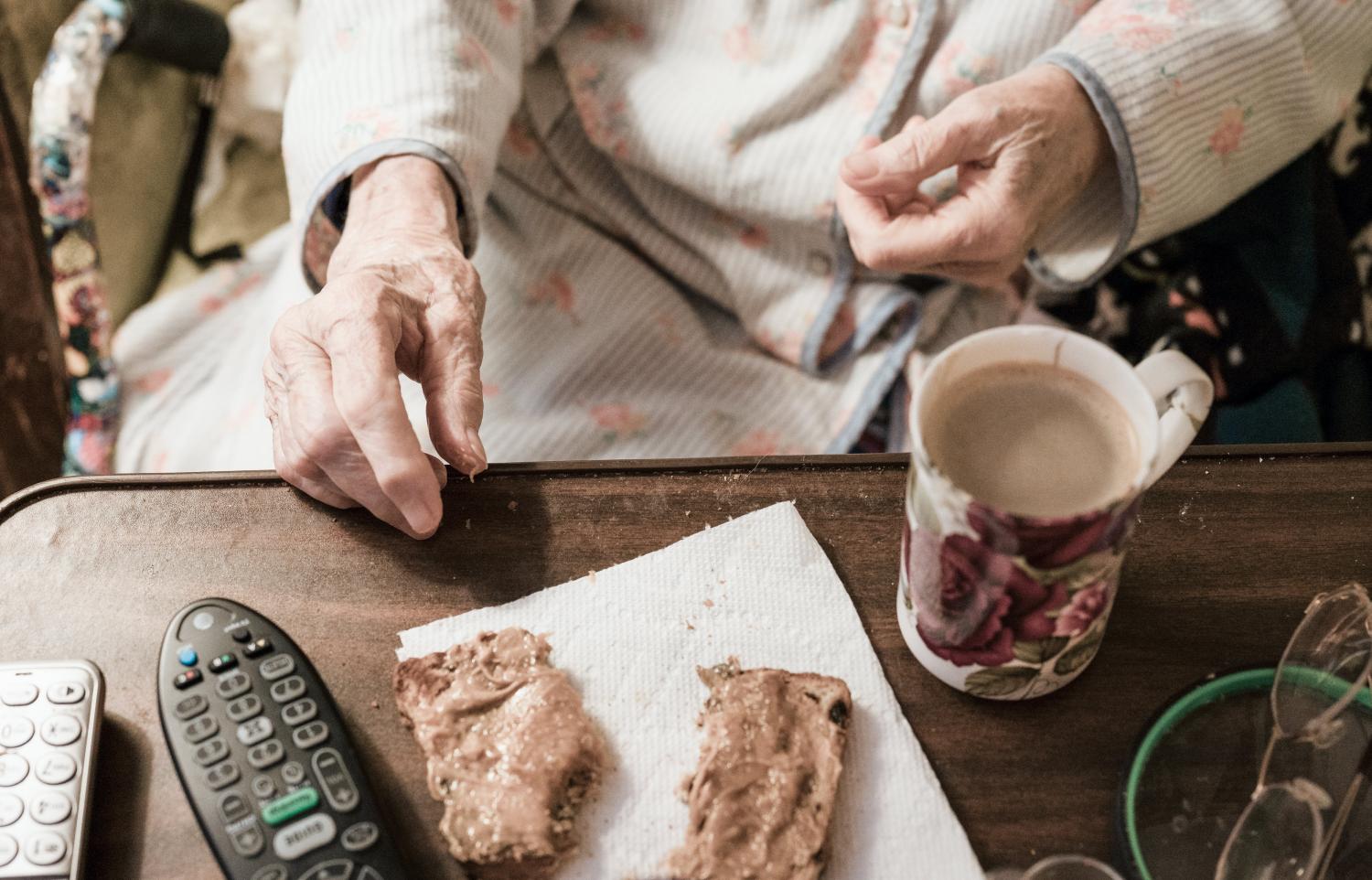
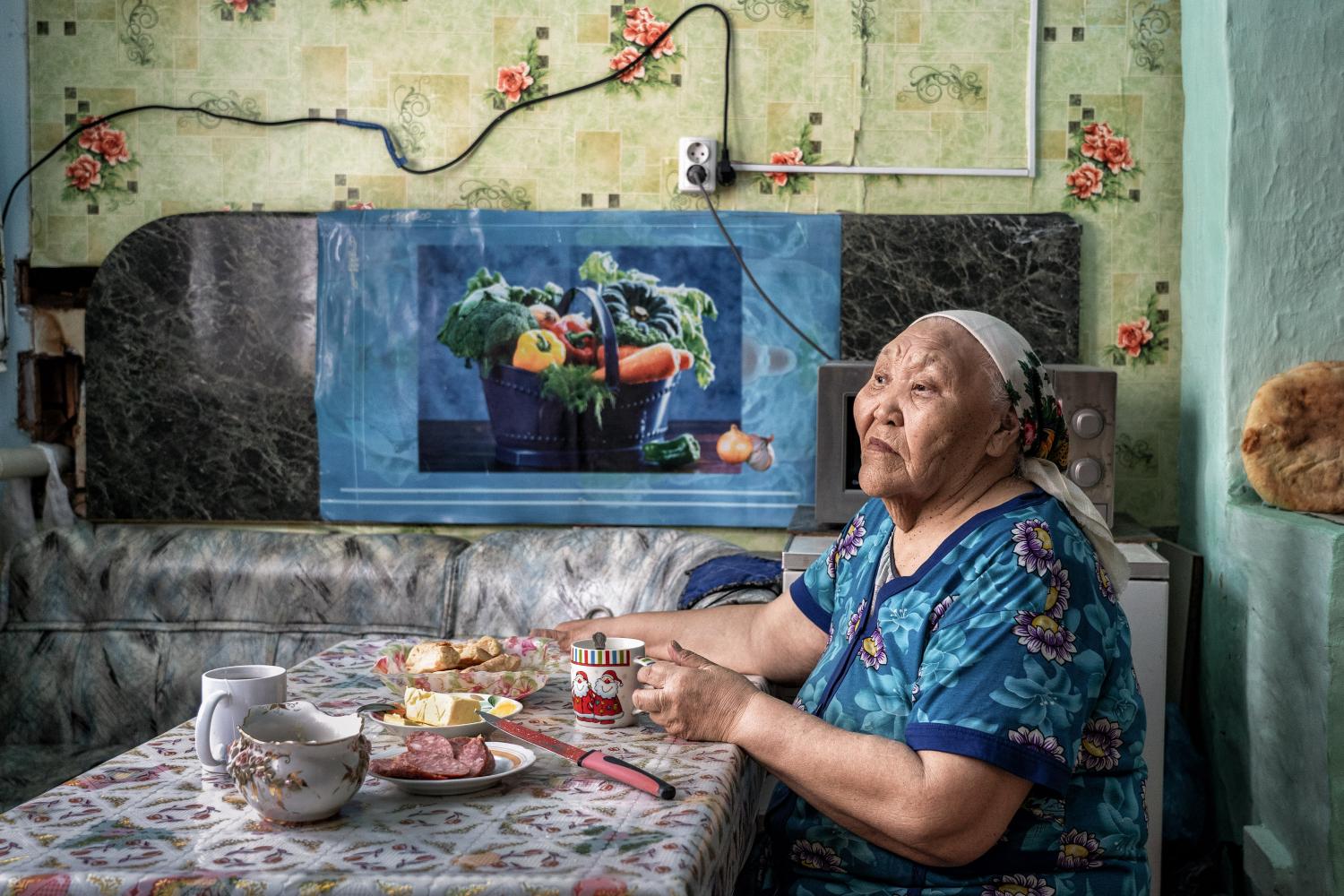
The “shut-ins” I visit throughout Chinatown share similar stories concerning family and sacrifice. Disadvantaged from poor health or poverty, this elderly first-generation immigrant population complains little about their isolation or disability. Instead, they remain in humble gratitude when considering the improved quality of life they were able to attain for their children and family after immigrating to America from China. Predominantly housed in tenements throughout Chinatown, these "shut-ins" are virtually unknown to the outside world.



My photographs are not about victimization or despair. Rather, they attempt to show the resilience and resourcefulness of those faced with harsh conditions. The shut-ins of Chinatown and the boarders at 81 Bowery have found ways to create family and community despite the harshness of their living conditions, sharing meals and limited resources. The signs of their resilience are there for those who care to look: a makeshift altar, laundry tucked under a bed to save space, a paper towel left half-used on a table.
These stories of fragmented families and bittersweet endings touch upon and intersect my own life and journey as a photographer.

To license this work for editorial, creative, or other uses, click on the OZMO logo above.
This will take you to the Ozmo website where you can review the cost and license for the photographs in this exhibit.
You will need to create an account with both Amazon payments and with the Ozmo website as described on the Ozmo website.