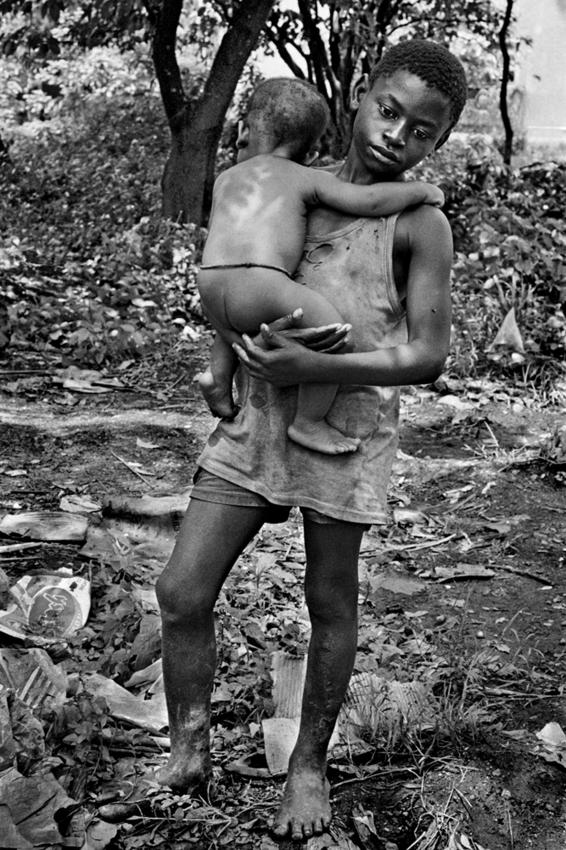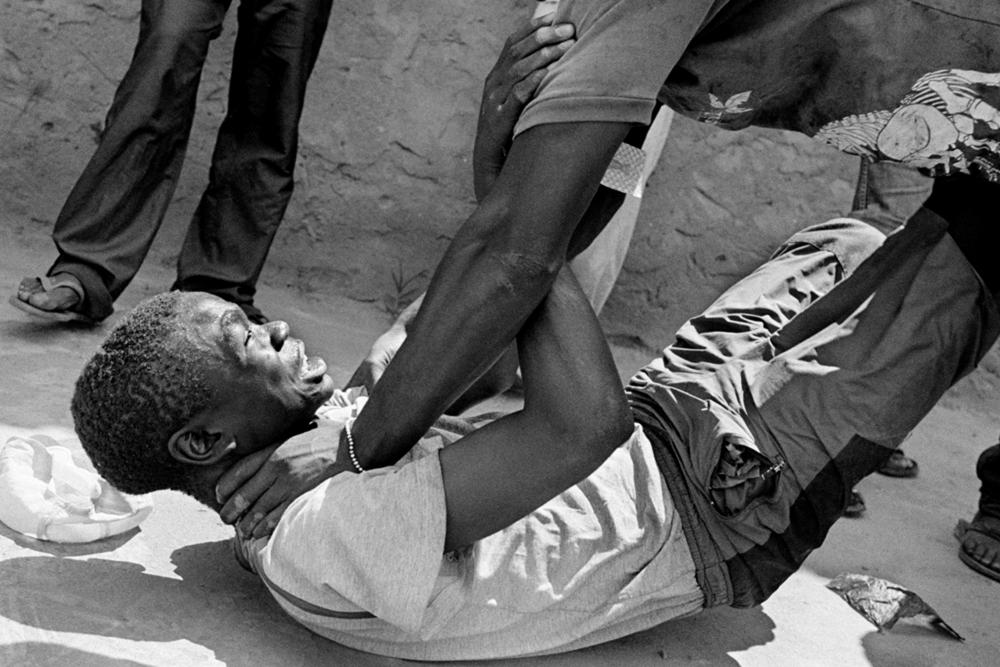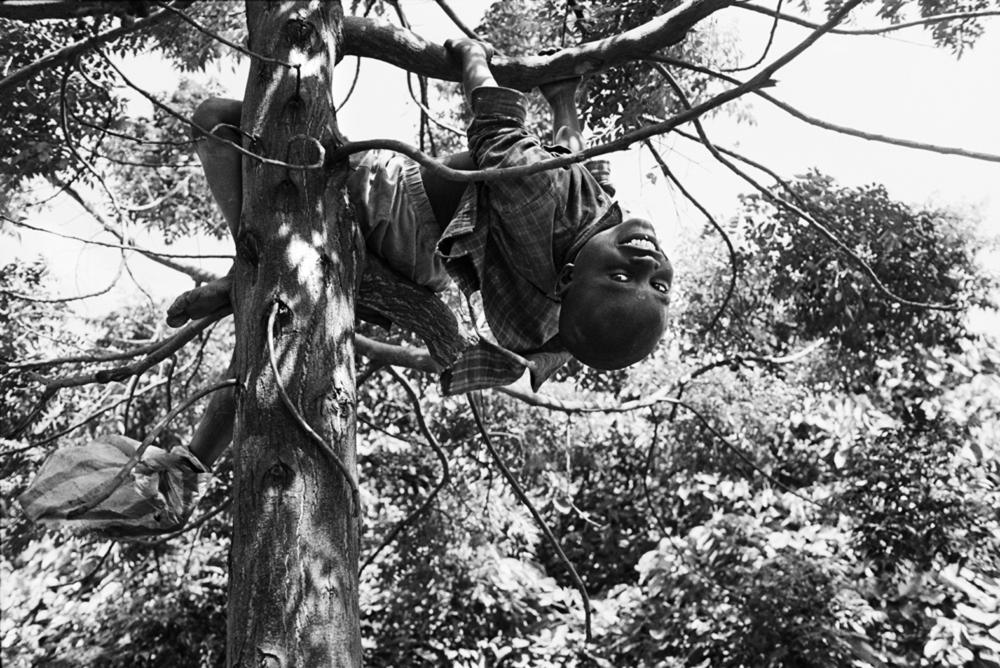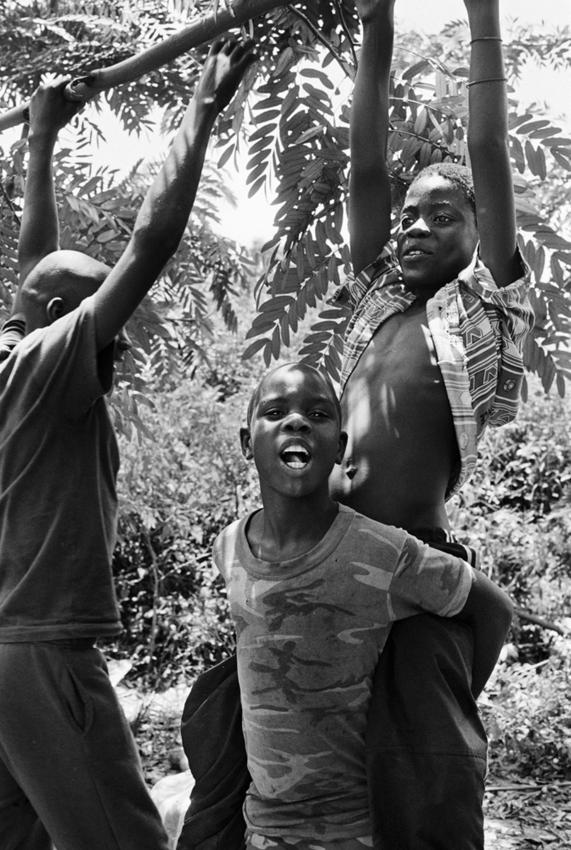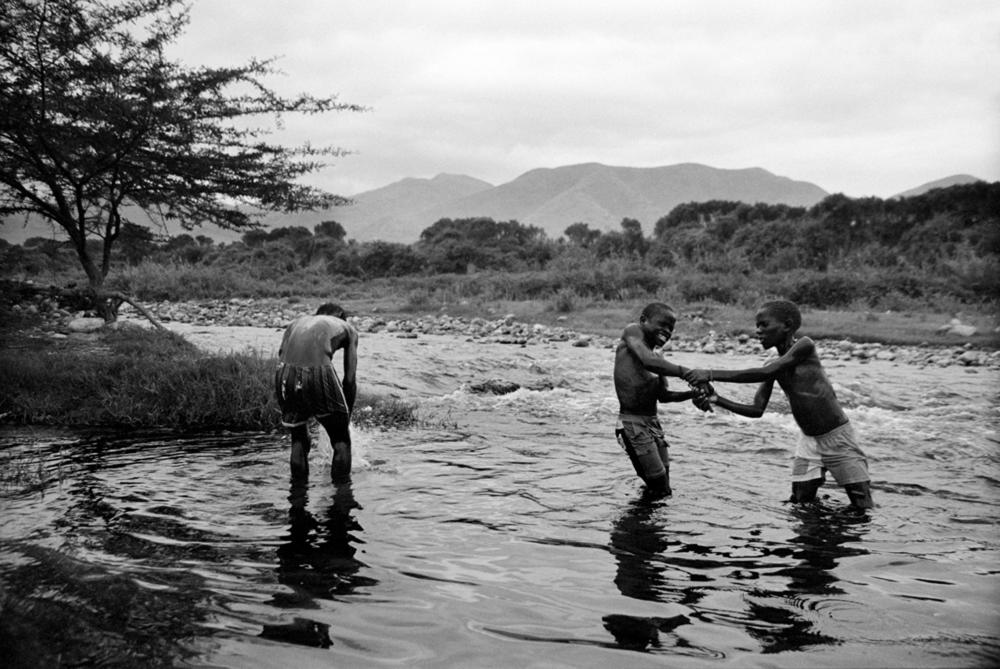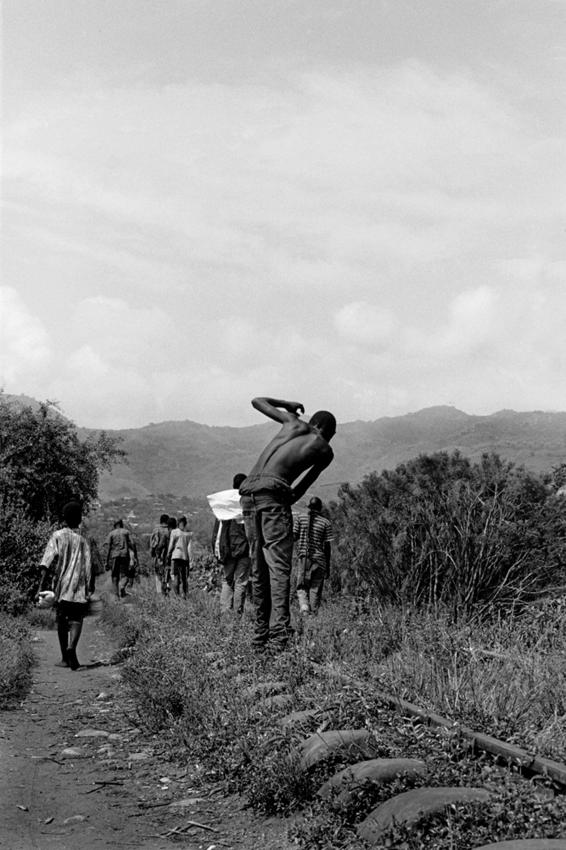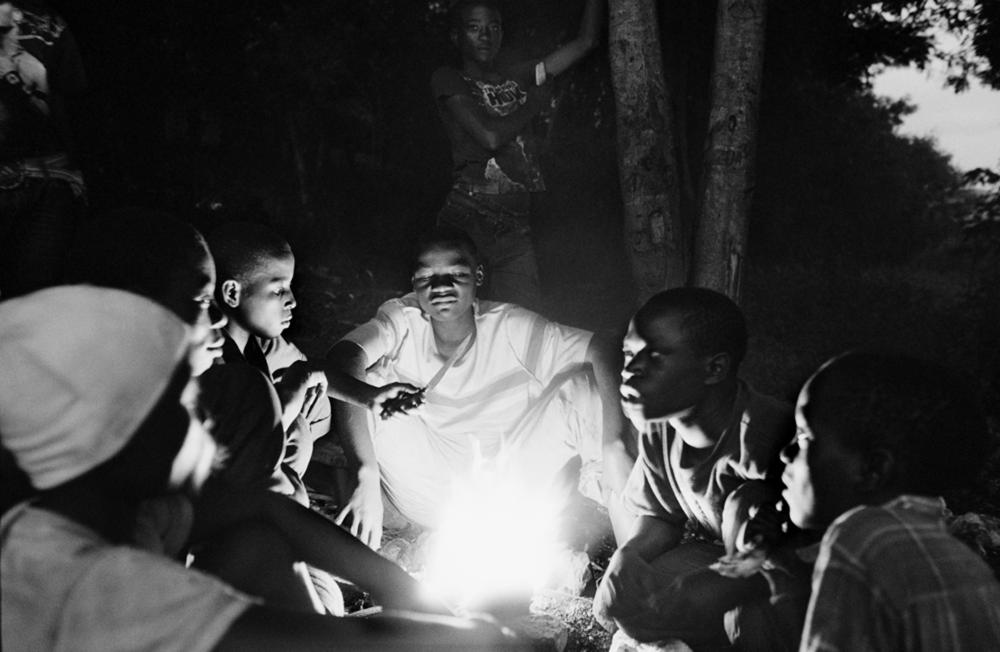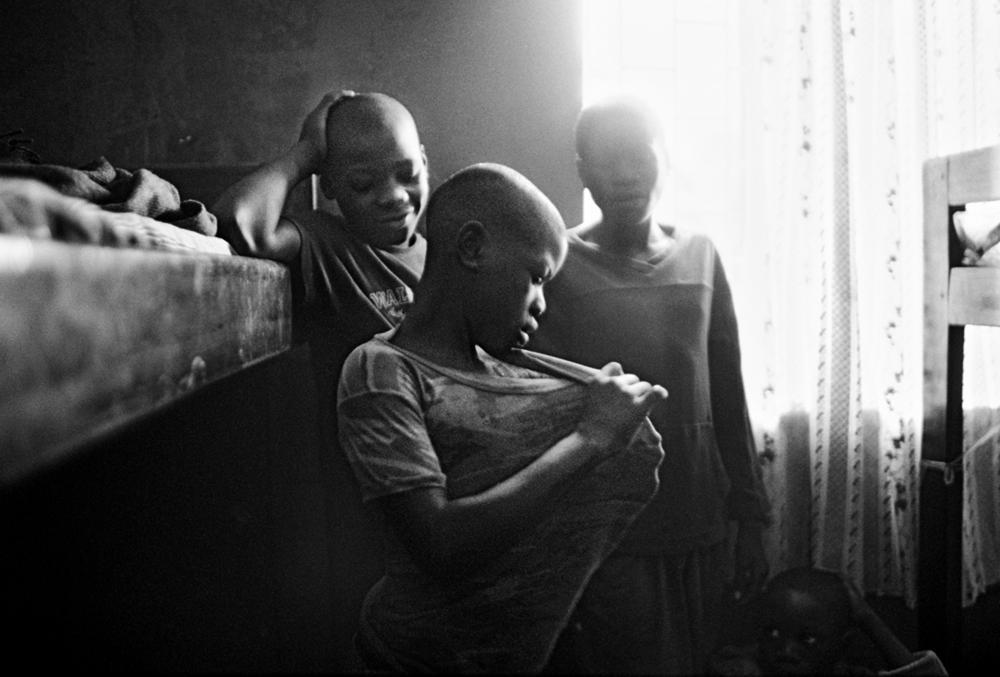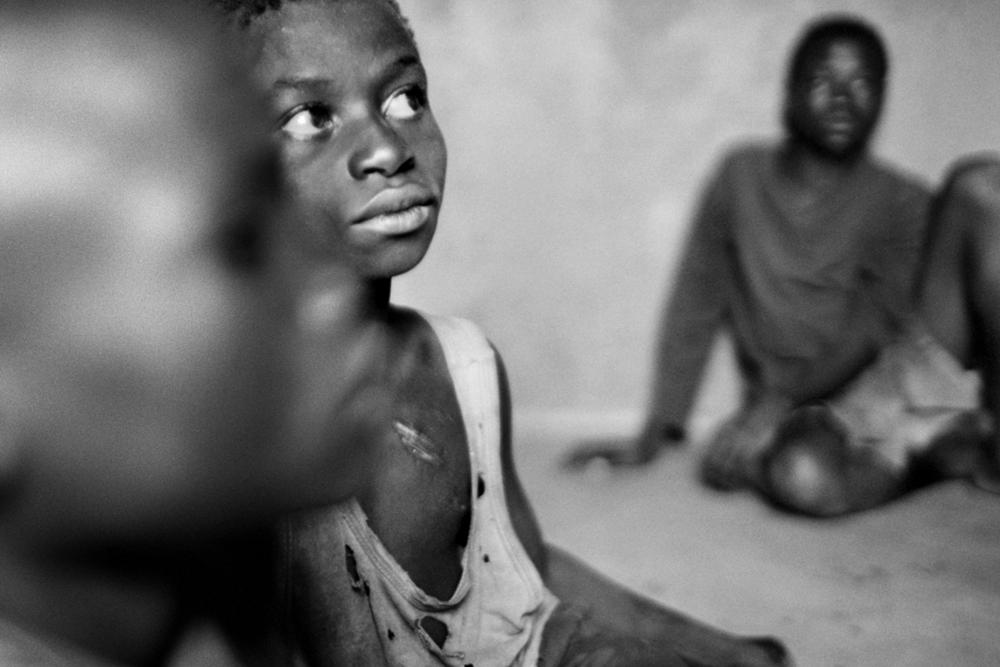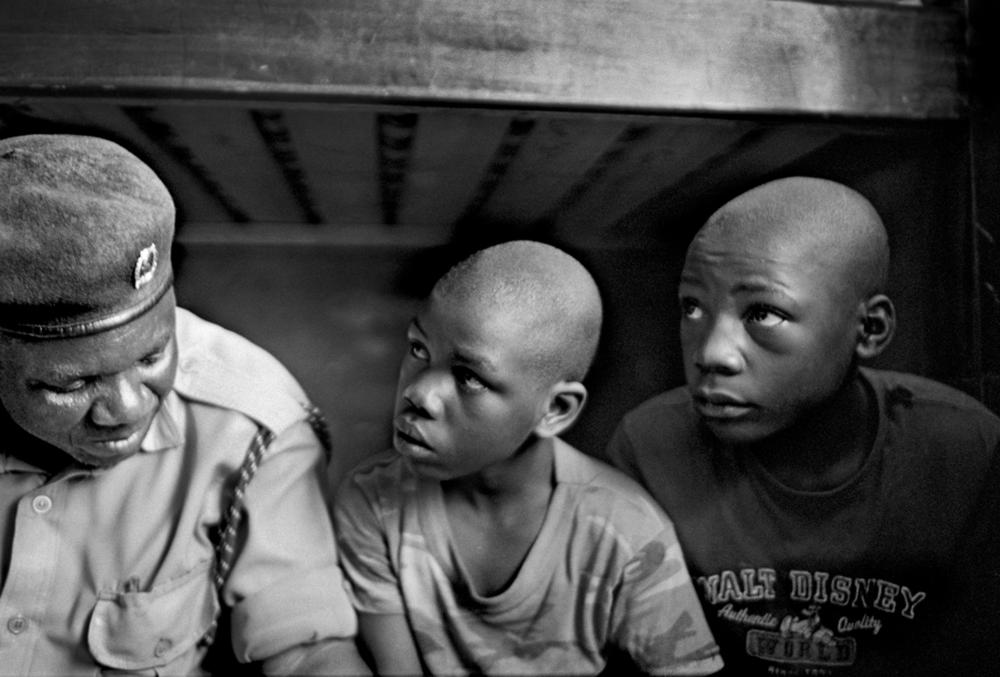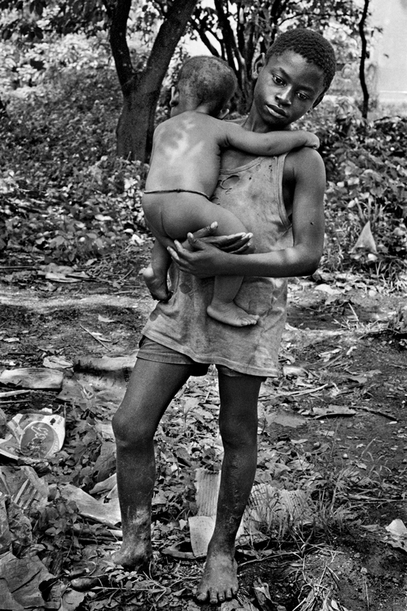

A tiny 6 month old baby is held lovingly by Muzamiru, one of the younger members of the Dustbin tribe. They reside in Kasese, a remote Western equatorial town of Uganda close to the Congolese border, a region of conflict. The baby's mother is a sex worker, but predictably, like many women in her profession, has acquired the HIV/AIDS virus, is dying from the disease and can no longer care for her child. The 'tribe' has adopted him. Muzamiru is 10 years old, a runaway because his father violently abused the family with knives and beatings. He ran away from the cruelty and has been a member of the tribe since he was 5.
14th November 2009 Kasese, Uganda
'ROUGH LIVING'
Carol Allen Storey | Rwenzorie Mountain Kingdom, Uganda
Photographer: Carol Allen Storey
Exhibit Title: 'ROUGH LIVING'
Location: Rwenzorie Mountain Kingdom, Uganda
‘ROUGH LIVING’
The spectacle of poverty amongst African children
The impoverishment of Africa has propagated the continent with an emerging underclass of runaways and orphans.
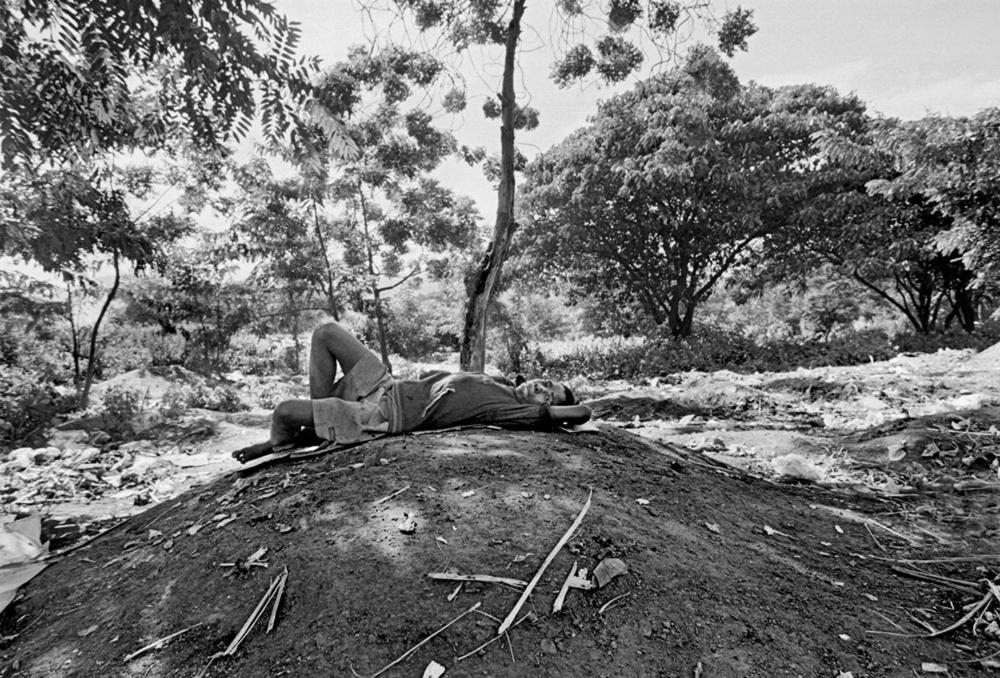
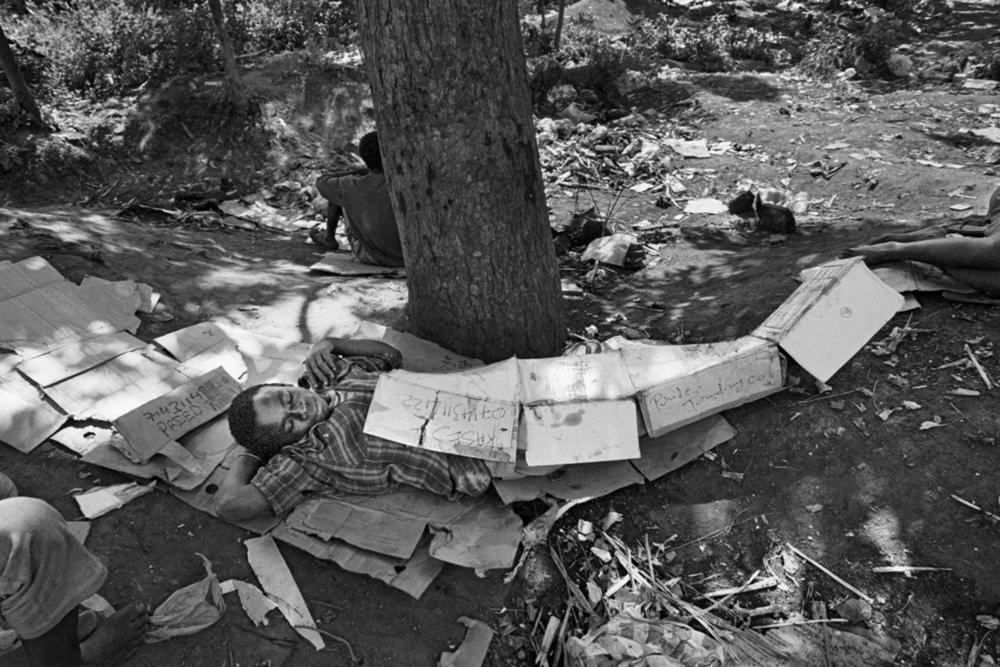
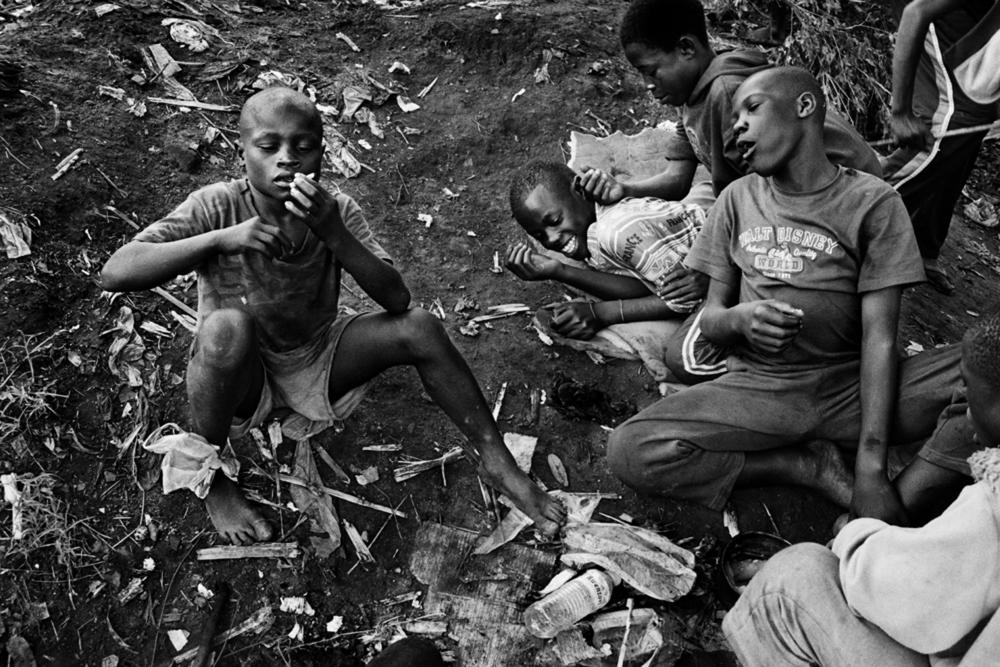
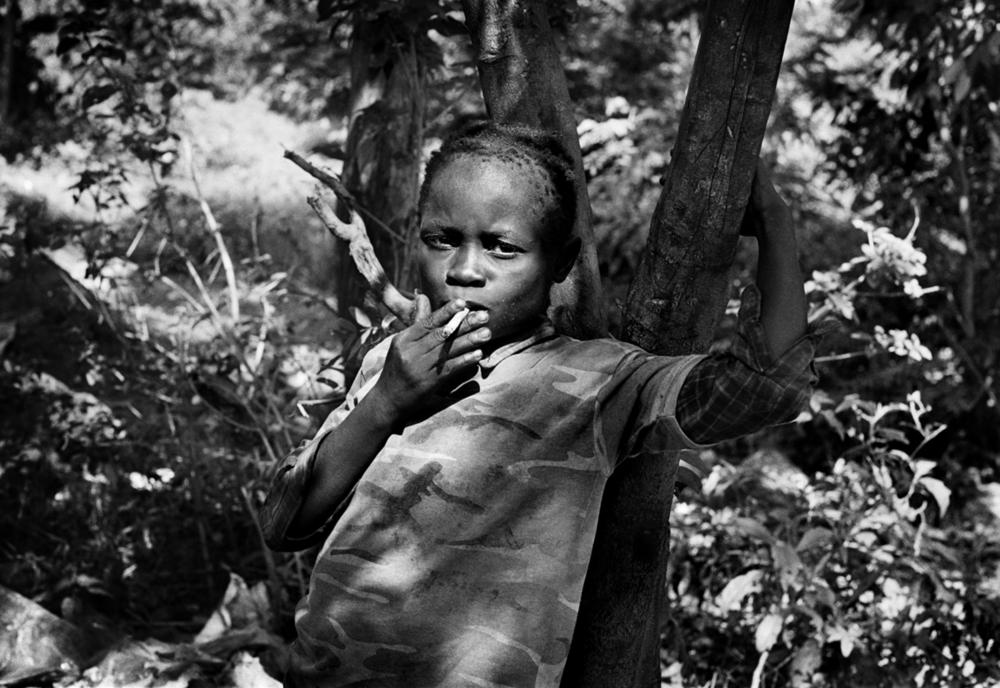
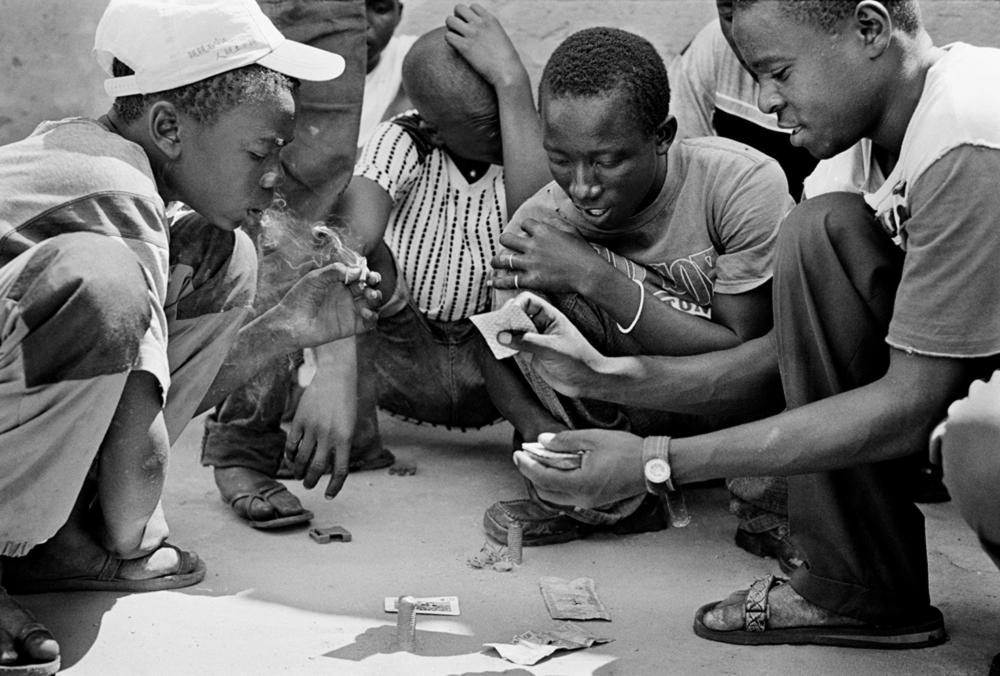
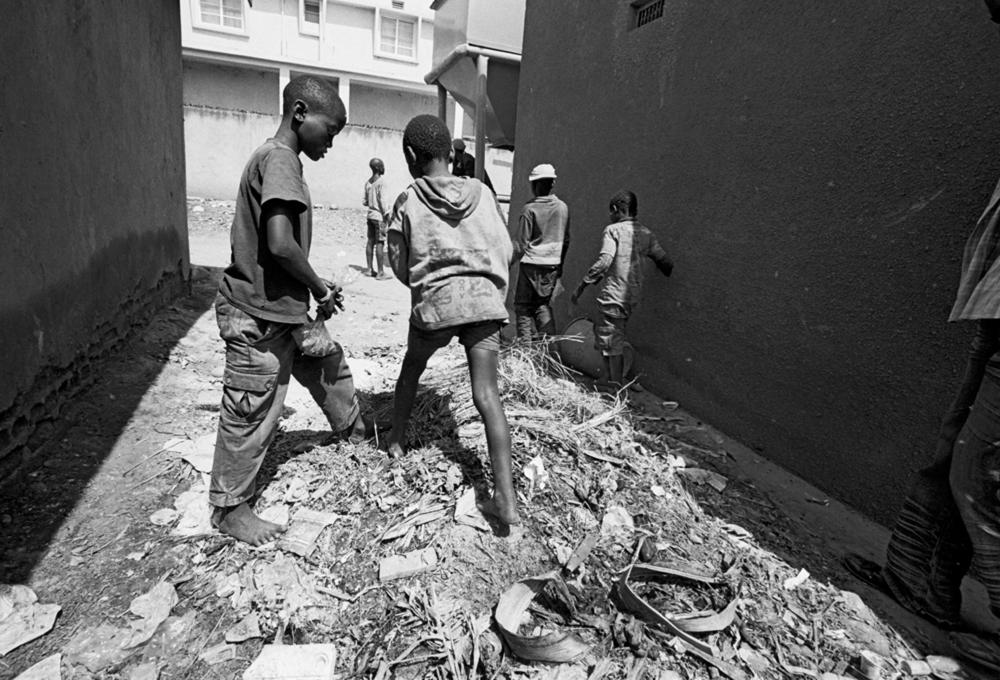
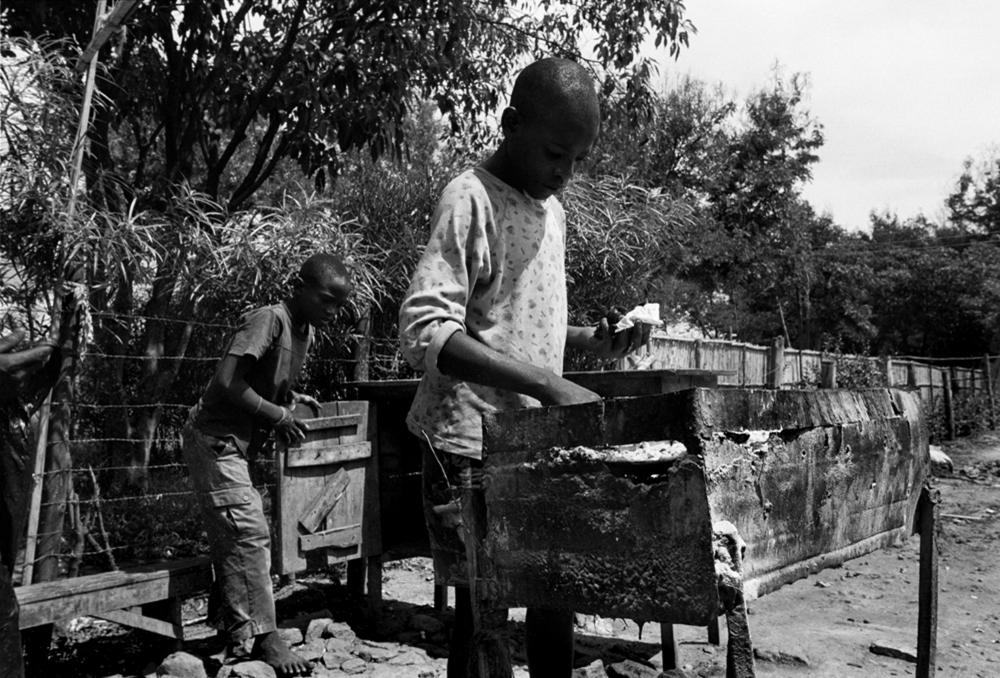
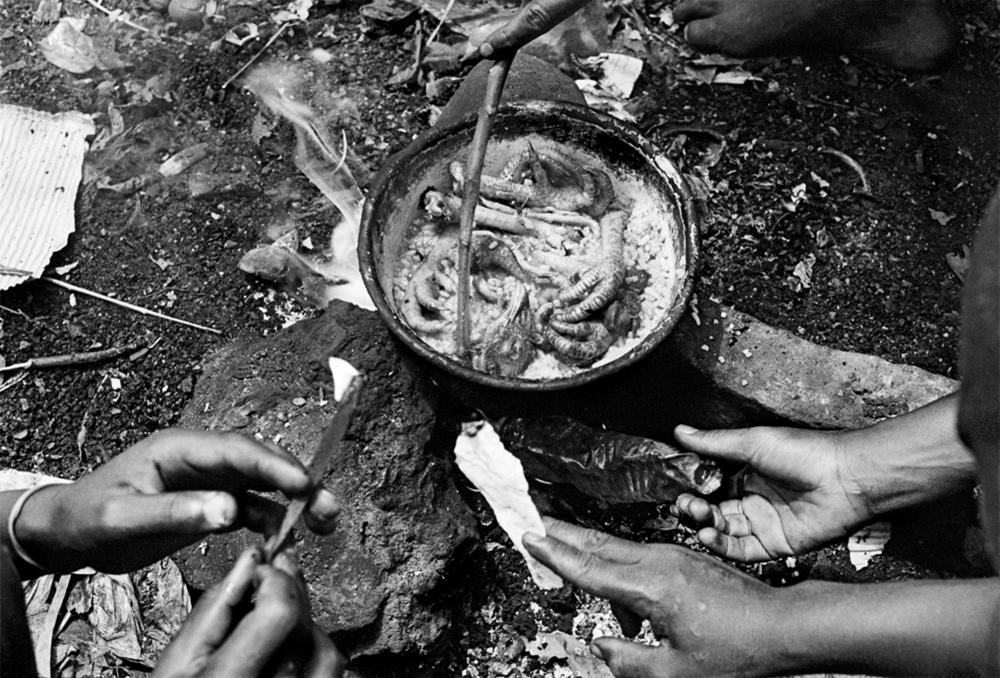
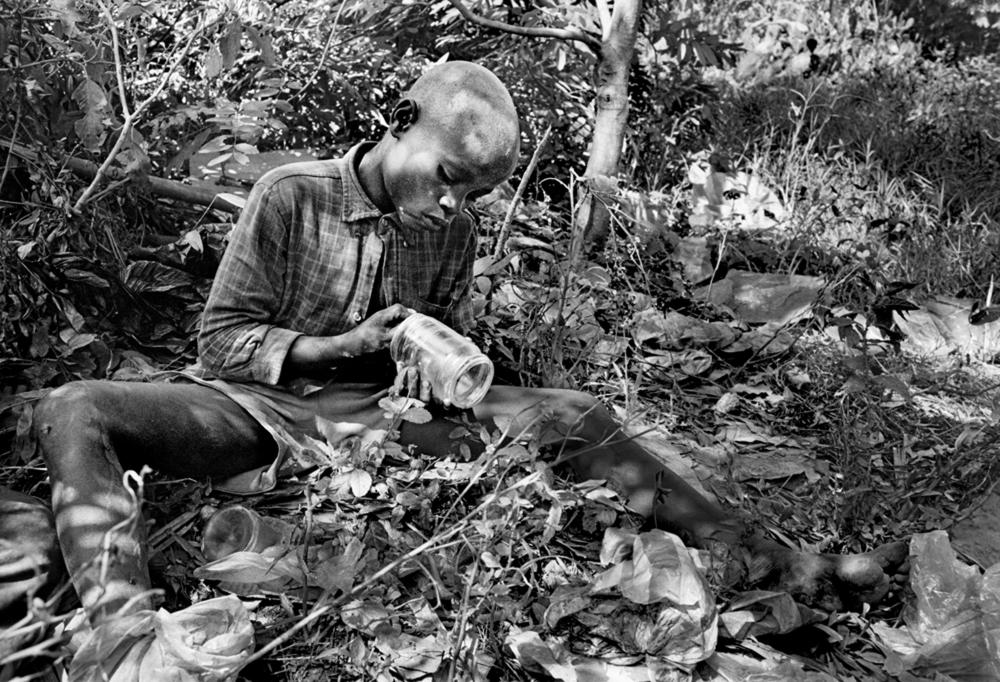
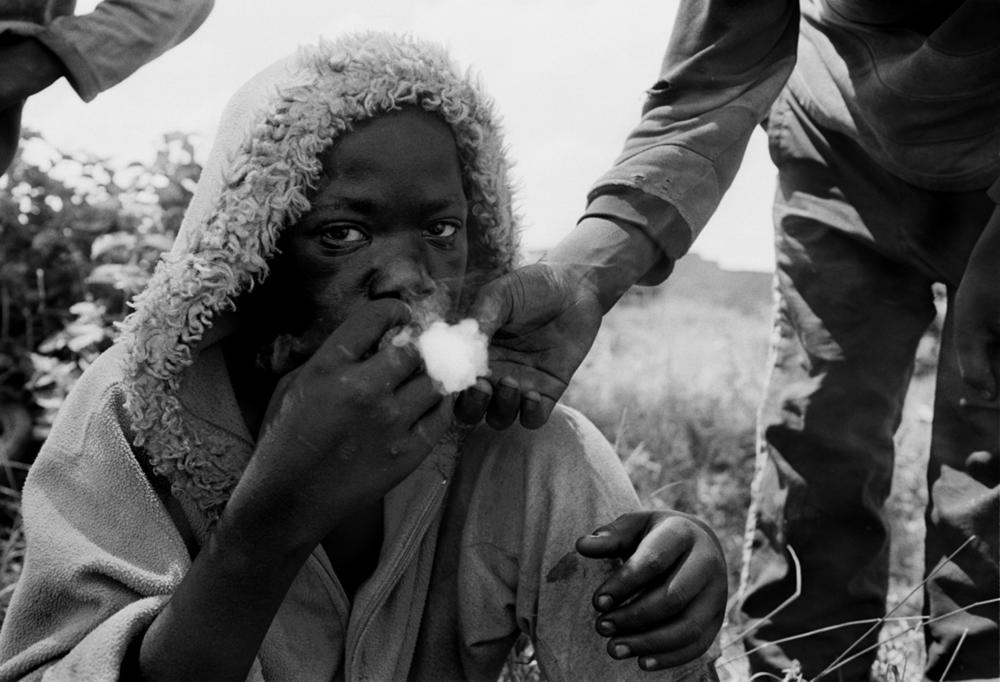
They roam the back streets, live rough, exist on a diet of rotting foods, addicted to drugs, alcohol, gamble and steal. Their future is bleak. Africa is staggering under the load of this emerging new tribe. The habitual poverty, lack of self-esteem, motivation, and stifling boredom is endemic in their daily life. What hope can disenfranchised children have without parents, affection, shelter, education, and moral guidance? Children as young as 5, living in a sub-human environment are a breach of children’s rights as guaranteed by the United Nations Charter for children.
This photo essay illuminates the children’s breathtaking resilience, spirit, and courage. it expresses their aspirations and their indomitable ingenuity managing the madness of their lives.
The profanity of poverty continues unabated. It is a life without aspiration. This is heartbreaking for all these innocents imprisoned by their catastrophic set of unwarranted circumstances.
My personal photographic project for more than four years, focuses on Sub-Saharan African women and orphans affected by the HIV/AIDS virus and poverty. It provides a visual narrative of their daily personal experiences progressing survival in a hostile environment, illuminating their resilience, indomitable spirit, courage, struggles and aspirations. The collection of essays provide a resounding voice for these ‘voiceless’ victims. My aim is to raise social consciousness, about what is happening in the region and trigger moral responsibility, lest we forget our role as humanitarians.
‘ROUGH LIVING’, is an essay I have been evolving the last 3 years. It illustrates how the impoverishment of Africa has propagated the continent with a plague of runaways and orphans.
They roam the back streets, live rough, exist on a diet of rotting foods, addicted to drugs, alcohol, gamble and steal. Their future is bleak. Africa is staggering under the load of this emerging underclass. The habitual poverty, lack of self esteem, motivation, and stifling boredom is endemic in their daily life.
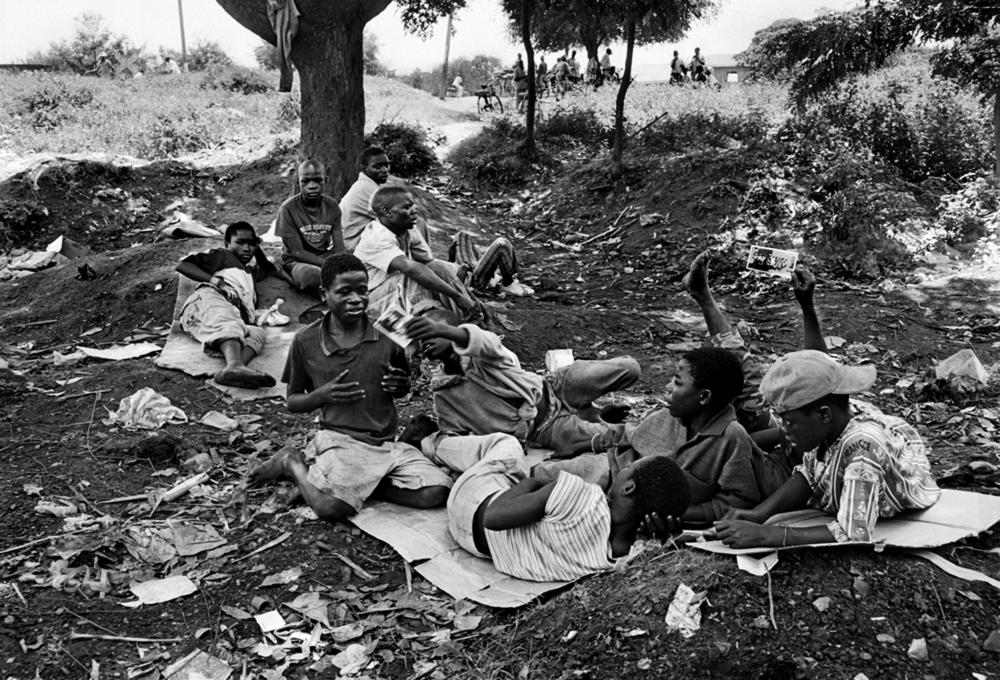
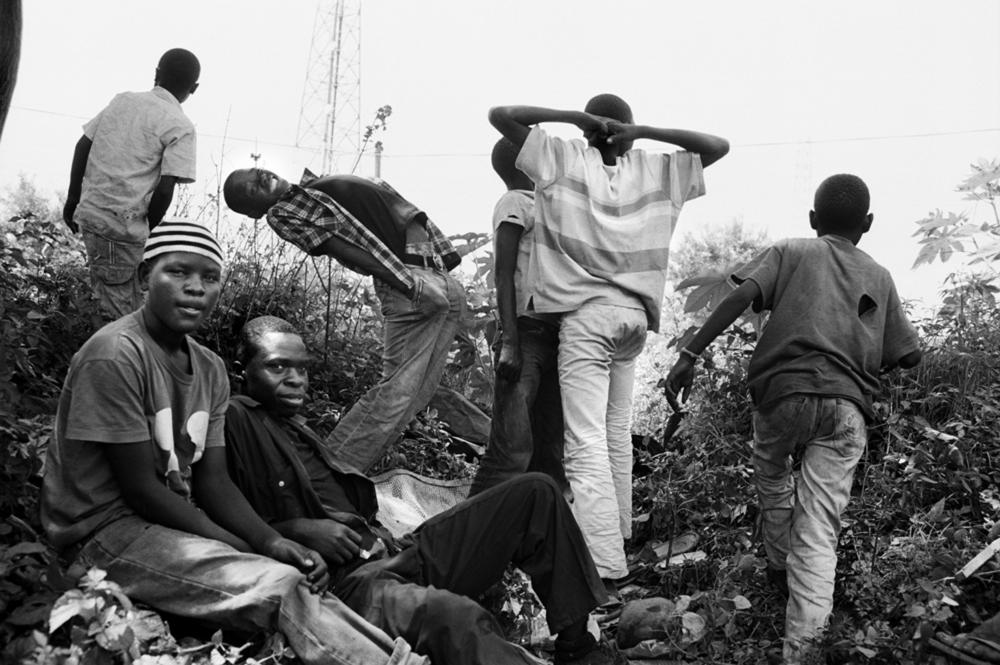
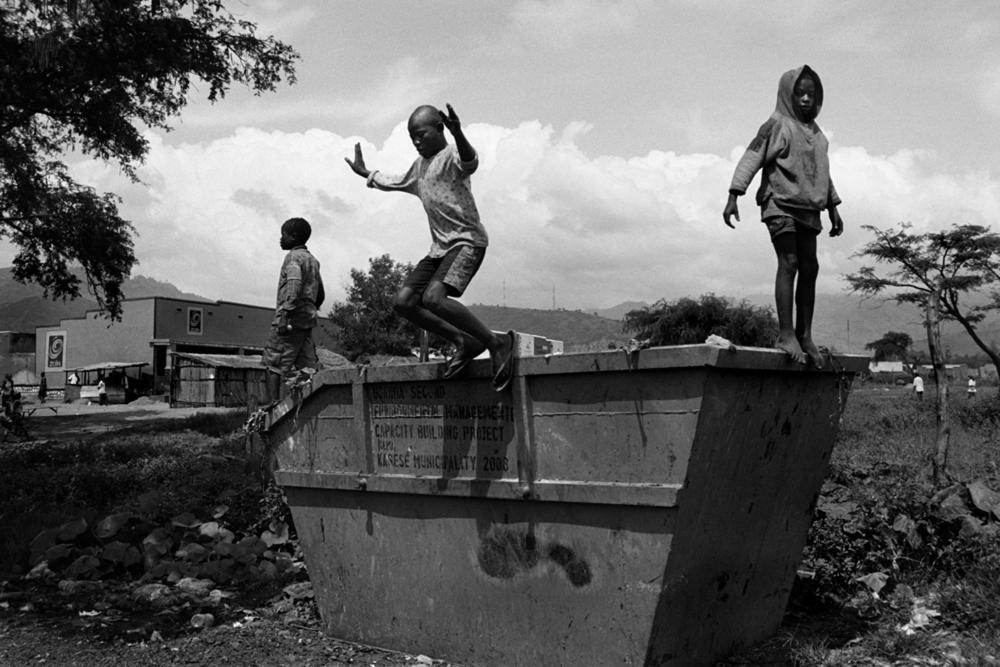
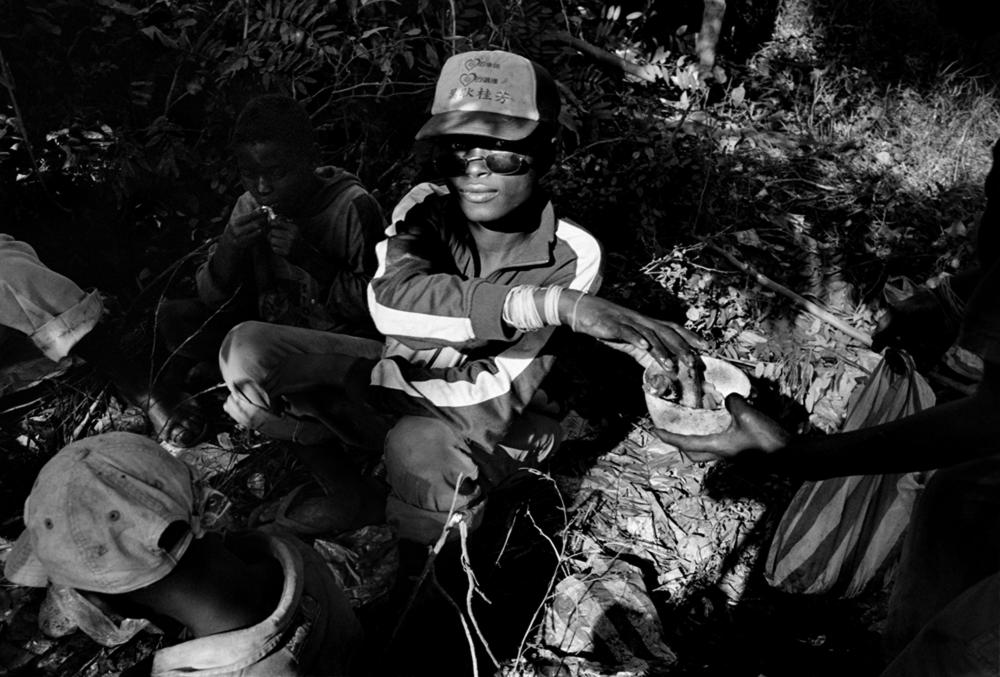
This young tribe reside in Kasese, a remote Western equatorial town of Uganda close to the Congolese border, a region of conflict. They are known locally as the ‘Dustbin Boys’ because they virtually live on a rubbish heap where they have accessibility to forage the meagre scraps deposited in the dumpster.
The boys range in age from 6 months to 14, many under 10. Some joined the tribe at the fragile age of 4. The baby is the child of an HIV/AIDS dying sex worker who the boys have adopted. None of the tribe attend school, they have no access to health care, a safe home, clean water and are tragically deprived of parental nurturing, love. They have become a closely knit family with the eldest member, Ali assuming the role of Chief.
The profanity of poverty continues unabated, as does the lack of support from national and international agencies. This is heartbreaking for all these innocents imprisoned by their catastrophic set of unwarranted circumstances.
All the photographs in this essay were captured with a Canon film camera using 35mm and 50mm fixed lens with Kodak B/W tri-X 400 film.
Save The Children UK
UNICEF UK
Carol Allen Storey
carol@castorey.com
www.castorey.com
Make Comment/View Comments