


Indonesia, Java Island,
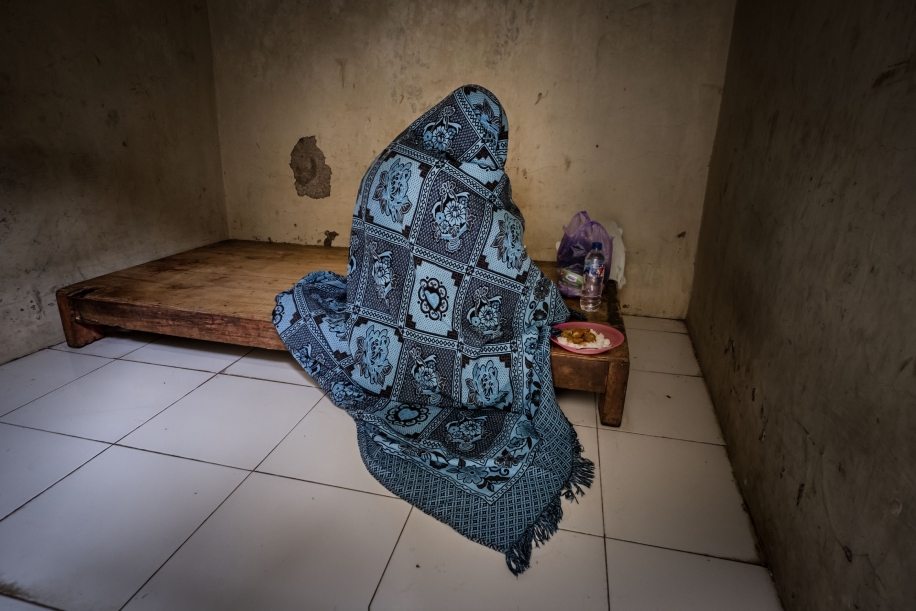
An unknown young woman wrapped in a blanket in a small cell at a rehabilitation center in Central Java. Minutes after I took this picture, she was taken away against her will and placed in the trunk of an SUV. Her mother was waiting for her, and within seconds they disappeared, leaving me with no answers. From my experience, observed on two different occasions, families bring their relatives to this kind of facility when they can no longer manage their behavior. According to the center’s manager, exorcism with Quranic prayers is an important part of the therapy.
Chains of Madness
Photographer: Alain Schroeder
Exhibit Title: Chains of Madness
Location: Indonesia
Pasung, the shackling of people with psychosocial disabilities,has been illegal in Indonesia since 1977, yet it remains widespread, especially in rural Java. Beyond poor healthcare access and infrastructure, the main driver is stigma: mental illness is often seen as a spiritual or moral failing. Families turn to traditional healers, faith rituals, or privately run healing centers with no oversight, often staffed by untrained individuals, including former patients. Conditions are sometimes inhumane. Residents are chained in filthy, overcrowded spaces, forced to eat, sleep, and defecate within their surroundings. Some centers administer antipsychotic drugs or shock therapy with little supervision. Widespread infections, malnutrition and severe trauma are common repercussions.
Despite the UN’s recognition of mental health as a fundamental right, cultural beliefs and systemic neglect leave many untreated. Real change demands not only funding, but education, compassion, and community outreach to break cycles of shame and offer dignity to those suffering.
Make Comment/View Comments