

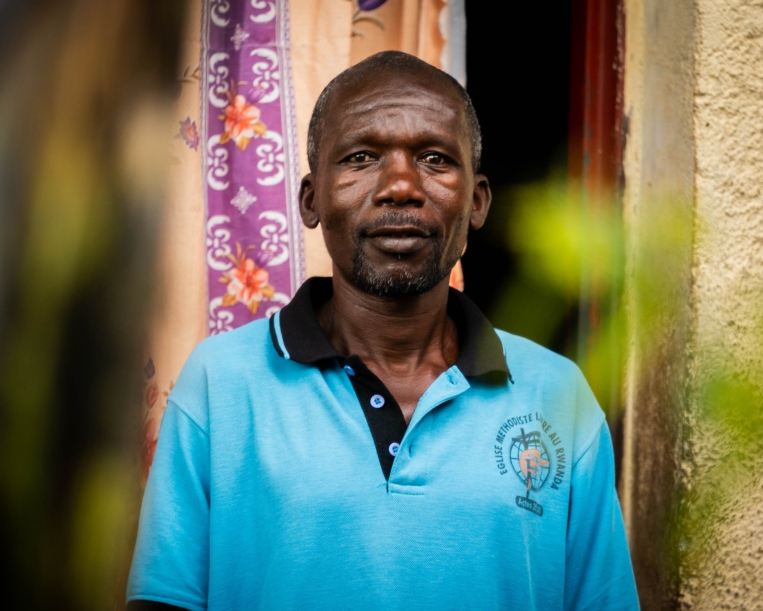

Musanze Reconciliation Village, Rwanda, An Ex-Combatant stands giving testimony to his involvement during the 1994 genocide against the Tutsis in Rwanda. He explains that after the genocide, he fled to Zaire, now the Democratic Republic of Congo, to keep committing acts of genocide. Eventually he returned to Rwanda to confess his crimes. He was imprisoned, then released upon asking those survivors he wronged for forgiveness. He now resides in the Musanze Reconciliation Village alongside other perpetrators and survivors, building their community and sharing his testimony to younger generations.
Rwanda: A 30 Year Path to Forgiveness and Reconciliation
Photographer: Andrew Palmer
Exhibit Title: Rwanda: A 30 Year Path to Forgiveness and Reconciliation
Location: Rwanda
This Exhibit explores the power of forgiveness and reconciliation in the aftermath of the 1994 genocide against the Tutsis in Rwanda. By focusing on both survivors and perpetrators, it aims to deepen global understanding, particularly in Western cultures, of Rwanda’s unique approach to healing and justice. Both survivors and perpetrators were deeply affected by the genocide causing widespread trauma and grief. In a world still grappling with ongoing conflicts in places like the DRC, Israel, and Sudan, this story is both timely and globally relevant. It offers a compelling model for how divided societies can rebuild and move forward. This project began in 2024 when I first traveled to Rwanda to film for an upcoming documentary. I returned in 2025 to continue filming and photographing. This exhibit goes along with the upcoming documentary film, in the early stages of post production, where I interview both survivors and perpetrators in their communities to tell their stories of forgiveness and reconciliation.
Make Comment/View Comments