


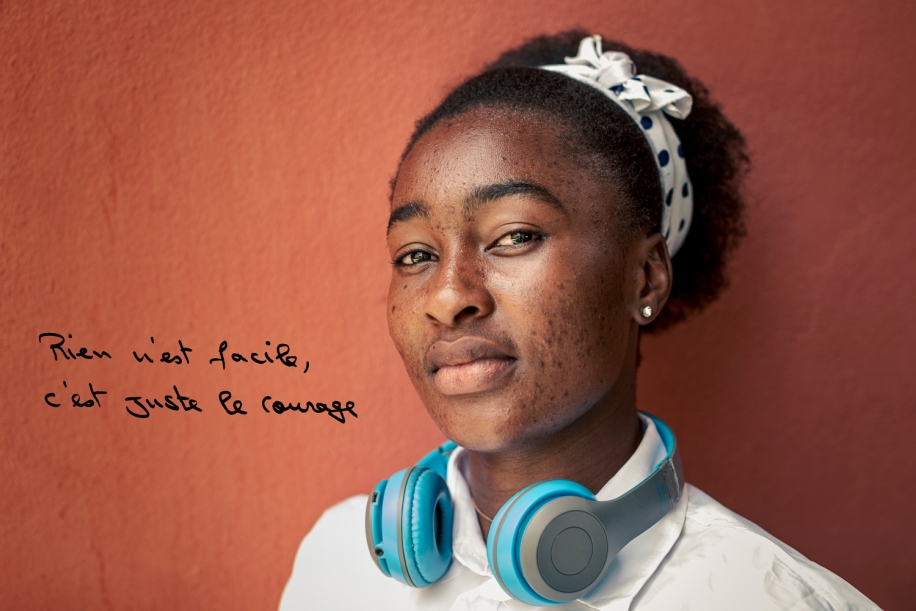

N’Djaména, Chad, March 2021
Raïssa, 23, from the Central African Republic, is a third-year student of Communications and Marketing. She is the single mother of a four-year old boy.
Raïssa lost her mother when she was three. Her father, an alcoholic with a history of abuse, was not in a position to raise her and her five siblings. The children were left in the care of an aunt, who mistreated them.
“I was constantly telling myself: you must do whatever it takes to succeed. I was always told that I was bright. I didn’t want us to drop out of school. For a long time, I had resentment in my heart but today I am free. I have forgiven.”
In May 2013, Raïssa fled her country with an older sister and her family. She was 16 and was just about to graduate from middle school. The family settled in N'Djamena.
“My pregnancy was a very difficult time. Yet, I managed to complete that year. I gave birth in September and had to stay home for one year. The following year, I went back to school. Eventually, I moved out and stayed by myself in a one-bedroom house with no electricity nor water. Life was tough. I had to pay a lot of attention in class because homework was barely an option. Eventually, I did obtain my Baccalaureate. I never gave up. You know, in life, nothing is easy. It is all about courage.”
In 2017, Raïssa obtained the DAFI scholarship. “I was so happy. I had tears in my eyes. Today, my son goes to school; I go to university. It is just the two of us and we keep going. We are fine.”


Make Comment/View Comments
Additional Credits
Commissioned by:
UNHCR's Education Unit
Photographs and texts by:
Antoine Tardy
www.antoinetardy.com
Video
Photographer Statement
‘Hope’, ‘game-changing’, ‘life-saving’, ‘beacon of light’, ‘power’, ‘independence’, ‘confidence’, ‘dignity’: those are some the words that I have heard time and time again over the past seven years, as I have travelled across 17 countries to work on the project and document the lives and journey of hundreds of refugees that UNHCR and partners work with in the area of education.
As much as their trajectories and personalities differ, the people I met share one thing in common: the uncertainty that is inherent to living life as a refugee. This is why education becomes for them a means towards gaining control back over the course of their existence. And this is what I wanted to capture in the exhibition, expressing the duality –or ambivalence– of their experiences.
Throughout the project, I have constantly experienced –and done my best to convey– a sense of dignity and shared humanity. I have considered myself as the spokesperson of the persons I have interviewed and photographed, and entertained the hope that they feel valued, acknowledged, and heard. This means that I do aspire to work with the most care, commitment, honesty, empathy and respect I am capable of at any given time, regularly re-assessing my methods, opinions, and intentions.
Some of the pitfalls I must avoid? Being condescending or patronizing, perpetuating power dynamics, reinforcing a sense of victimization, romanticizing reality, or imposing preconceptions or expectations. My go-to for that? Building a relationship with my counterparts whereby they are not ‘subjects’ but ‘agents’. We co-own and co-create the stories together.
License

To license this work for editorial, creative, or other uses, click on the OZMO logo above.
This will take you to the Ozmo website retro toys where you can review the cost and license for the photographs in this exhibit.
You will need to create an account with both Amazon payments and with the Ozmo website as described on the Ozmo website.
Tags
Content loading...
Resources
The DAFI Scholarship:
UNHCR’s higher education scholarship programme, best known by its acronym DAFI – The Albert Einstein German Academic Refugee Initiative, plays an integral role in enabling refugees worldwide to access higher education in their country of asylum. Since its inception in 1992, the DAFI programme has supported over 27,200 students in 59 countries.
However, for the first time since 2020, there was a decrease in the number of scholars supported, reflecting the shift in global funding and subsequent reduction in resources and support for refugees worldwide.
More at: www.unhcr.org/what-we-do/build-better-futures/education/higher-education-and-skills/dafi-tertiary-scholarship-0<>
Affiliated NGO
UNHCR, the UN Refugee Agency
Contact Photographer
www.antoinetardy.com
Note to viewers and editors
All facts and figures, including the age of the person shown in the photograph, are accurate at the time the image was taken, as noted in the first line of the caption.
Stats
Nothing But Courage
Antoine Tardy | Chad, Egypt, Malawi, Mexico, Rwanda, South Africa, Zambia
Photographer: Antoine Tardy
Exhibit Title: Nothing But Courage
Location: Chad, Egypt, Malawi, Mexico, Rwanda, South Africa, Zambia
Only 9 per cent of refugees have access to higher education, far below the global average of 42 per cent.
This exhibition tells the stories of refugee students and alumni in Chad, Egypt, Malawi, Mexico, Rwanda, Slovakia, South Africa and Zambia who overcome all the bleak figures, odds, boundaries and labels to take control of their lives and achieve success on their own terms.
These are the stories of individuals who do not let their unfavorable situations define who they are and who they want to become. These are stories of those who have the chance to unlock their potential, who are translating their hardships into motivation.
Ultimately, these are stories of resilience and hope, of solidarity and determination, of self-realization in the face of adversity.
Only 9 per cent of refugees have access to higher education, far below the global average of 42 per cent.
This exhibition tells the stories of refugee students and alumni in Chad, Egypt, Malawi, Mexico, Rwanda, Slovakia, South Africa and Zambia who overcome all the bleak figures, odds, boundaries and labels to take control of their lives and achieve success on their own terms.
These are the stories of individuals who do not let their unfavorable situations define who they are and who they want to become. These are stories of those who have the chance to unlock their potential, who are translating their hardships into motivation.
Ultimately, these are stories of resilience and hope, of solidarity and determination, of self-realization in the face of adversity.
Commissioned by:
UNHCR's Education Unit
Photographs and texts by:
Antoine Tardy
www.antoinetardy.com
‘Hope’, ‘game-changing’, ‘life-saving’, ‘beacon of light’, ‘power’, ‘independence’, ‘confidence’, ‘dignity’: those are some the words that I have heard time and time again over the past seven years, as I have travelled across 17 countries to work on the project and document the lives and journey of hundreds of refugees that UNHCR and partners work with in the area of education.
As much as their trajectories and personalities differ, the people I met share one thing in common: the uncertainty that is inherent to living life as a refugee. This is why education becomes for them a means towards gaining control back over the course of their existence. And this is what I wanted to capture in the exhibition, expressing the duality –or ambivalence– of their experiences.
Throughout the project, I have constantly experienced –and done my best to convey– a sense of dignity and shared humanity. I have considered myself as the spokesperson of the persons I have interviewed and photographed, and entertained the hope that they feel valued, acknowledged, and heard. This means that I do aspire to work with the most care, commitment, honesty, empathy and respect I am capable of at any given time, regularly re-assessing my methods, opinions, and intentions.
Some of the pitfalls I must avoid? Being condescending or patronizing, perpetuating power dynamics, reinforcing a sense of victimization, romanticizing reality, or imposing preconceptions or expectations. My go-to for that? Building a relationship with my counterparts whereby they are not ‘subjects’ but ‘agents’. We co-own and co-create the stories together.
The DAFI Scholarship:
UNHCR’s higher education scholarship programme, best known by its acronym DAFI – The Albert Einstein German Academic Refugee Initiative, plays an integral role in enabling refugees worldwide to access higher education in their country of asylum. Since its inception in 1992, the DAFI programme has supported over 27,200 students in 59 countries.
However, for the first time since 2020, there was a decrease in the number of scholars supported, reflecting the shift in global funding and subsequent reduction in resources and support for refugees worldwide.
More at: www.unhcr.org/what-we-do/build-better-futures/education/higher-education-and-skills/dafi-tertiary-scholarship-0
UNHCR, the UN Refugee Agency
www.antoinetardy.com
All facts and figures, including the age of the person shown in the photograph, are accurate at the time the image was taken, as noted in the first line of the caption.
Content loading...

Make Comment/View Comments

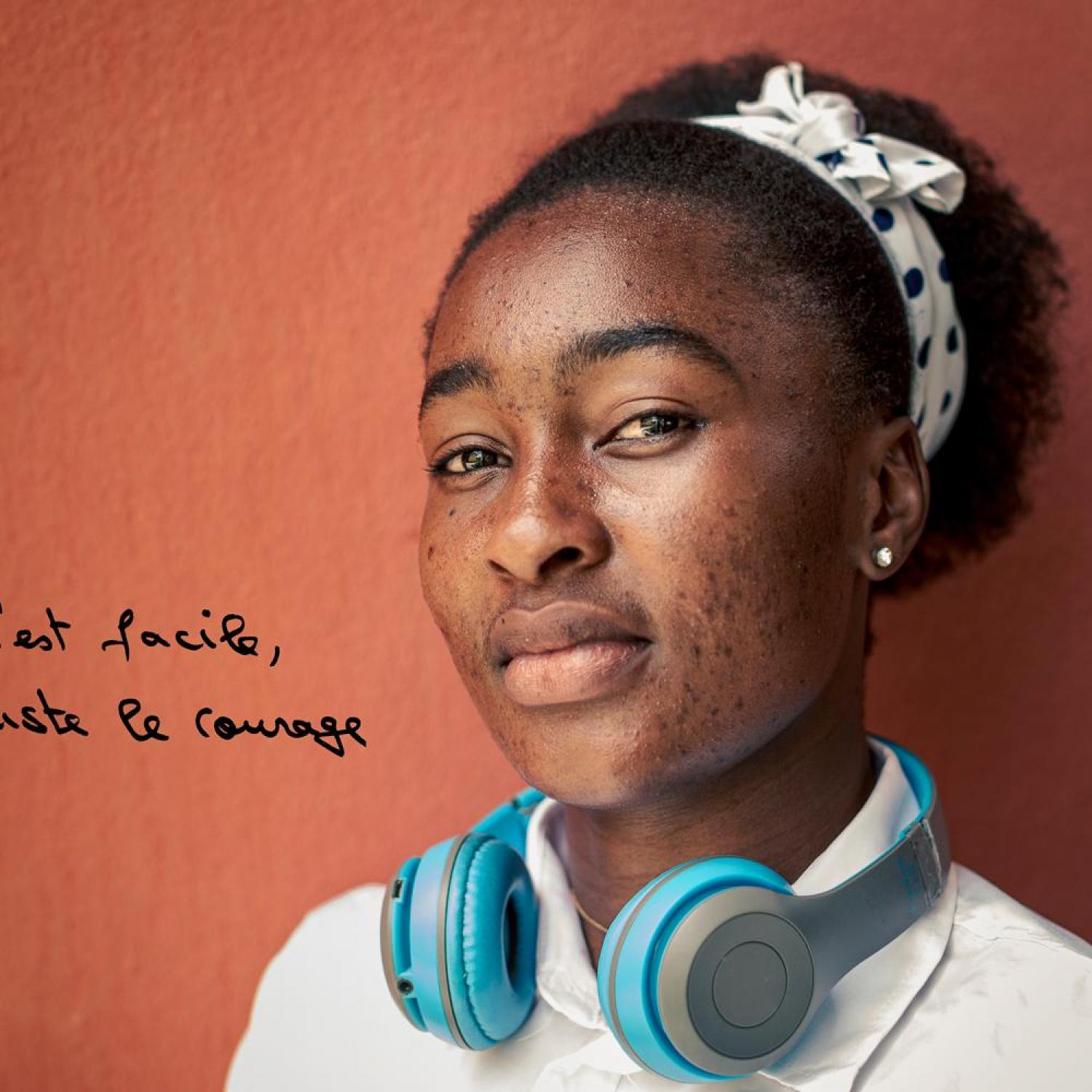
N’Djaména, Chad, March 2021 Raïssa, 23, from the Central African Republic, is a third-year student of Communications and Marketing. She is the single mother of a four-year old boy. Raïssa lost her mother when she was three. Her father, an alcoholic with a history of abuse, was not in a position to raise her and her five siblings. The children were left in the care of an aunt, who mistreated them. “I was constantly telling myself: you must do whatever it takes to succeed. I was always told that I was bright. I didn’t want us to drop out of school. For a long time, I had resentment in my heart but today I am free. I have forgiven.” In May 2013, Raïssa fled her country with an older sister and her family. She was 16 and was just about to graduate from middle school. The family settled in N'Djamena. “My pregnancy was a very difficult time. Yet, I managed to complete that year. I gave birth in September and had to stay home for one year. The following year, I went back to school. Eventually, I moved out and stayed by myself in a one-bedroom house with no electricity nor water. Life was tough. I had to pay a lot of attention in class because homework was barely an option. Eventually, I did obtain my Baccalaureate. I never gave up. You know, in life, nothing is easy. It is all about courage.” In 2017, Raïssa obtained the DAFI scholarship. “I was so happy. I had tears in my eyes. Today, my son goes to school; I go to university. It is just the two of us and we keep going. We are fine.”
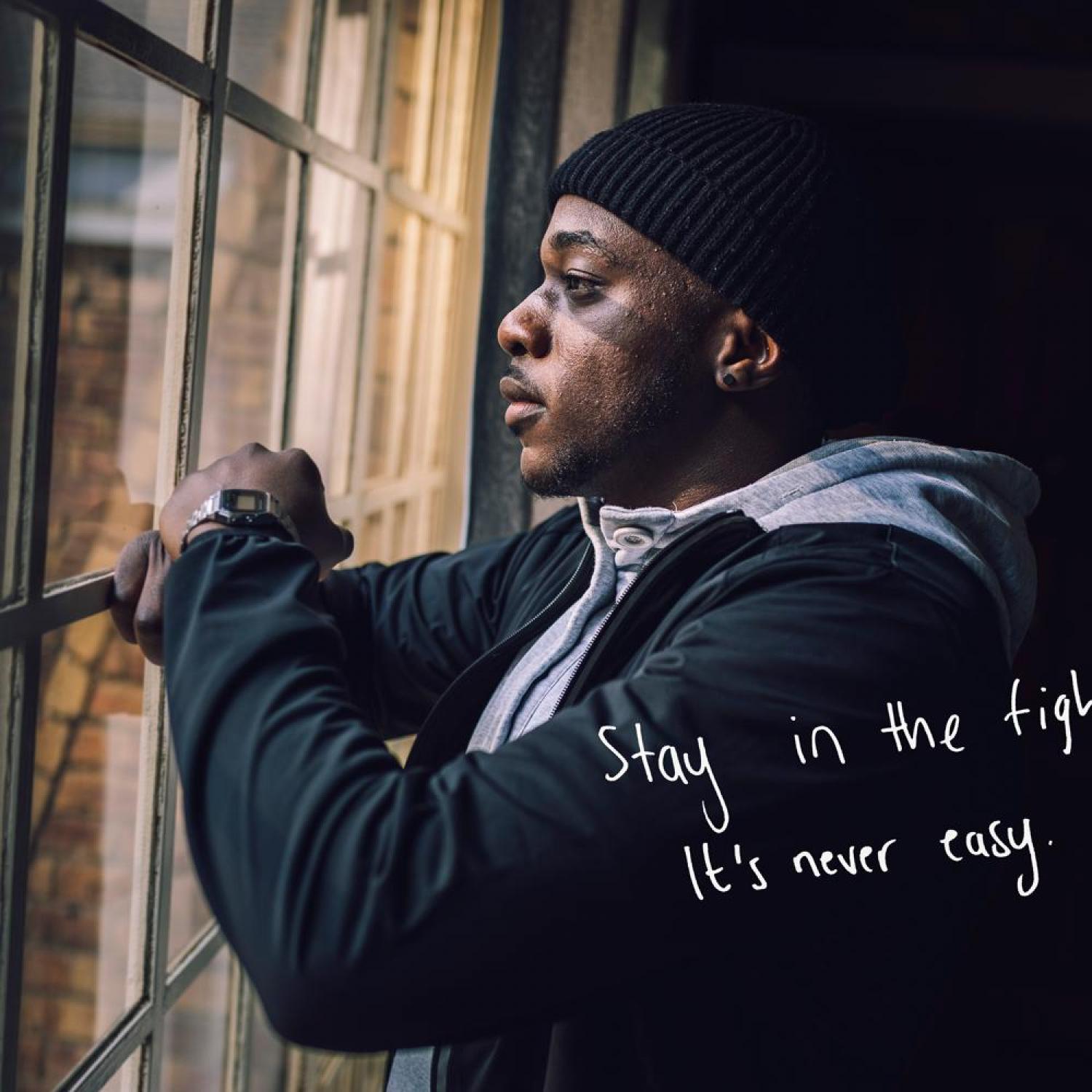
Johannesburg, South Africa, June 2024 Aristote, 22, from Mbujimayi, DRC, came to South Africa with his family at the age of 5. “I’ve done all my education here, starting from pre-school.” “Since Grade 10, I wanted to study engineering. In physics class, I fell in love with the electricity lessons. I am happy about the choice I made. I am enjoying it. I am learning more about myself because it is very challenging. Coming into university, I had never failed any of my classes. But here, you are definitely tested. You study so hard and you only get a 50% mark. So I did face my first failure here at university and was able to bounce back.” “I learned about DAFI through friends. During my first year, I was struggling with finances. When I came out of high-school, I finished as the top achiever in my school. For my secondary education, I was actually part of a special programme, where the students are being nurtured and pushed. We had advanced lessons for instance. Through that programme, I got connected to a trust fund programme, which assisted me during my first year of university. However, it wasn’t much and I was still struggling, with transportation in particular, among other things. At the time, in spite of my grades, I did not get actual scholarships because I was a foreigner. But someone told me about DAFI and I applied. I prayed a lot to get it, which I did.” “It’s a fight. Stay in the fight. Continue persevering. It's not easy. Nothing's ever easy. Some people get something easily. Some people have to work for it. So you just have to.”
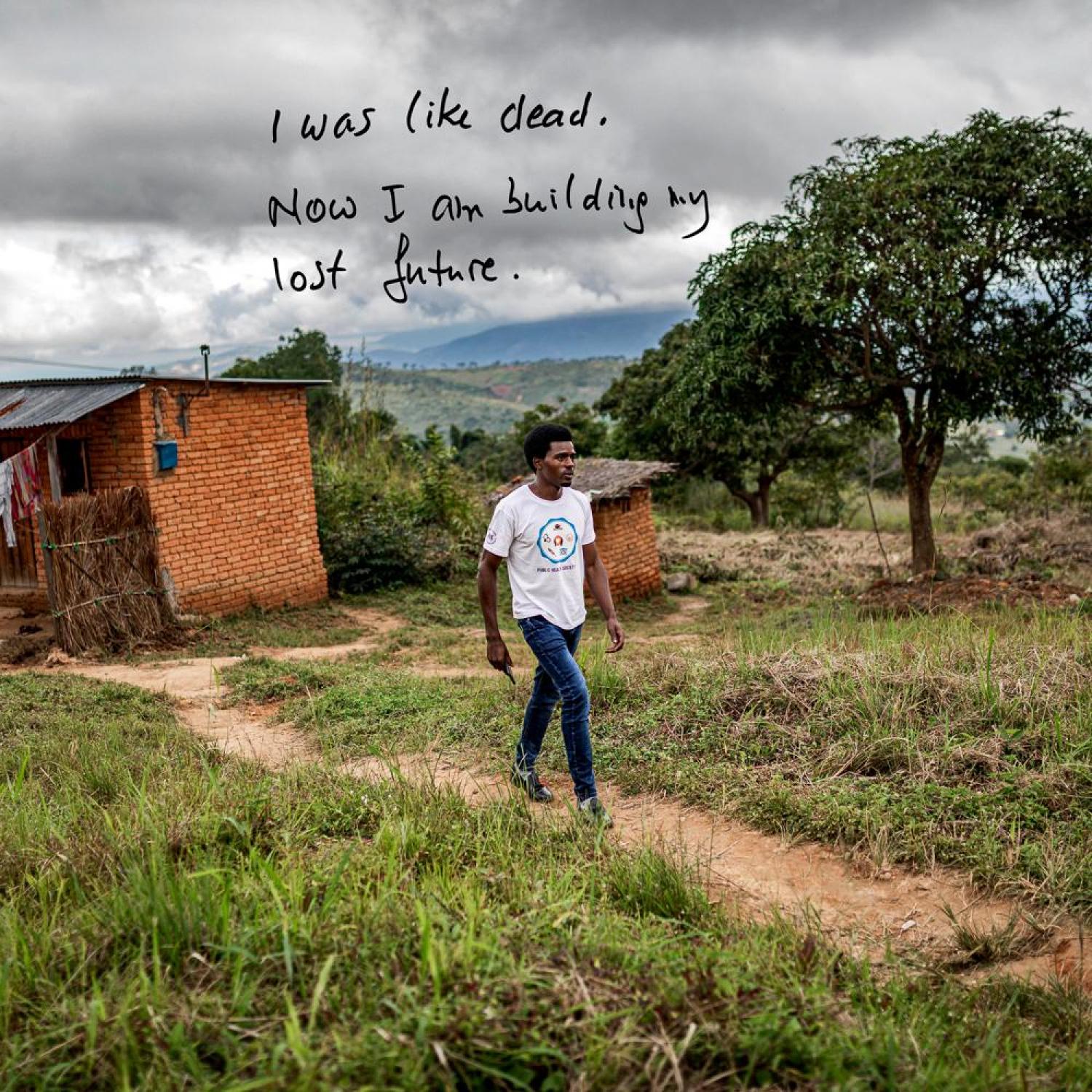
Livingstonia, Malawi, May 2021 Arsène is a second-year student in Public Health at the University of Livingstonia, in northern Malawi. He is one of the eight DAFI scholars currently enrolled there. In September 2016, when he and his brother were forcefully enlisted in the military back home, the two boys fled, seeking refuge first in Uganda and then Malawi. Arsène was eventually able to resume his education at the Form Four level (i.e. last year of secondary school) in Dzaleka Camp. After completing high school he was out of school for six months before applying for and being accepted to the DAFI scholarship programme. “I had lost hope in continuing my studies. Receiving the DAFI scholarship was like a miracle. I could not even imagine it. It is a great chance I have been given. I can’t waste it.” Arsène chose to enroll in a Public Health degree programme. “Helping people through health support had been on my mind for a while. What triggered my passion was seeing how people are being deprived of their fundamental rights, including myself. I told myself I would do my best to help prevent such abuse. Today, I am extremely happy about my choice. By accessing this knowledge, I trust that I will find ways to help people in my community. Before, I was like dead. I could not even imagine that I would have the chance to study. We don’t have to limit ourselves in how we think about the future. I want to tell everyone: ‘Go for any opportunity. Follow it. Go as far as you can. You never know where it will take you. Never give up in your life’. As for me, I am now building the future that I had lost.”
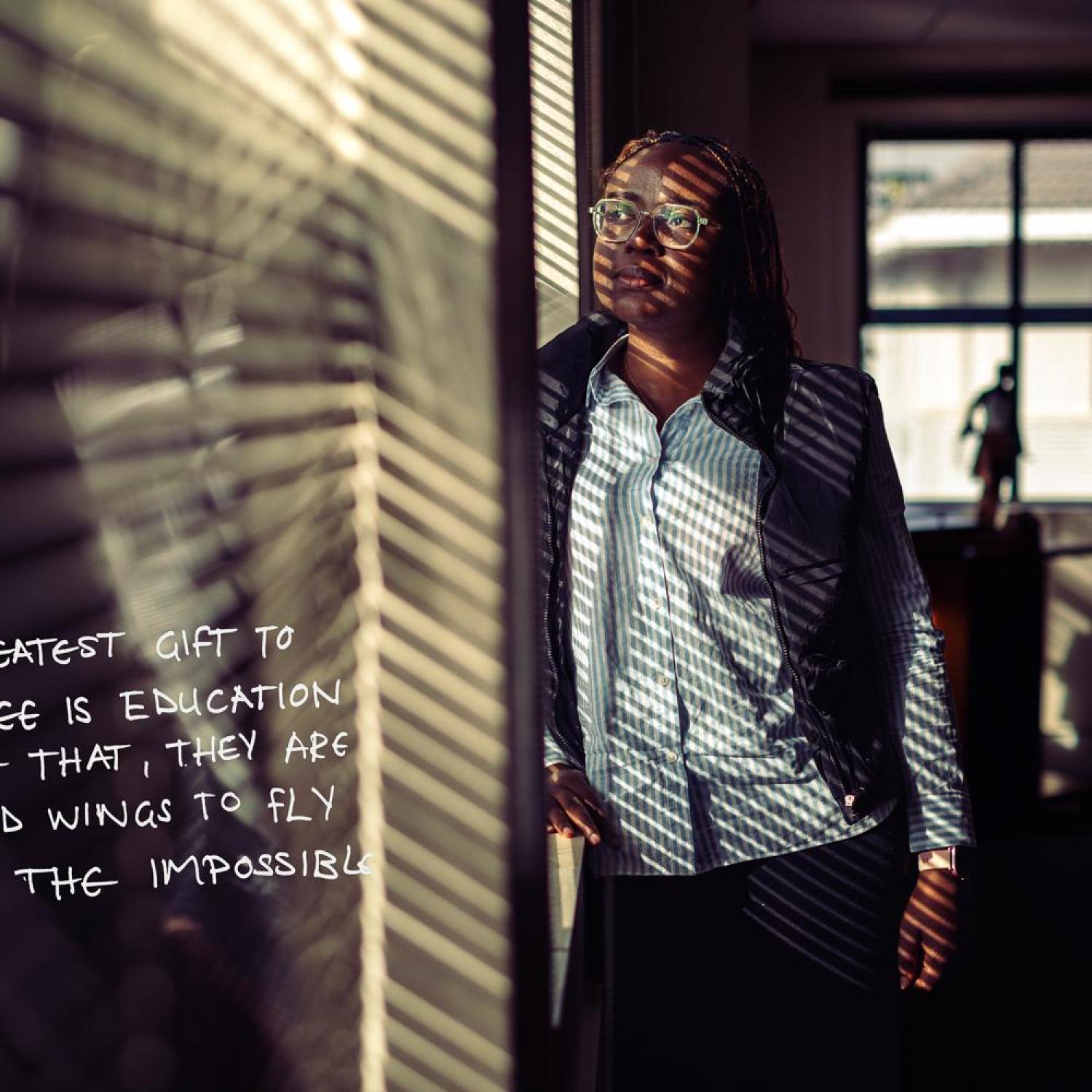
Johannesburg, South Africa, June 2024 Sarah, 28, from DRC, came to South Africa at the age of 7, with her family. “My parents were selling on the streets in order to generate income, just to send us to school and all that. At school, there was no such difference between South Africans and foreigners. As I grew up, I realized that things were not so simple. Living and growing up in a country that isn’t your own, you are never too certain of what is going to happen next. There is so much uncertainty and so much unfairness. That is limiting.” “Refugees generally do well because they have this extra-motivation. They know what they have to do and why. They have to go the extra mile because nothing is going to be granted to them otherwise.” “I chose to study anthropology at college without any guarantee that I would come out with a degree. In June 2016, I received the news that I was accepted in the DAFI scholarship programme!” “The scholarship meant everything. It was like I was in a tunnel and then suddenly there was light. It was the beginning of everything. Basically, I would say that my life started then. It felt like the hard work had paid off.” In March 2021, Sarah landed a job at the Mandela Institute for Development Studies (MINDS). “I read one day that refugees are people who cannot make it on their own, who need to be held by the hand. That really disturbed me. I actually think refugees who are granted opportunities grab them and make the best of them. So I just hope that we can really change that narrative and be seen as contributors to the economy.”
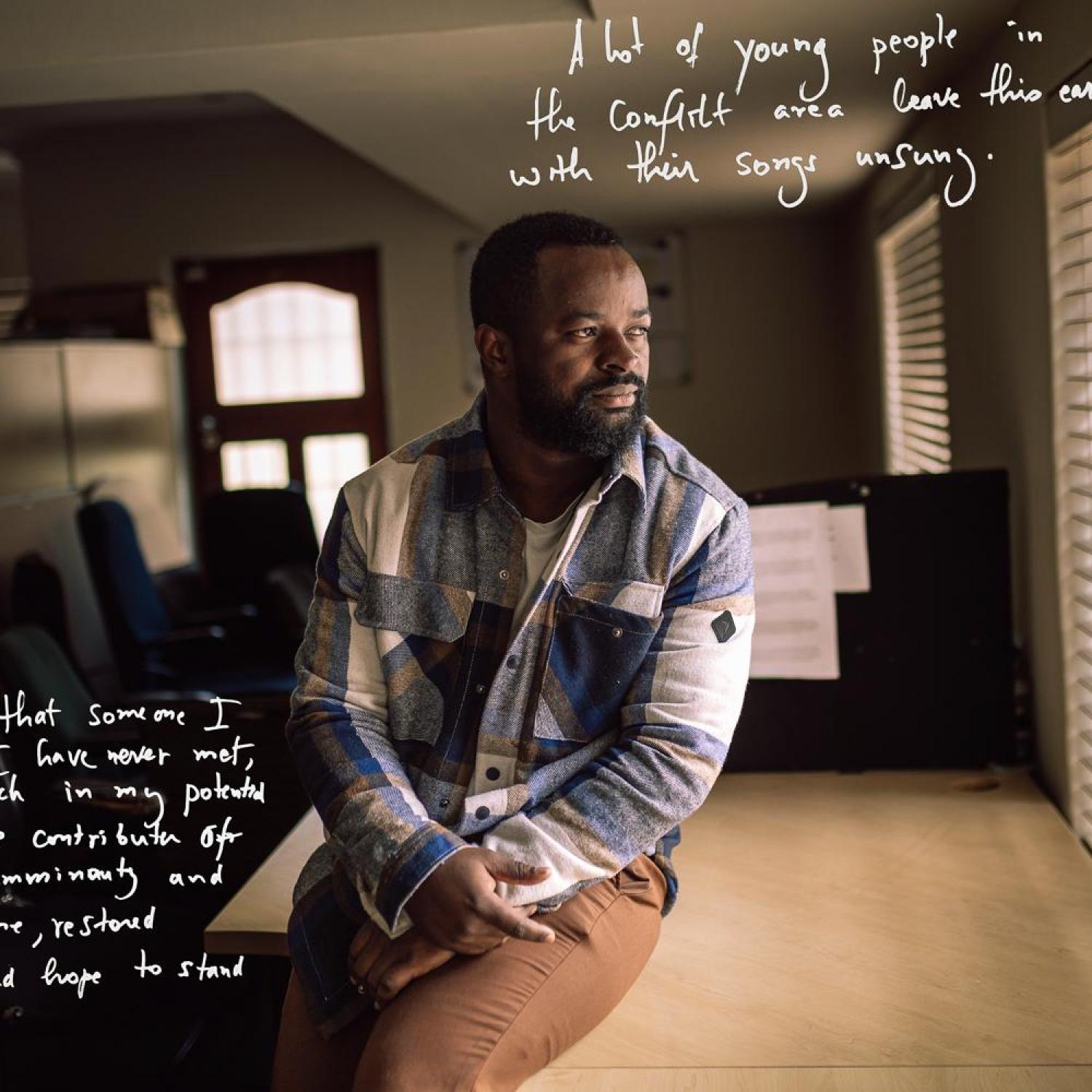
Johannesburg, South Africa, June 2024 Mashahuri, 29, fled North Kivu, DRC, in 2014, and came to South Africa by himself. “I had completed my secondary education and always knew that I wanted to continue my studies. But at that time, I really didn't see how. Nevertheless, I registered at university, in construction. I still didn’t know how I would pay for it but all I could do was to study, study, study.” “I was in survival mode back then. I studied the hardest I could. I remember sleeping on campus many times. I had fire in my belly. I knew where I was coming from, and I knew what was going to happen if I did not make it. I did not even have enough food. I was so hungry. But I never gave up. I didn't have a choice. All I wanted was just to be in a starting position so that I could at least survive.” In 2016, Mashahuri got accepted in the DAFI scholarship programme. “It caught me at my lowest. As a refugee, goodness is not what you expect from people. You don't really feel like you belong. But all of a sudden, for the very first time in my life, things were different. It was more than a relief, it was life-changing.” Mashahuri then moved on to a B.Tech and then to an Honours degree. Today, he works as Compliance Coordinator for DAFI. “As a refugee, living in a camp, if you give me food, it's fine, but you will have to give more because I will still be starving. So if you equip me, if you empower me in a way that I can look after myself, not only will I be able sustain myself, but I will also take from you the burden of helping others.”
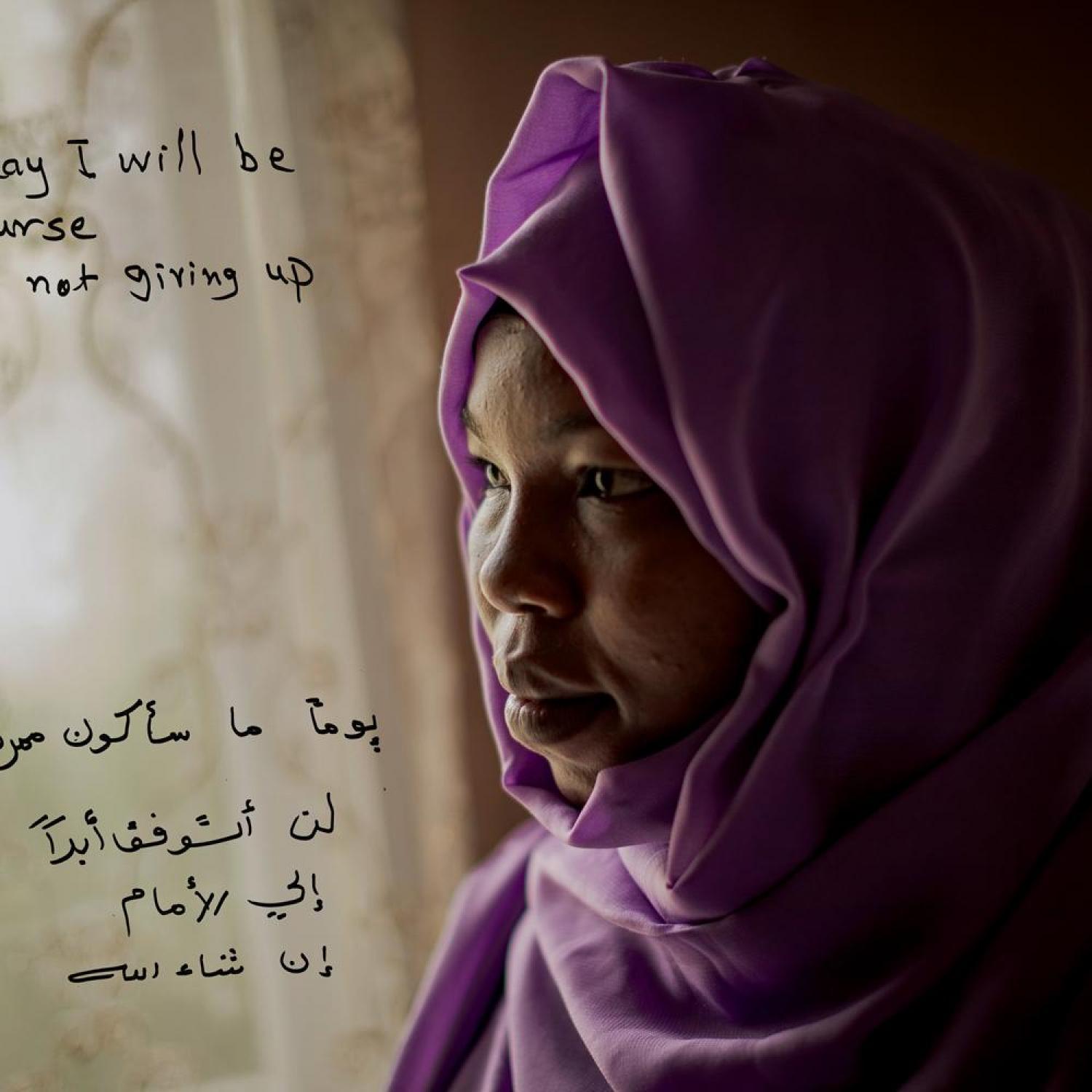
N’Djaména, Chad, March 2021 Firdos, 25, fled Darfur, Sudan, in 2003, at the age of seven, with her parents and her three siblings (two sisters and one brother). They settled across the border, in Iridimi refugee camp, where Firdos pursued her primary education. From 2007 to 2009, Firdos was already teaching evening classes for adults. In 2010, using the money she had been able to save, she went back to Sudan in order to obtain her native country’s Basic Education Certificate. Firdos eventually graduated from secondary school in 2014. The following three years, she worked in the camp as a teacher in the morning (primary level) and attended secondary school in the afternoon (following the Chadian curriculum, given that it had then been made available in the camp). In parallel, she also attended courses at the Ecole Normale Supérieure of Abéché for three months every year. “From the beginning, my mother was aware of the value of education, especially for girls, but my father was not. My mother is the one who was pushing for me to keep studying. It is not until I graduated from high school in Sudan and started teaching in the camp that my dad changed his mind. He would start saying things like: “This is my girl! You are a better person now. Education is very important.” From that point onwards, he has supported me.” In 2017, after a first failed attempt the year before, Firdos eventually graduated from high school with a Chadian Baccalaureate degree, and subsequently obtained the DAFI scholarship. “Studying nursing was my dream. There is a great lack of health professionals in our community. I want to contribute as much as I can. I am also responsible for my family now.”
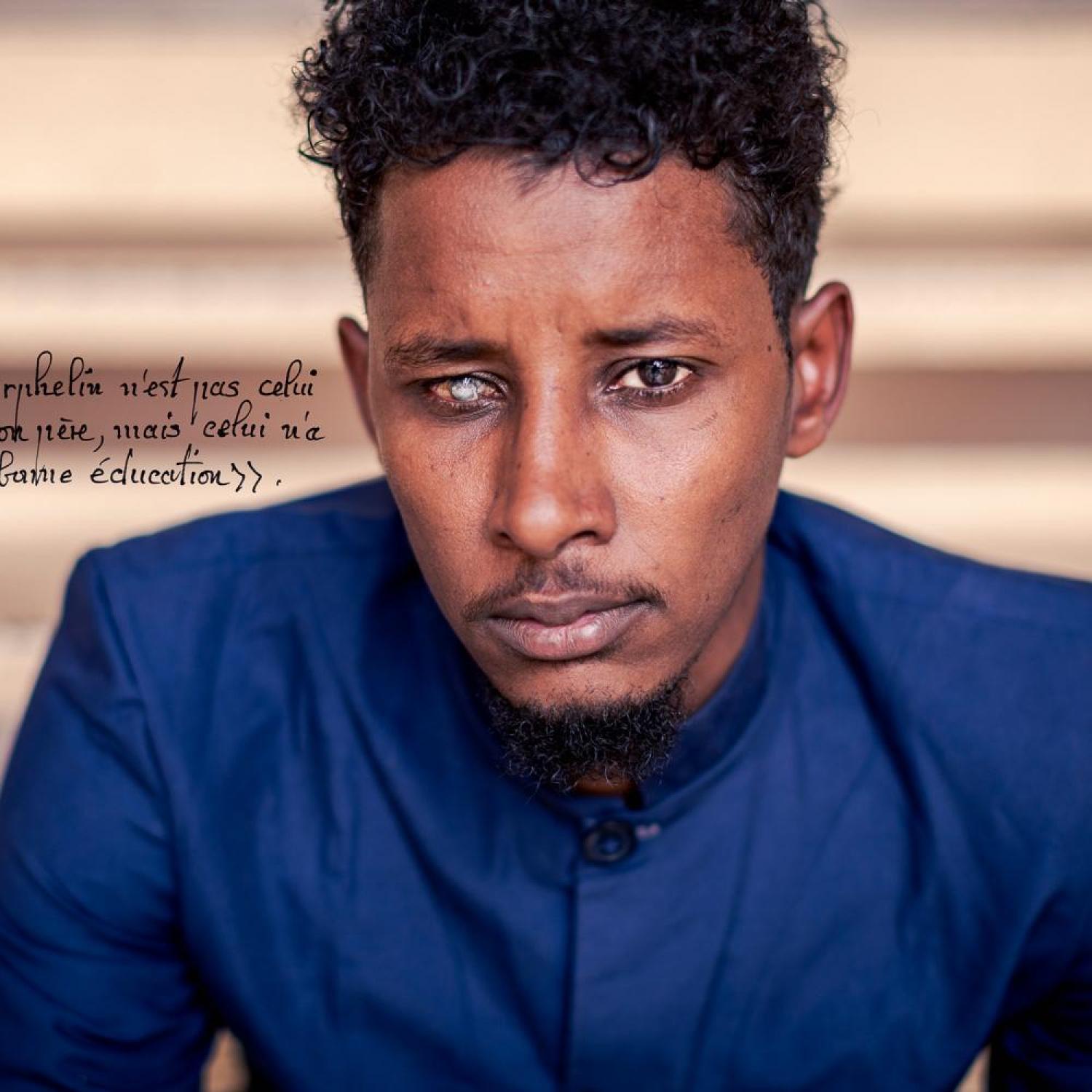
N’Djaména, Chad, March 2021 Mahamat, 23, is a student in N'Djamena, Chad pursuing a dual degree in Education Sciences at Emi Koussi University and Sociology at HEC Tchad. He obtained the DAFI scholarship in 2018. In 2003, Mahamat was only five years old when his family fled the Central African Republic to seek refuge in Southern Chad. The family eventually settled in Amboko camp. About a year after their arrival, Mahamat injured himself with a knife leaving him blind in the right eye. In 2018, an infection partially damaged his left eye, further diminishing his vision. Despite these challenges, Mahamat worked his way through primary and secondary school, performing and progressing until he was ready for college. Now a DAFI scholar, he lives in the capital city N'Djamena, pursuing a dual degree in Education Sciences at Emi Koussi University and Sociology at HEC Tchad. Mahamat’s ambition is to specialize in Special Education so that he can support people living with disabilities and improve their standing in society. “People living with disabilities are often marginalized; they are not valued as much as other people. However, they are just as capable as anybody else and should not be pushed to the side lines.”
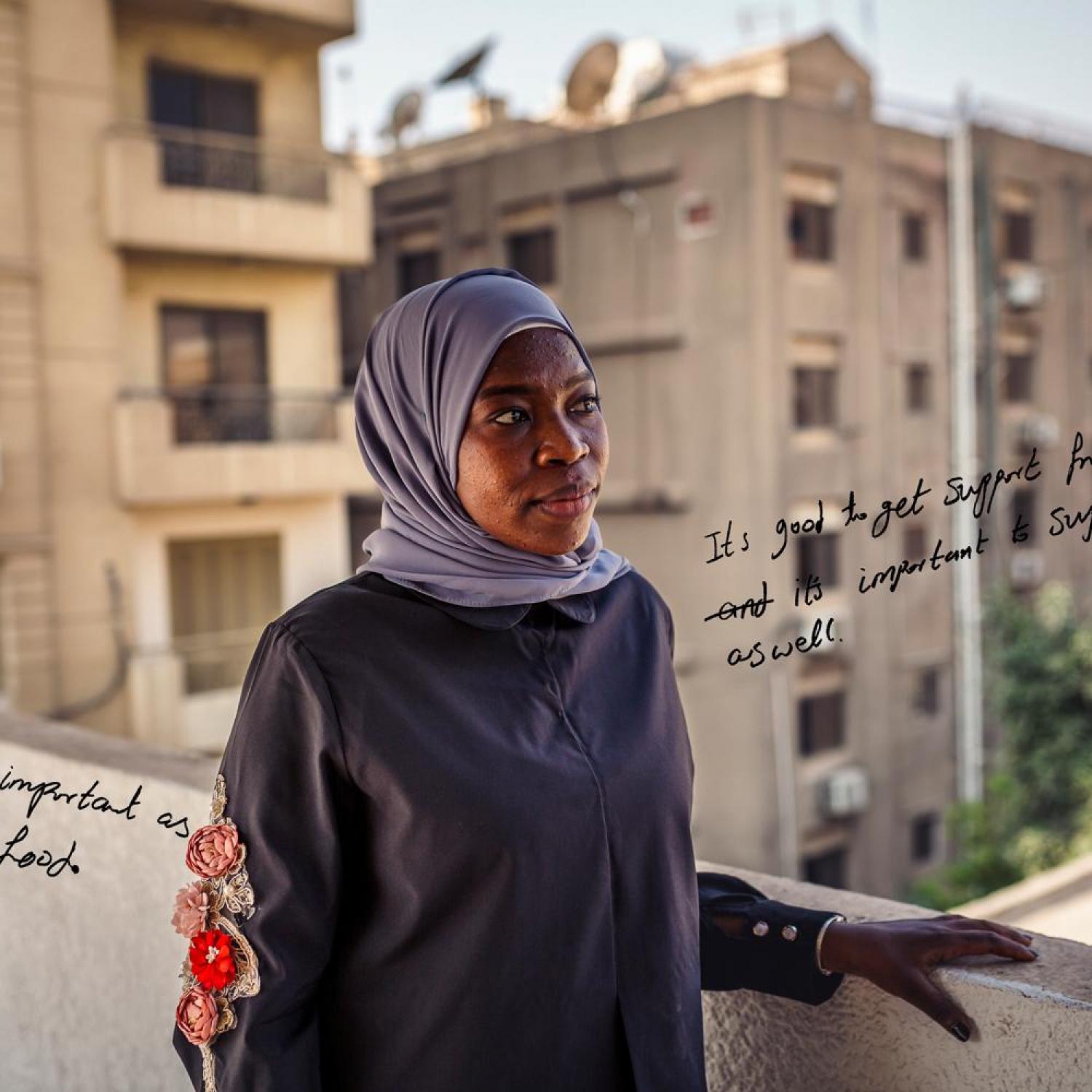
Cairo, Egypt, November 2021 Najwa, 25, and her family came to Egypt in 2000. She was 4. “I actually feel more Egyptian than Sudanese.” Najwa has two younger brothers who are both studying.“Our parents support us a lot. They are fully convinced that education is life-changing. It elevates you and allows you to have a better life. It also makes you a better person in the way you deal with others. In my case, education has enlightened me. It has taught me how to deal with the diversity of people we meet in our society. I have also witnessed first-hand of difficult life can be for people who are uneducated. Education is just as important as water and food.” “I applied for DAFI on the very last day of the application process, back in 2016, and got accepted. It was mind-blowing! I can’t even explain how happy I was.” She enrolled in a BA of Biochemistry at Cairo University. “Without DAFI, I would not have been able to pursue my studies at the undergraduate level. I would be a more closed and introverted person. I feel like I would be less valued in life. I would have less courage and confidence.” “I’ve learned that it is good to receive support from others but it needs to come in combination with helping yourself.” “My message is: do good and good will come to you. This is my favorite quote. Never give up. Things will go tough; things will go rough. But persevere and at the end, your life will be enlightened. The only light through darkness is education.”
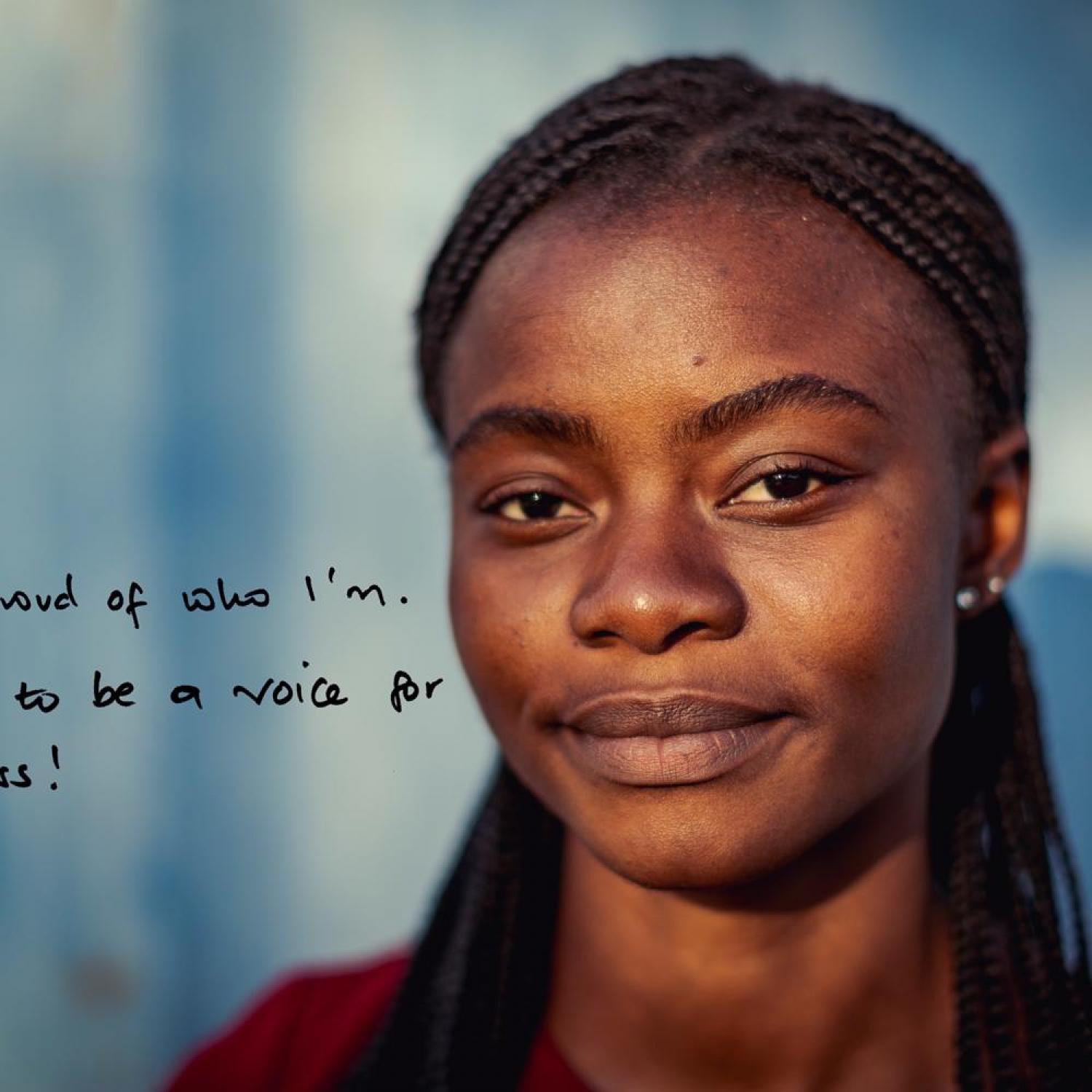
Lusaka, Zambia, May 2021 Noëlla, 25, was born in the DRC. In 2003, she fled her country with an aunt and settled in Lusaka, Zambia. From the age of 13, after her caregiver passed away, Noëlla has lived with her cousins in a child-headed household, up until today. After graduating from high school in 2014, Noëlla stayed home for the most part of 2015 and 2016, doing her best to generate some income through odd jobs. “It was just to be able to put food on the table of keep us going. I was so determined, knowing that there would be a better tomorrow. I was optimistic and go-oriented. I also decided to keep good company around me. I had to stay positive, although it was challenging.” In 2017, she applied for the DAFI programme and was awarded a three-year scholarship. Her long-time ambition has been to address the negative narrative surrounding refugees. “I picked journalism and communications because growing up, I have always had the mentality and the ambition of representing people. I want to be a voice for the voiceless. People might have a bad perception about refugees, but this is just a status. We are all equals as human beings.” She hopes to shed a positive light on the lives of refugees and empower youth, believing that “behind a refugee is a father, a mother and a young person who is able to contribute to the welfare of their communities, and they should not be looked down on or discriminated against.” “I am proud of who I am and where I come from. It is important for one to know their roots. That is one thing I have been deprived of and I strive every day to live with it, although it has always generated some anxiety.”
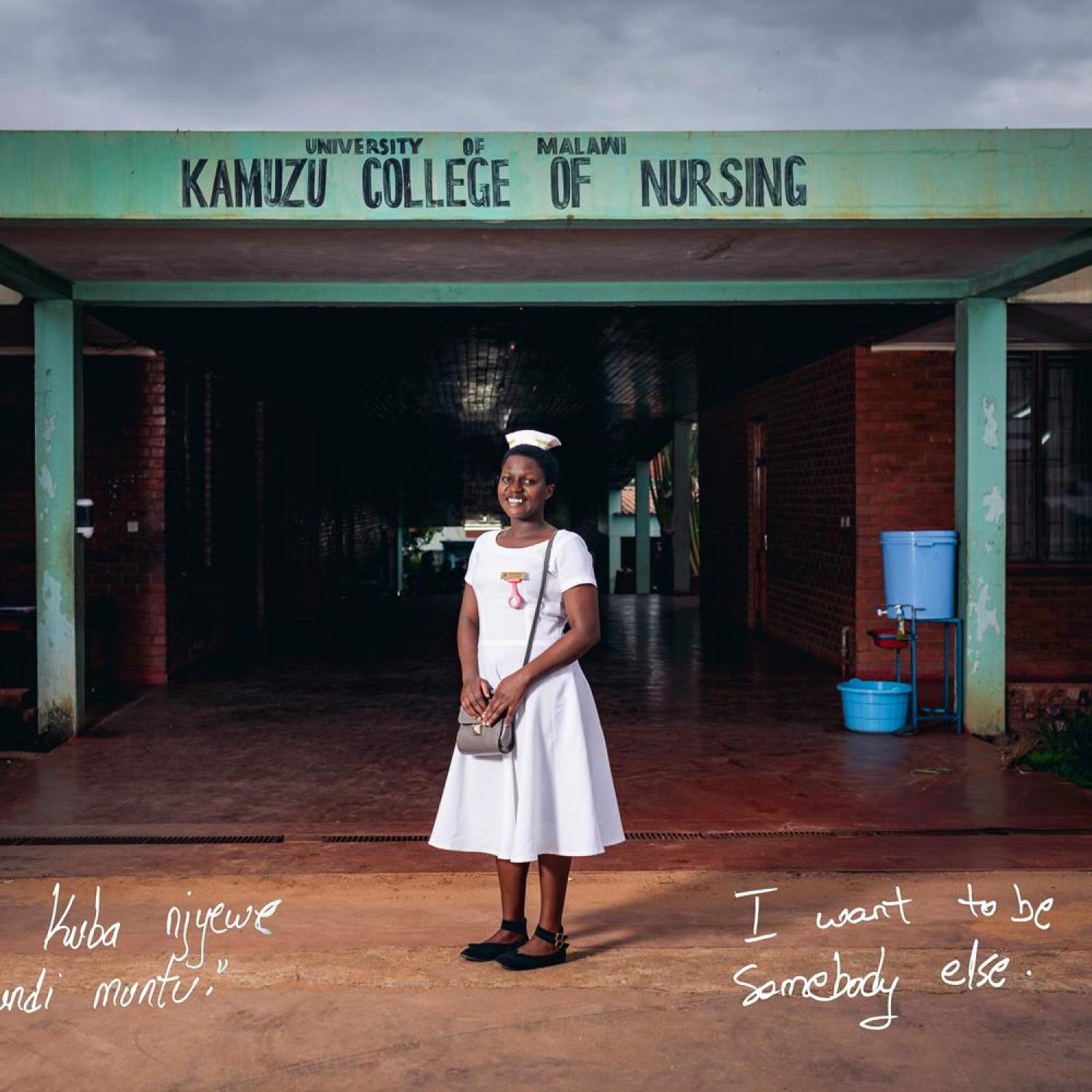
Lilongwe, Malawi, May 2021 Leah, 21, was born in Tanzania in 1999 after her family fled the genocide in Rwanda. She grew up in Dzaleka camp, in Malawi. “It had always been my dream to work in the medical field. As a toddler, I suffered from malnutrition and almost did not survive. The nurses and doctors who took care of me are the reason why I am still alive today, and I told myself that other children would also survive thanks to my help.” “It was not easy at all but I completed my studies nonetheless, and ranked number one in our school. After that I remained home for two years, with no opportunity or possibility to continue my education. When I got accepted into the DAFI scholarship programme in 2019 I was so relieved and thankful. I was excited to start a new life at university. My door to success had finally opened.” “Without education, I would be meaningless, powerless; I would be someone with no identity in the community. My ambition is to help my fellow refugees and everyone who is outcast or in need of assistance. I want to speak for those who are speechless, to advocate for the needy. My message to them is that having a very painful life story does not mean that it is the end. People can still make it, can still reach their dreams through hard work and through putting their whole spirit into what they want to achieve.” “Eventually, I wish to be myself, not someone else. I am confident and I try to be a role model for younger girls back in the camp.”
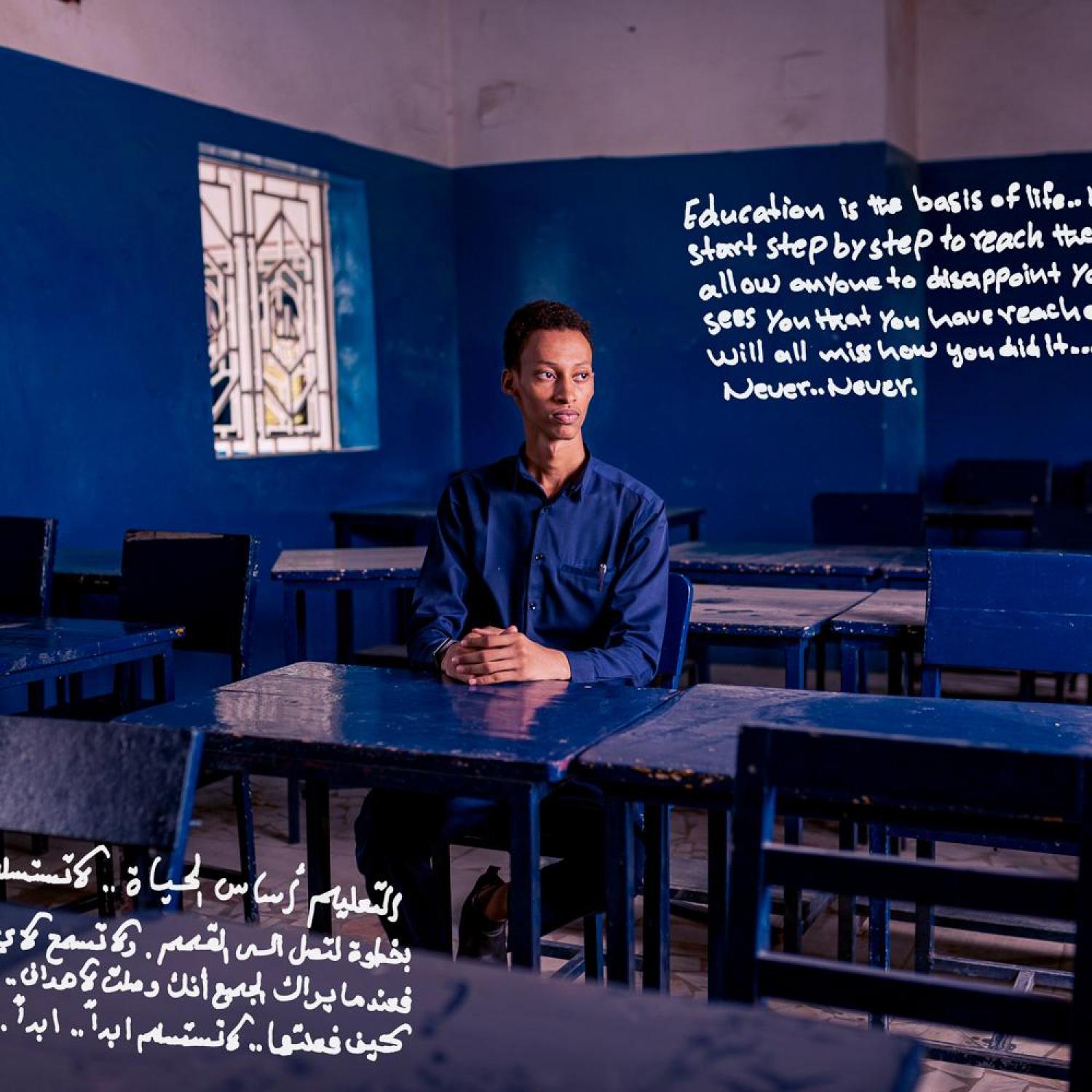
N’Djaména, Chad, March 2021 Mohammed, 21, fled Yemen with his mother and siblings in 2015, making their way to Chad through Oman and Sudan. His father and older brother remained in Yemen. When the family left, Mohammed had already completed his second year of high school. Upon their arrival in N'Djamena, he stayed out of school for one year. His mother was selling cakes for a living. Eventually, Mohammed joined the Sudanese-Chadian Friendship School where he graduated with his Baccalaureate in 2019, improving his level of Chadian Arabic through his friends at school. That year, Mohammed obtained the DAFI scholarship. “I was so happy to get it. My sisters and I were staying at home a lot. We didn’t have money to cover for our studies.” With his scholarship, Mohammed has been supporting his older sister to attend college. She is a third-year student in IT at King Faisal University. “I didn’t want to sit a home, being idle.” Once he graduates, Mohammed would like to pursue a Master’s in accounting. “I have various business ideas in mind that would allow me to support my family. At school, my friends call me ‘The Accountant’ because I like it and I’m good at it.” “Never give up in life. Go to school; learn more to become somebody. If you don’t, you won’t achieve much.”
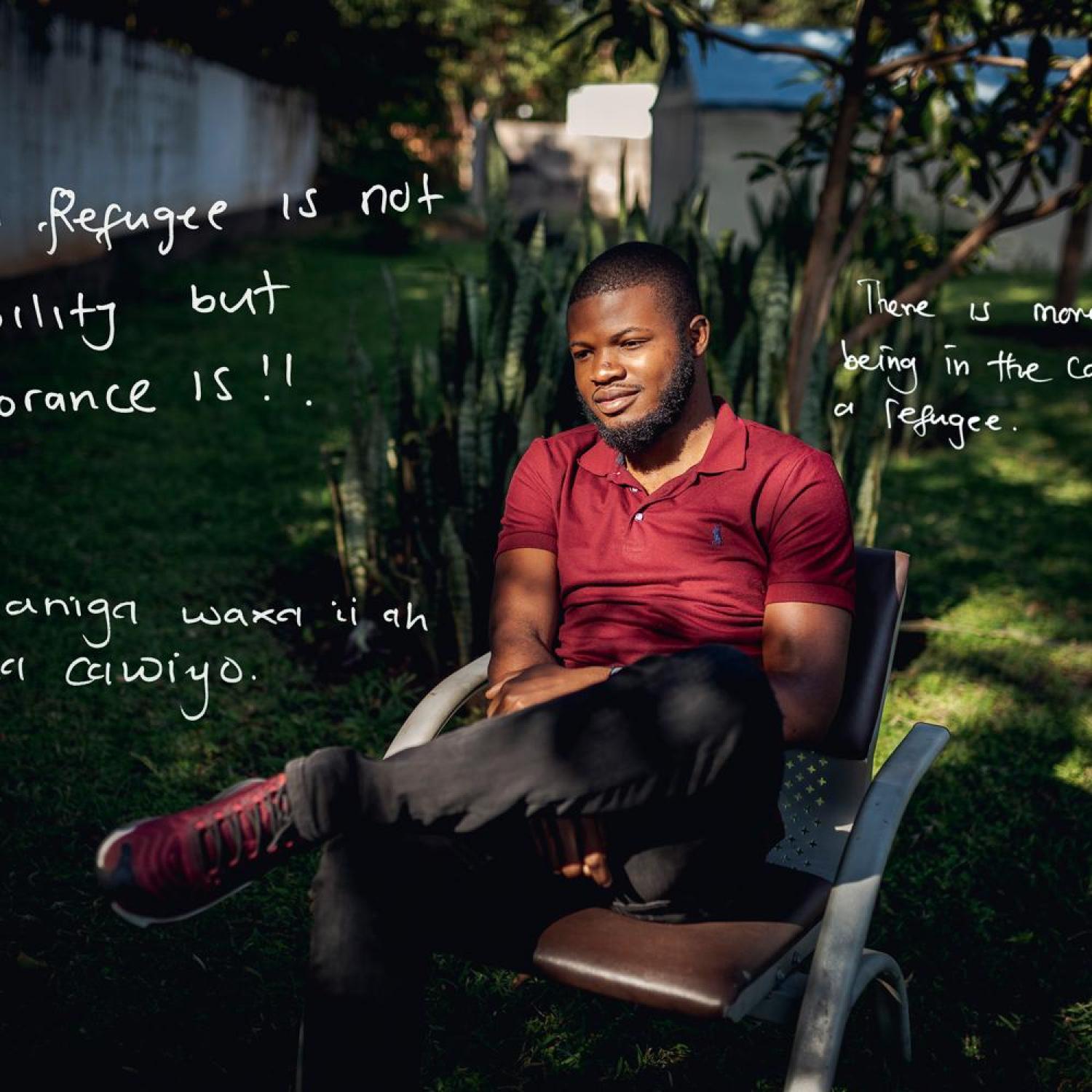
Lusaka, Zambia, May 2021 Louis, 21, was born and raised in Meheba refugee settlement, in Zambia, to Congolese parents. “In the camp, there is that phenomenon whereby students who graduate do not go anywhere, so it demotivates the others. There is that mentality that going to school in Zambia as a refugee is not going to make a big difference.” “Through my work in the camp, being exposed to social issues a lot, I realized how important it is to go to university as a refugee. I broke away from friends who were demotivating me. I decided to get onto a new path, my own one.” In June 2017, Louis was accepted in the DAFI scholarship programme. “I was very, very excited. I was finally coming out of a circle I had been in my whole life! I would finally do something different. I was the only DAFI scholar from the camp that year and the only one from my family to ever make it to university.” “Along with other DAFI scholars, we do sensitization work in the camps. We tell the youth what it is like to go to university. In the camps, people lack direction. Their mindset is closed. They think they are bound to being only refugees. University education allows you to clear up your path and understand that there is more to life than that. I want to be an example for others, or an inspiration even.” “Today, I am a changed person. Through university, I have gained confidence and knowledge. My future has opened up. I have made new friends and new experiences. I have learned that there is more in life than being a refugee and being in a camp. Now I will get to chose whatever I want to do.”
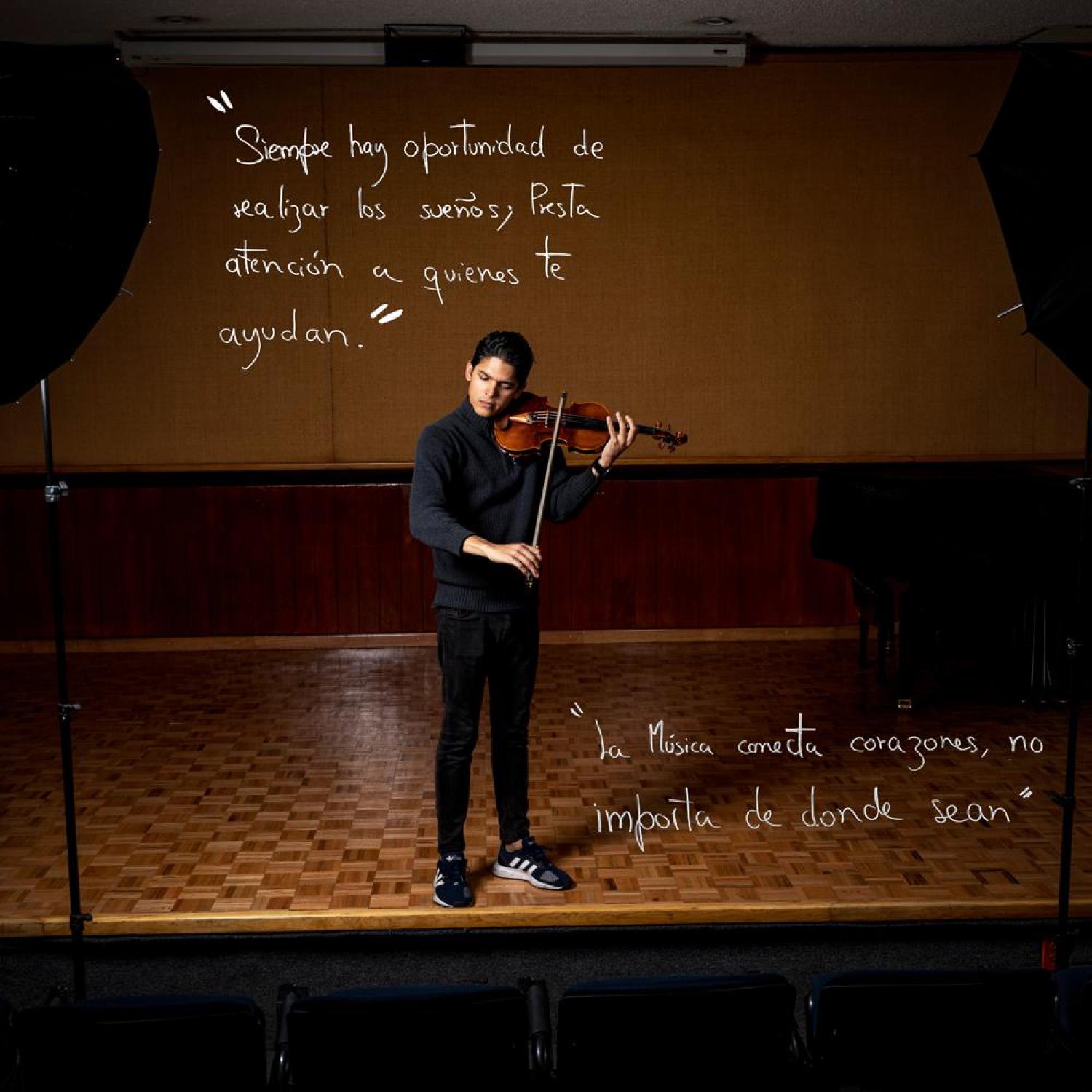
Mexico City, Mexico, September 2022 Sayd, 27, from Venezuela, came to Mexico in 2018. He is a first‑year student of Music at the National Autonomous University of Mexico. After leaving Venezuela alone with his violin, Sayd arrived in Mexico and immediately began searching for ways to resume his musical studies. “Music can be a therapy. It can also connect hearts and nations. It is a universal language.” “Getting the DAFI scholarship, in particular, was a great relief. It gave me the support and the tranquility I need to be able to concentrate on my studies and dedicate time to my instrument. Before, I had to do manual jobs to earn some money, which was harming my hands. I was constantly thinking of how I could dedicate more time and energy to my music career. I was always asking myself: How am I going to do all what it takes to become a professional musician? How will I be able to put in all the effort and dedication if I don't have the necessary time?. Now, thankfully, my mind is more at peace.” “I am fully committed to my career as a musician, it is what I have set for myself. I was always ready to make sacrifices and to find ways to pursue it, regardless of the circumstances.” “Mexico is a very hospitable country. Most people are welcoming and warm-hearted. This country and this school offer me so many opportunities; I feel grateful. It is also very multicultural as a nation and I have never experienced any discrimination so far.” “I feel extremely privileged to have been given such opportunities. I see so many people who do not get the chance to do what they want, or what they love, in life. They are limited in so many ways.”
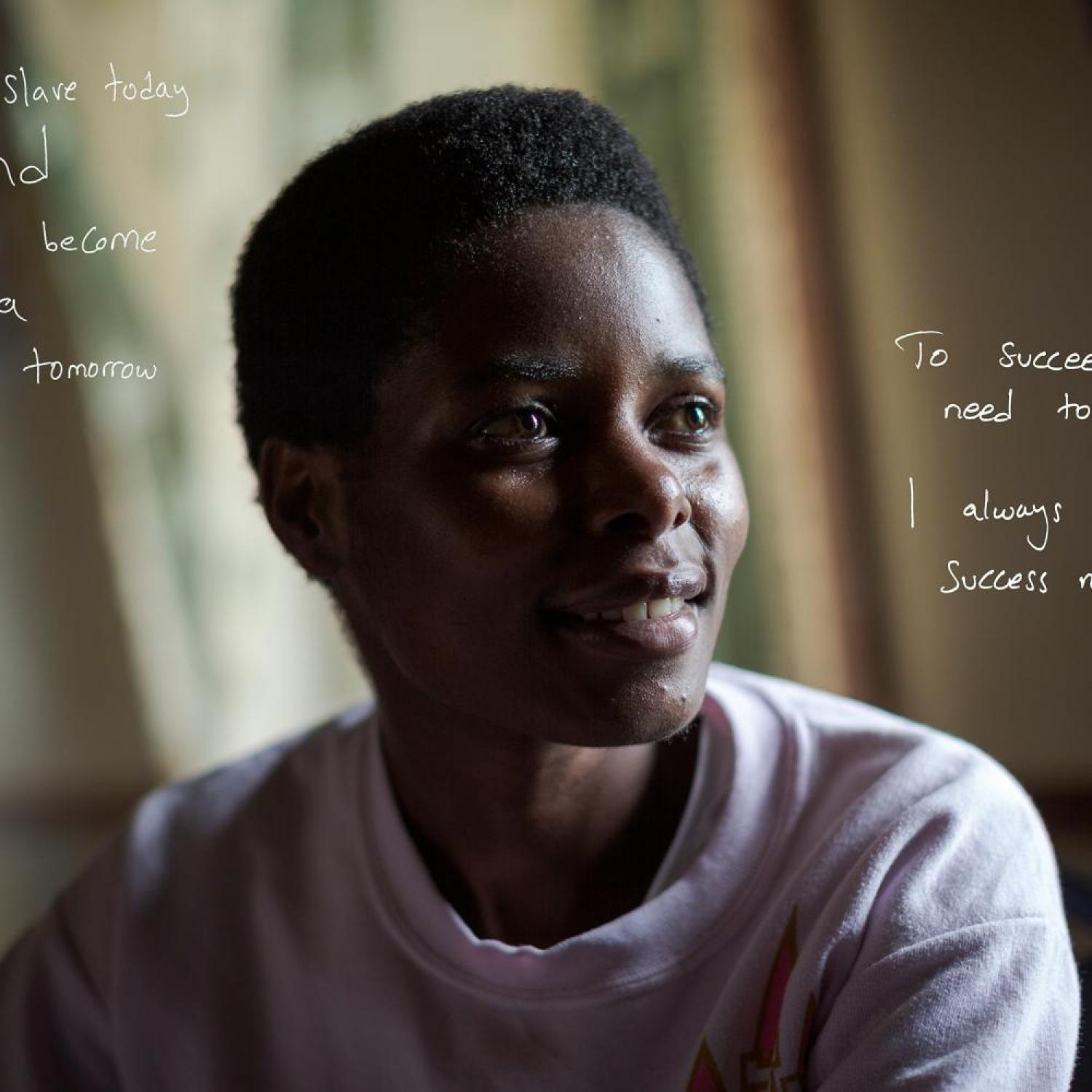
Livingstonia, Malawi, May 2021 Adonette, 21, was born in Tanzania from a Rwandan mother and a Burundian father who both lived in exile. In 2002, the family had to flee again to Malawi and settled in Dzaleka camp. Adonette was four. “In the camp, life was really hard. We had no relatives nor support system there. We lived off of farming. As the oldest, I was been looked upon by my siblings, so I had to be exemplary. I had to work hand in hand with my parents so that we could all have something to eat at the end of the day.” “One day, I learned about the DAFI scholarship and I applied. It was my last hope; it had to work. I was telling myself: this time around I’ll be picked and I’m leaving for school. To my surprise, it happened! My heart was full of joy. I could not even express how I felt. When you wait for something for that long and you hope so much that you will get it, when it comes, you know… I had been through a lot. I swear it was like a miracle.” Adonette’s initial choice was Public Health but she was given Food Security and Nutrition. “Actually, I liked it because I was used to cooking a lot when I was younger, and I enjoy it. It is a good degree because it aims at reducing malnutrition in the community.” “It will be hard for me, as a refugee, to get a job here in Malawi. But this cannot all be for nothing. All the efforts I’ve made; all the time I’ve spent in school, it has to count for something. All those struggles, all those issues I had to overcome, I will get a reward somehow.”
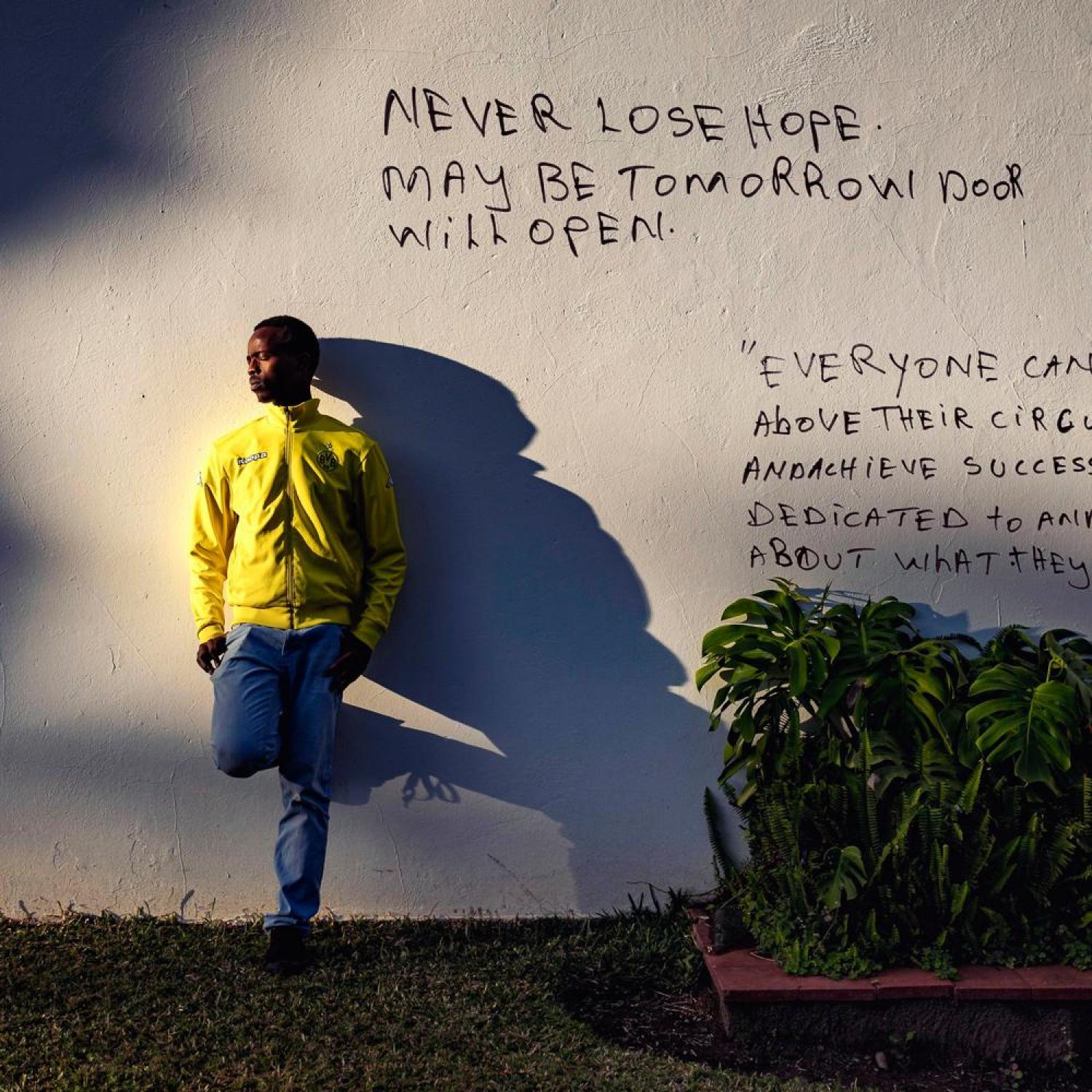
Lusaka, Zambia, May 2021 At age 13, Mandela lost his entire family to the conflict in Kivu, DRC. He was rescued by a friend of his father and eventually made it to Zambia on his own, ending up in Mayukwayukwa settlement. There, Mandela managed to resume his education. The following year, he moved to the capital city Lusaka where he completed high-school. He then had no prospect of attending university for nearly four years, and worked small jobs to make ends meet. “I didn’t have a choice. I had to follow my own path.” In 2017, he applied for the DAFI scholarship. A few weeks later, while at work in an auto repair shop, his phone rang. “You are in,” a voice said. Mandela was euphoric. “I immediately came down on my knees and started praying. I am going back to school, I thought! It meant so much to me. It showed me that one should never lose hope in life. A door can open at any time. Patience is key.” Mandela enrolled in Computer Science at Cavendish University. “My dream was coming true. It was real. The moment I got this chance, I thought: whatever it takes, I will do everything to see it through.” “When you have been given an opportunity, it makes sense to help others. I know there are so many people out there with so many needs and very little hope. I have been through this kind of situation when hope was the hardest thing to feel. But along the way, I met people who opened their doors, shared their hope with me and made me to believe that as long as there are people available to contribute towards someone else’s needs, hope will always be there.”
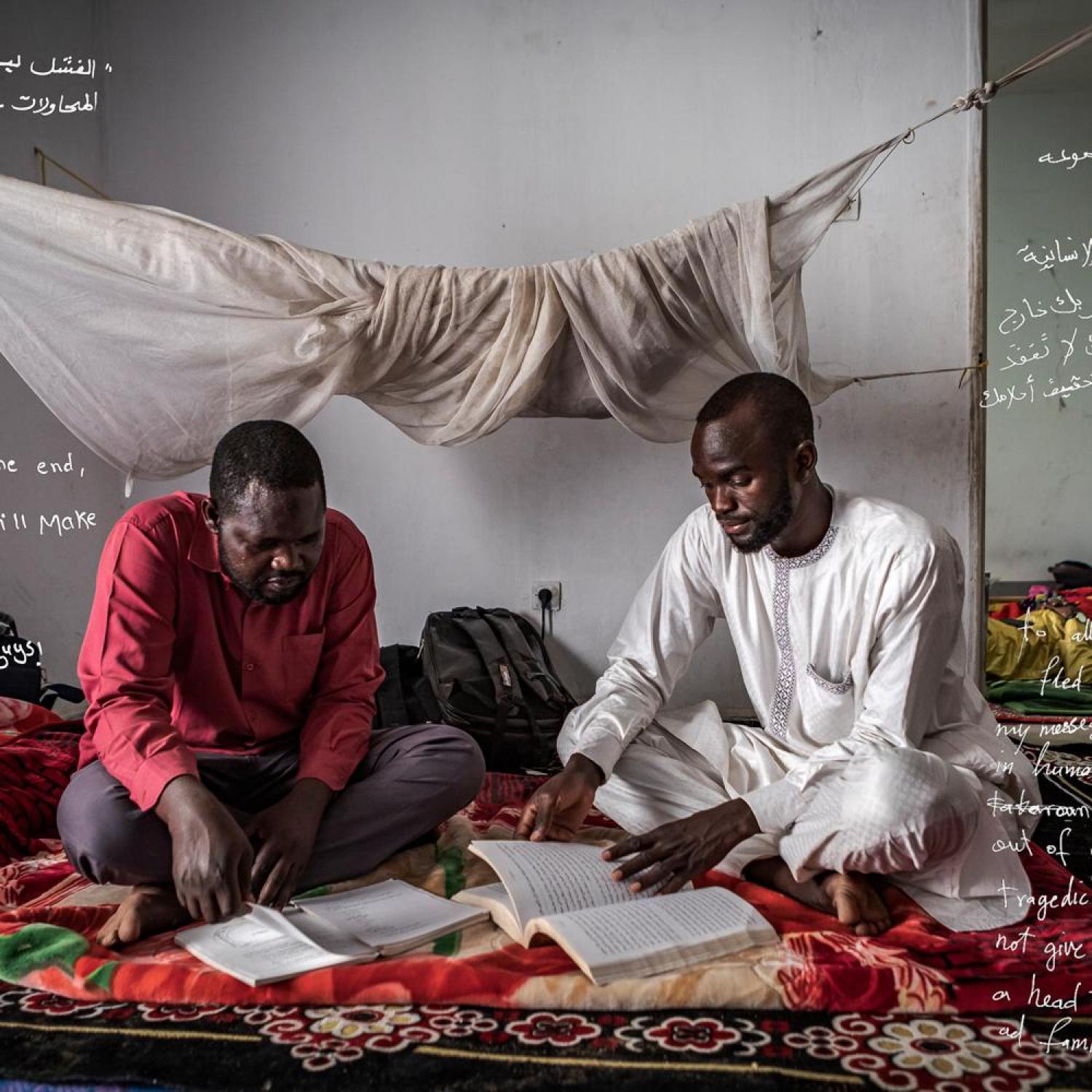
N’Djaména, Chad, March 2021 Mohamed (31, left) and Atteib (20, right) are roommates, sharing a home with other students. Both are originally from Darfur and were forced to flee in 2003 when the conflict erupted. Atteib’s family settled in Treguine refugee camp, while Mohamed’s found refuge in Djabal camp. Their education was repeatedly disrupted as they navigated between Sudanese and Chadian school systems, as well as parallel certification schemes, encountering numerous obstacles along the way. With higher education initially out of reach, both worked as teachers in their respective camps, responding to an acute need for education. Atteib reflects: “From a young age, I realized how important education is. Teaching children is one of the things I love most.” In 2012, the first DAFI scholarship call was announced in Chad. Mohamed applied and was selected. “DAFI has truly changed my life,” he says. “Even if I had eventually made it to university on my own, the experience would not have been the same—and I would not have been able to support my family back home.” Atteib followed in his footsteps and received a DAFI scholarship in 2017. In November 2020, Mohamed began a Master’s programme in Human Resources Management at King Faisal University in N’Djaména, becoming the first person from his refugee camp to pursue postgraduate studies.
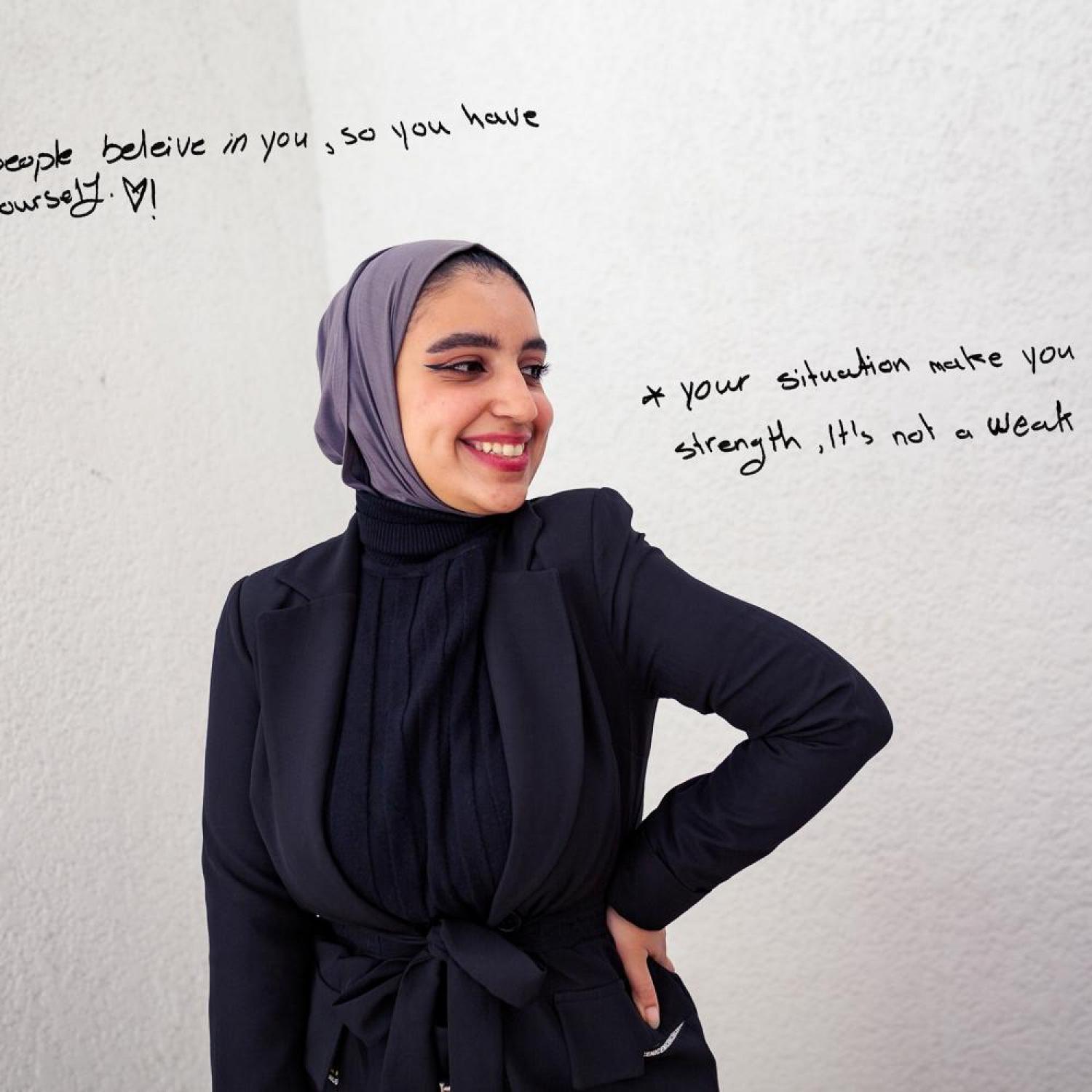
Cairo, Egypt, November 2021 Fatima, 22, was born in Jordan and raised in Kuwait, where she graduated from high-school in 2017. Her family initially hails from Yemen and came to Egypt in 2017. “We wanted to change our destiny.” “I stayed home idle for two years. I was looking for scholarship opportunities, without success. At the time, it didn’t know that I would stay here and study. But now, thanks to DAFI, I’ve realized that Egypt is my present and future. I’m on my way to achieving my dreams.” Today, Fatima is a third-year student of Medicine at Cairo University. “It has been my childhood dream to become a doctor. I really want to help others without asking for anything in return. My motto is: give, give and never stop giving.” “DAFI has given me more confidence. It is not only about our academics, it is about life and personality. It has shown me the way forward. Actually, it is the reason why my family is still here. So it is fair to say that it shifted the trajectory of the whole family. Today I am responsible for them all. They rely on me.” “When people believe in you, you have no choice but to believe in yourself. I have learned to respect others more; I have become more mature.” “Our situation as refugees is a strength. There is nothing to be ashamed about.” “My message is: we are all heroes of our own stories. We can all be proud of who we are and where we come from. Every person can make a difference. All it take is to take that first step.”
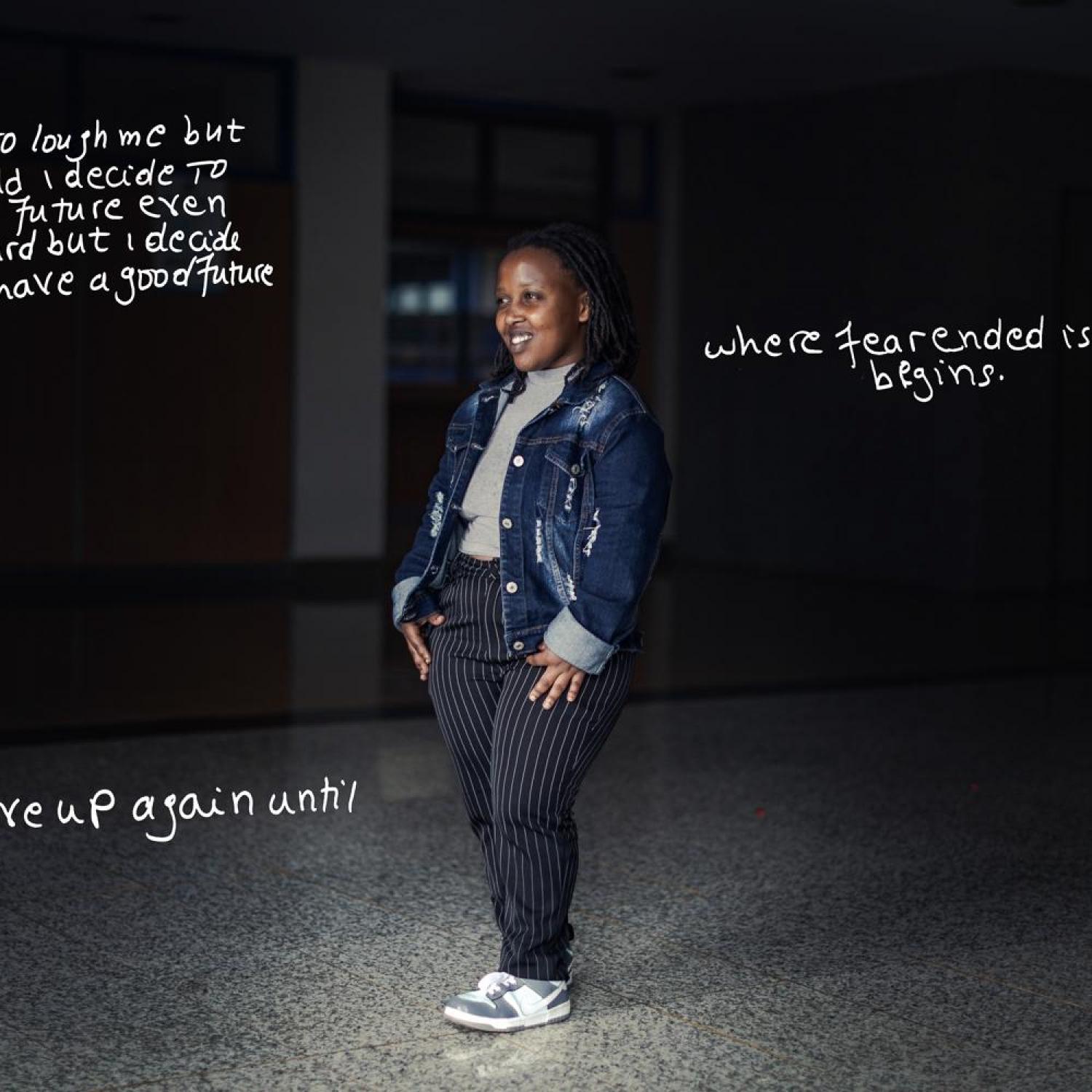
Kigali, Rwanda, March 2024 Patience, 24, originally from the DRC, was born in Gihembe refugee camp, in Rwanda, as the youngest of three girls. She never met her father. From 2008 onwards, the girls lived on their own, their mother having left the household. All the way to Senior 4, Patience studied in the camp. “My disability gave me motivation. Even though others laughed at me, I decided to work hard and listen to the teachers. I wanted to prove others than my height might be little, but my abilities aren’t. However, I didn’t make friends; I was on my own.” At the age of 16, Patience moved out of the camp to attend a boarding school, thanks to a sponsorship programme. “I finally started to feel like myself, to free myself from fear, to discover who I am. I tried to build relationships with other students, even if it was difficult. I grew up and I changed. I understood the value of opening up, despite the teasing. I developed friendships; we supported each other.” In 2021, Patience obtained the DAFI scholarship and chose to study finance at Kigali Independent University (ULK). “Here I can carry on with my life independently. On campus, students don’t make fun of me. I am treated as a good student and I can actually support others.” “DAFI has changed me and has given me freedom. It has taken me out of the camp and has given me a reason to stay alive. It has raised me to a new level.” “My message to my fellow refugees is: encourage everyone, never give up, be good to others. Build good connections, leave bad people and surround yourself with good ones. Personally, if I had given up, I would not be where I am today.”
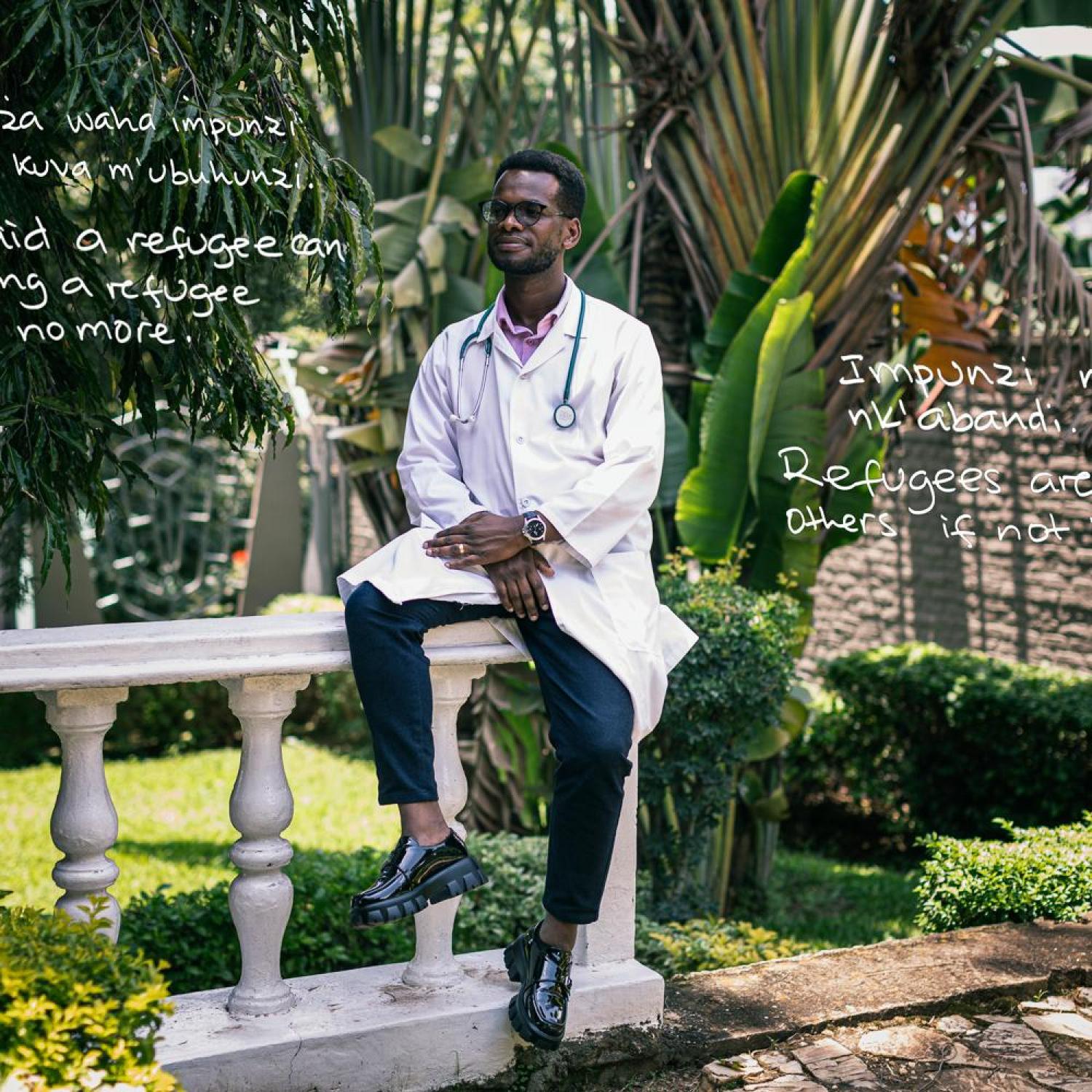
Kigali, Rwanda, March 2024 Paul, 29, was one year old when his family fled Northern Kivu, DRC, and settled in Kiziba refugee camp, in Rwanda. He grew up in the camp and pursued his primary and junior secondary education there. “Education is everything for myself and my family. Growing up as a refugee, there is a scarcity of opportunities. Things that people take for granted, you don’t get them so easily. One way to access those things is education. Even though my parents did not go to school, they know the importance of education.” Paul graduated from primary school as the top performer in his school of 600+ students, and in the entire district actually. Thanks to his family’s support, he then moved out of the camp to study at the Ecole des Sciences de Musanze, a respected school of excellence. He later entered med school thanks to a DAFI scholarship and finally graduated in 2019. In 2022, he landed a position as a general practitioner at a private clinic in Kigali. “People have biases and prejudices about us refugees. Some cannot understand how you could have made it all the way to university and become whatever you are. People who know you, who know your capabilities and everything, once they learn that your are a refugee, they see you through a different lens.” “Refugees can become anything. They are people like any other. Perhaps circumstances made them even better people, in terms of abilities, kindness and potential. The only difference is a matter of opportunities: they are simply less available for refugees.”
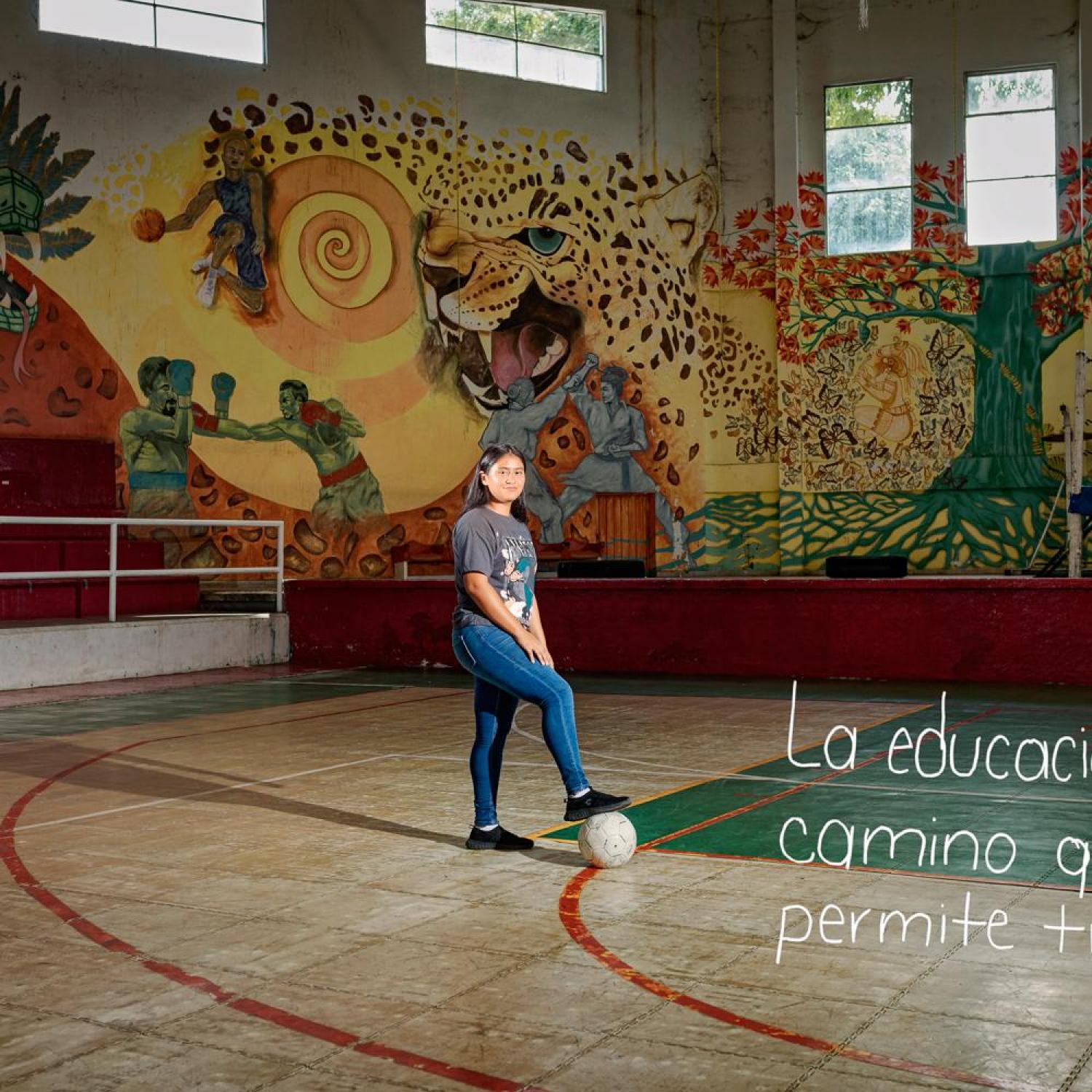
Tapachula, Mexico, September 2022 Katherine, 20, from Honduras, came to Mexico in 2013 with her mother and her two brothers. She was nine years old and had completed Grade 5. “At the beginning, it was hard for me to adapt. Everything was new. We had left everything behind and had to start a new life here. Luckily, I did not experience any discrimination at all. On the contrary, people were nice to me. By the time I reached secondary school, I had adapted well. I even made it to the top of my class and was elected as president of the student council. In the end, I graduated with high honors.” Katherine is now a second-year BA student of Biopharmaceutical Chemistry at the Autonomous University of Chiapas. “I started university in August 2020, in the midst of the Covid-19 pandemic. For almost a year and a half, we did not have any face-to-face class. It is only since January 2022 that all classes finally resumed on campus. It was challenging to study online all the time because our studies imply a lot of practice in the lab. Having said that, I felt happy everyday because I was studying.” “When I got the news that I was awarded the DAFI scholarship, I was thrilled and relieved, because my degree is expensive. If it was not for DAFI, I would probably no longer be studying; I would be working to support my mum and my brothers.” “I love football. I have been playing since I was 10 and I really enjoy it. I play in defense. In high school, I was the captain of our team. Today I play on the university’s team.”
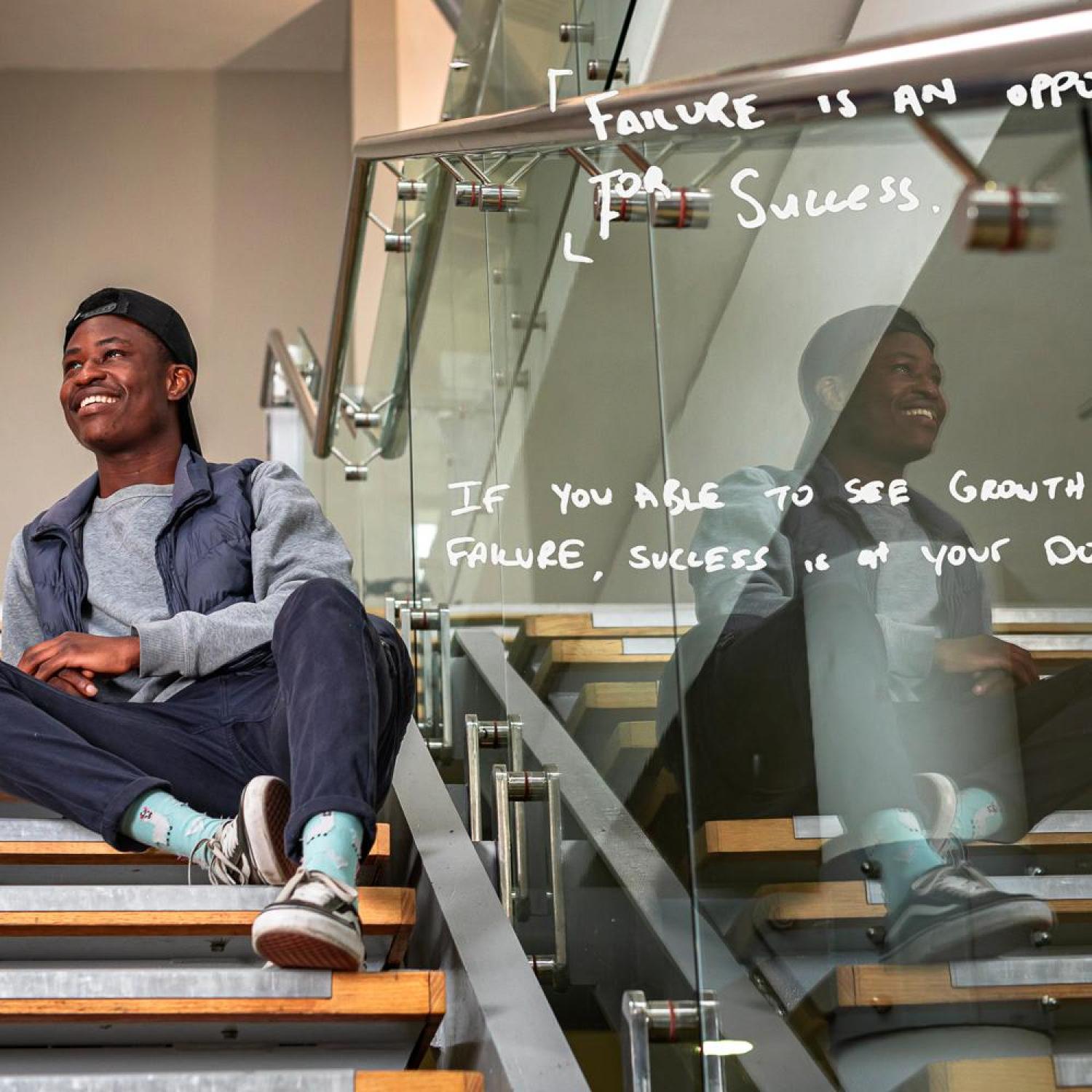
Cape Town, South Africa, June 2024 Glory, 24, came to South Africa with his family in 2005, from the DRC. “I basically grew up here. I attended two primary schools and two high-schools due to the moving and increase of rent.” “Our parents taught us that there are two things that we need to find value in: faith and education. They knew that the only things that they could offer us for our future were those two. Not a fancy house or whatever. That was not our story.” “I pushed hard. I was one of the top students in class. I graduated from high-school in 2019 and had a desire and passion to study further. My teachers really played a big role in my life. School was my second home. I wanted to impact others the way my educators impacted me. That is why I chose education as my field.” “In 2020, I joined college in sports science. It is not until the end of 2023 that I received the DAFI scholarship. Oh my goodness! I remember the joy on my parents' face, on my brothers’. They were so happy. That day was just a celebration. It felt so unreal, it felt like a dream. It really released the weight off of the family.” “DAFI had a huge impact on the whole family. Not only on me. It has been so good up until today. It has allowed the family to change and rethink. It has allowed us to begin to think of new ways to sustain ourselves. It was such a good experience. I can imagine all the families that are getting those emails, you can imagine the joy that is going into those houses.”
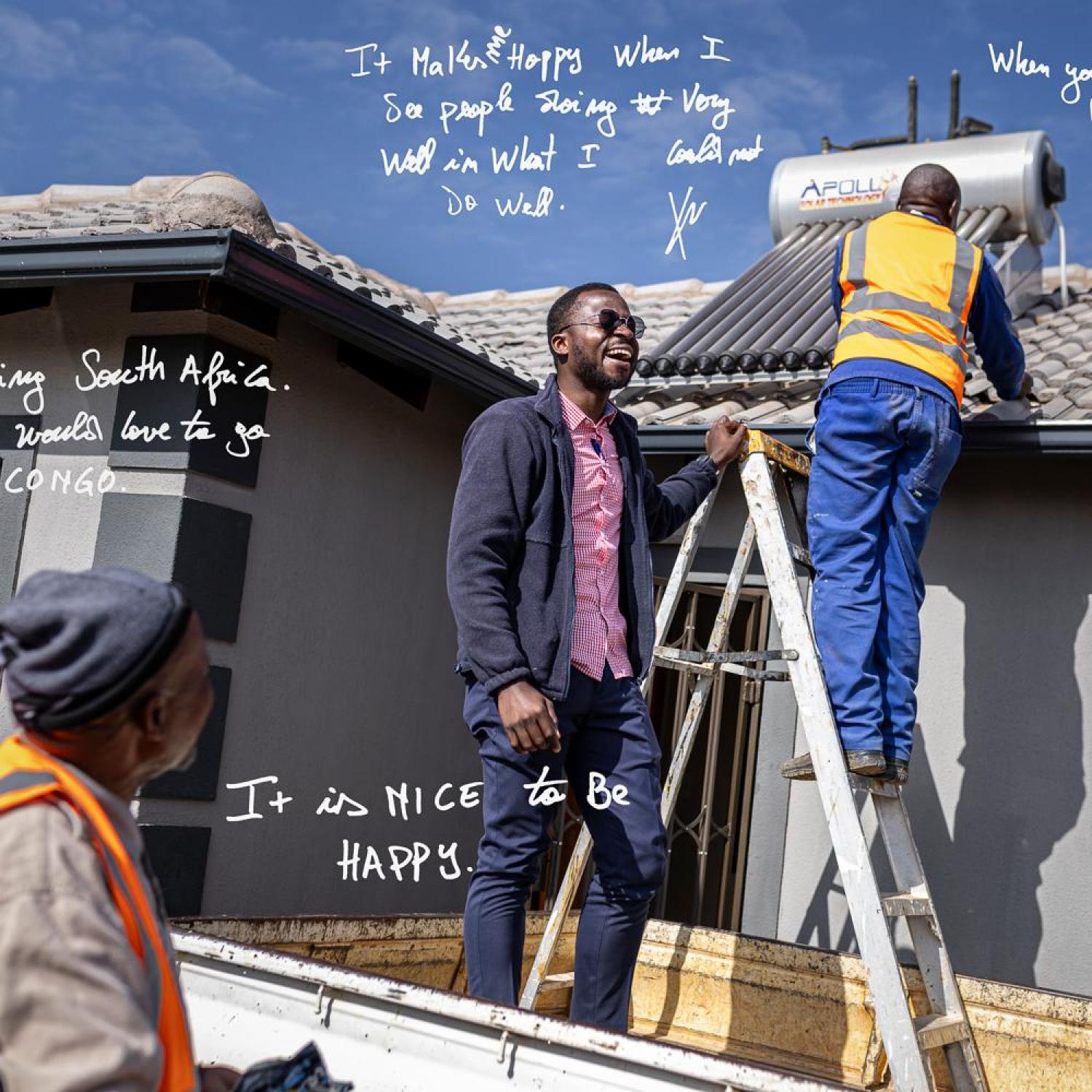
Pretoria, South Africa, June 2024 Henoc, 30, grew up in the DRC, and came to South Africa in 2013 on his own, at 19. “I needed to find a place where I could have peace and where I could study. Due to the insecurity and the instability in my home country, there was a severe lack of opportunities.” “Not being educated means being stuck. Education is the key. It changes your perspective on things; it changes your approach.” “For my first year, I made an arrangement with the university so that I didn’t have to pay up front. During my second year, thanks to my practicals, I was able to start paying back. That’s when I heard about the DAFI scholarship. I applied the following year and was finally accepted! It was such good news. I wasn’t going to receive my certificate until I was able to settle my fees.” “In October 2021, I got the job that I am still in today. I'm in the field every day. I don't like problems, so when they come, I look at the situation and find a way to solve it.” “I always try to be generous. It doesn't matter if people tell me I’m too soft. It's nice being happy, you know, and being in a position where you can assist others.” “When I meet youngsters who come to South Africa, I tell them: now you have a choice to make. Which path do you want to follow? If you follow the good path, you're going to do well. If you follow the wrong path, you're going to delay yourself. That’s ok, you can always catch up, but be aware that some opportunities in life only come around once.”
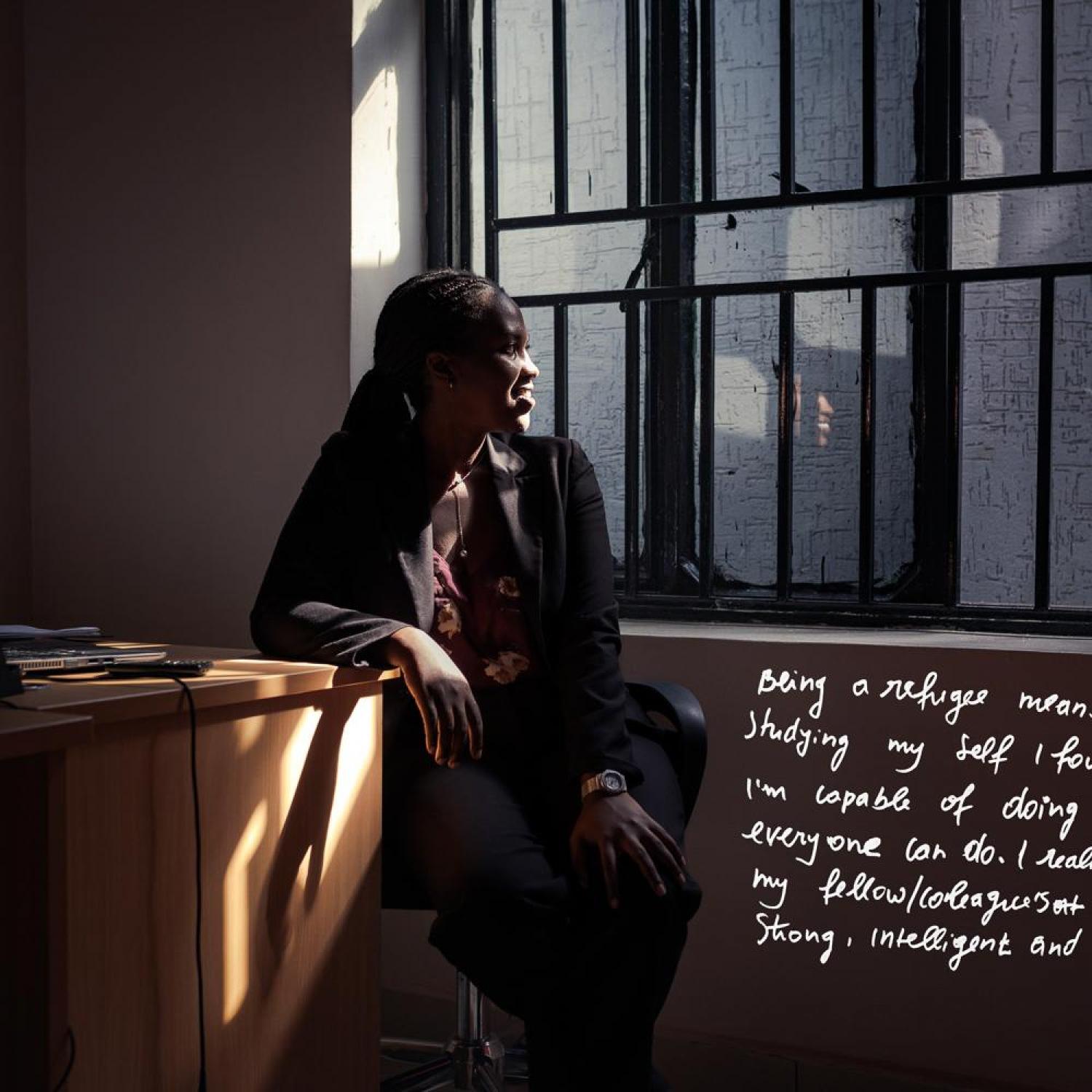
Kigali, Rwanda, March 2024 Claudine, 26, was born in Kiziba refugee camp, in Rwanda, after her family had fled their region of North Kivu, in DRC. In 2018, Claudine became one of six DAFI incoming scholars from Kiziba that year, and moved to Huye (former name: Butare) to pursue of Bachelor’s of Law there. “I was very hard-working and I focused on my studies. Actually, university changed me. I became some kind of focal point, or resource person, for the other students. I was wondering: why do Rwandans who have everything, who have homes, cars, etc., would ask for my help, even though I don’t have any of that?. I started realizing that I was capable of doing anything, that being a refugee means nothing. It can often be a trauma but once you’ve studied yourself, once you know what you want, you realize that it means nothing.” Since September 2023, she has been working as a case manager, supporting fellow refugees, at a law firm in Kigali. She is an intern but has reasonable hopes that she can get hired there. “Today I feel happy, confident and excited. I am doing the thing I love and I am serving my community. I see myself as a human right activist.”
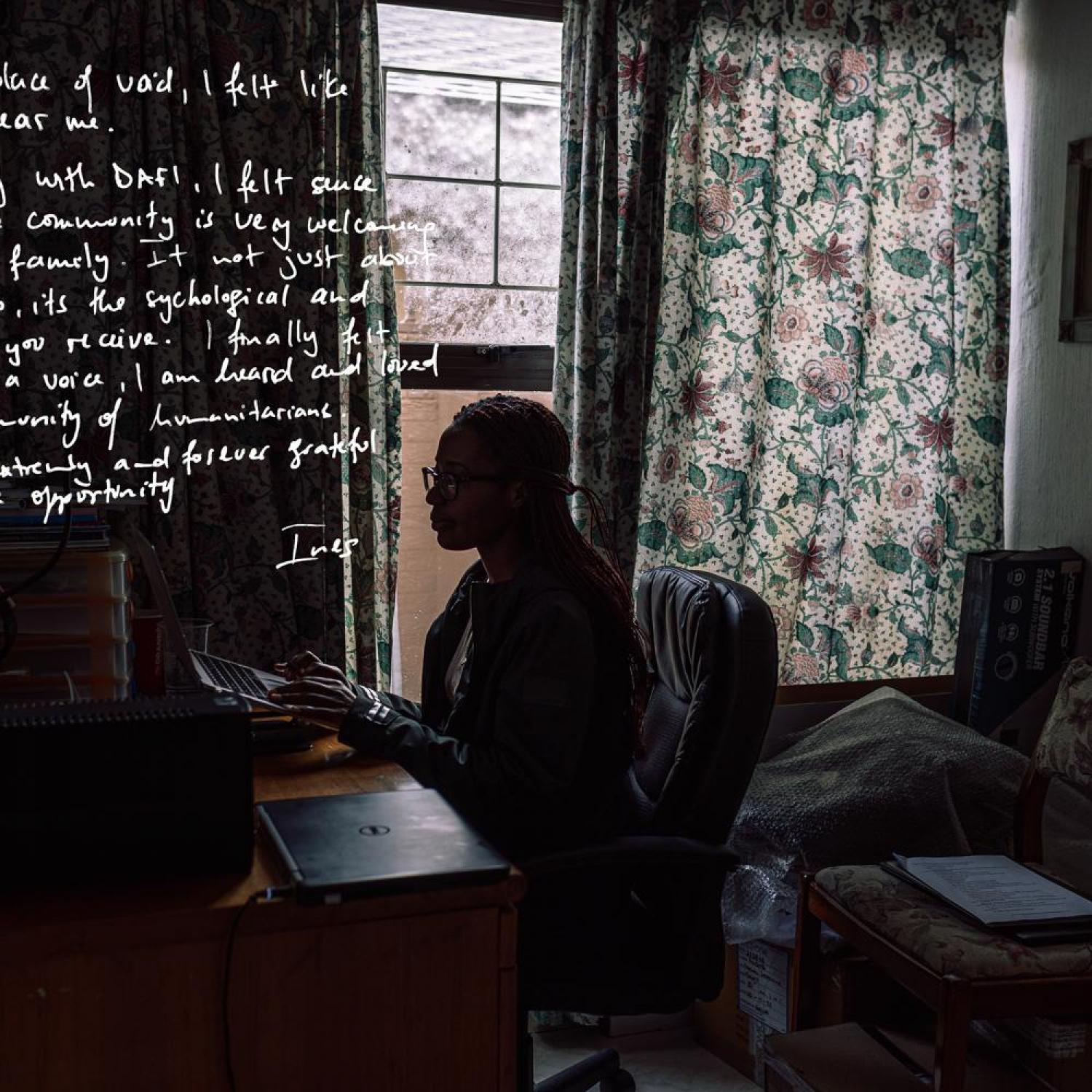
Cape Town, South Africa, June 2024 Inès, 30, grew up in Rwanda. Her parents and younger brother fled in 2005, leaving her and her sister in the care of their grandmother. Two years later, the family finally got reunited in South Africa. “When we got here, life was different. We were 15-20 people under the same roof. I had to look after my siblings, cook for them, make sure they did their homework. I was homesick.” “At school, I didn’t have to make an effort. I would just listen to the teacher and then pass with flying colors. Because of the challenges our family has been through, I've had to do many things by myself until now. I’ve had to figure out everything on my own.” “I had always had a knack for sciences: maths, physics and chemistry. I managed to make it to my third year of university, in chemical engineering, by negotiating really hard with the finance office, working on the side and figuring out ways to repay some of my debt. I continued to study as hard as I could.” “After two failed attempts, I finally got the DAFI scholarship. It felt like a weight was coming off of me. It felt good, like I was contributing to things that I wanted to see as a change in our family.” “With DAFI, you feel like you belong, like they are part of your family, like there's a future. You start believing in yourself more. It is an overwhelming experience of starting from a place where you felt like you didn’t belong to a place where you have a voice. Without it, you always think of yourself as a refugee." Today, Inès works as a Project Management and Implementation Coordinator for the Middle East and Africa (name of company is undisclosed).
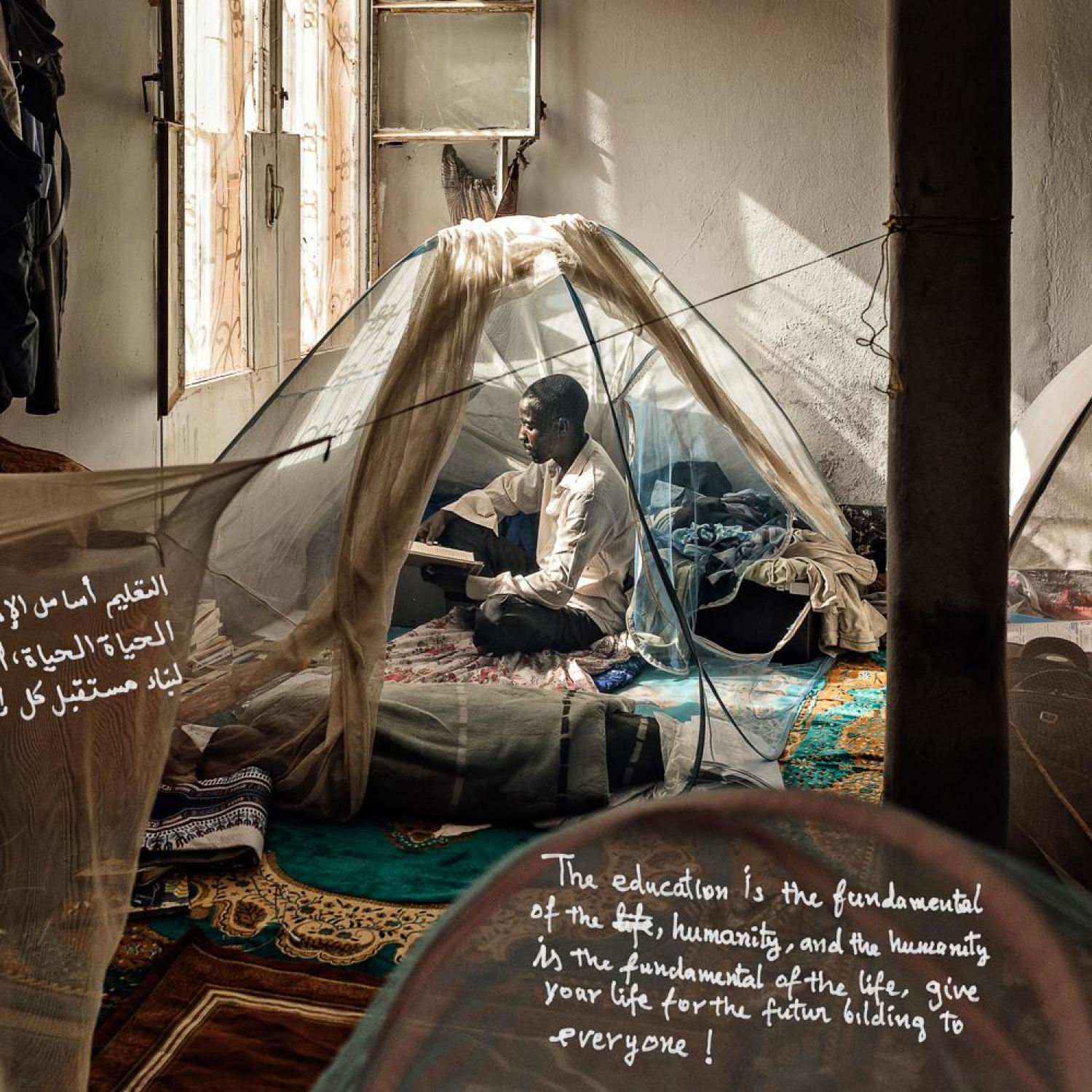
N’Djaména, Chad, March 2021 Adam Moussa, 38, was 22 when he was forced to flee Darfur in 2004. He was still in secondary school student. The family eventually settled in Bredjing camp, in eastern Chad. Ever since, Adam has been very involved in education initiatives in the camp. Witnessing the dire needs for teachers and learning opportunities for children in the camp, Adam voluntarily joined forces with other refugees to provide non-formal education to refugee youth from age 5-15. “Without education, we cannot change our lives and our communities,” he says. From 2009 to 2014, Adam worked as a secondary-school teacher while learning French on the side. He was Director of the school from 2009 to 2012, while being a tireless advocate for education in the refugee camp. From that time, he has earned the nickname of “Teacher Adam”. In 2015, he passed the Chadian Baccalaureate exam, after refugees were integrated into the national education system. From that point onwards, higher education was no longer out-of-reach. In 2016, Adam obtained the DAFI scholarship and joined university. “I was a teacher in the camp for nearly ten years. Once I graduate, I would like to go back and start teaching again. Actually, during the holidays, I go back and I organize tutoring sessions for the youth there. Growing up in Western Darfur, there was no school in our village. I had to move to a town almost 50 kilometers away to pursue my education. Why? Because if we do not study, we cannot change our lives. That is where my motivation and passion come from. Education is something you receive and pass on. That is how communities can be transformed. If we educate ourselves, we can master our own destiny.”
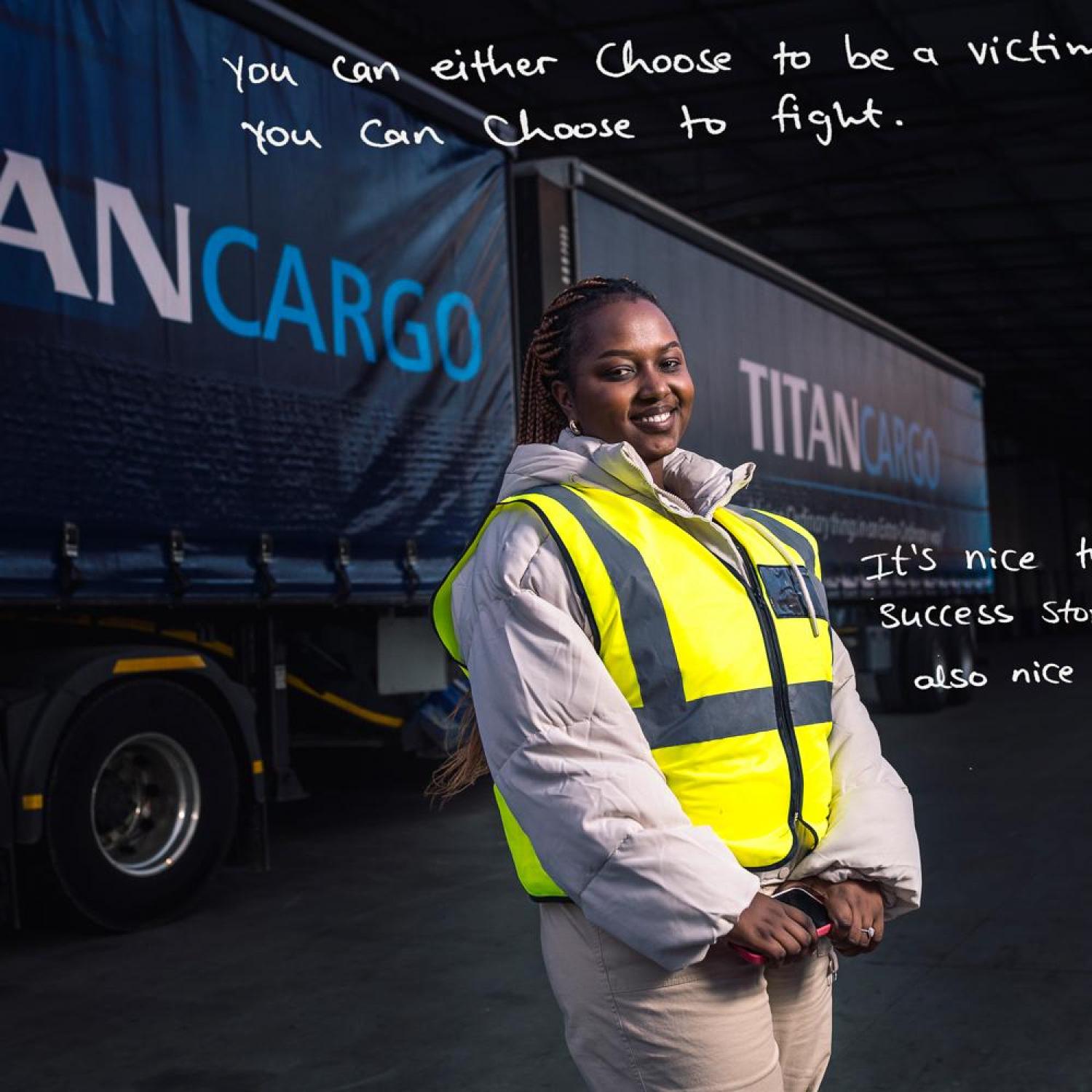
Cape Town, South Africa, June 2024 Madeleine, 27, her mother and siblings fled Rwanda in 2006 and went through Uganda, Kenya, Tanzania, Malawi and Mozambique before settling in South Africa. “Our mother planted the idea in our minds that with the life we were living, it was only through studying that we could get out of it.” “My motivation came from knowing that with all the odds stacked against you, you can either be a victim or you can try and fight. My mom is a single mom. She raised three kids on her own. She never gave up. I wanted to do something, to change the circumstances.” “Somehow, I had managed to make it to my third year of university, in Operations Management, but I was owing a lot. I was in debt and was working, bussing tables, doing all those things, but everything was just going from bad to worse. At some point you get so tired of being made the society's problem when you know you're trying your best. It’s constantly like you just finish one battle and there's another one just around the corner. It gets draining. You are never ever at a place in your life where you don't have any challenge. You almost feel like you are a hybrid person. You don't really belong anywhere. It's a state of limbo.” “In December 2020, I received the DAFI scholarship. My mom was ecstatic. It's like something good was finally happening to me. I could finally be a full-fledged student, get a laptop, some books and everything. I also stopped working. I could focus on my studies full time. It felt amazing.” Today, Madeleine works as a Procurement Officer for Titan Cargo, a distribution and warehouse company based out of Cape Town.
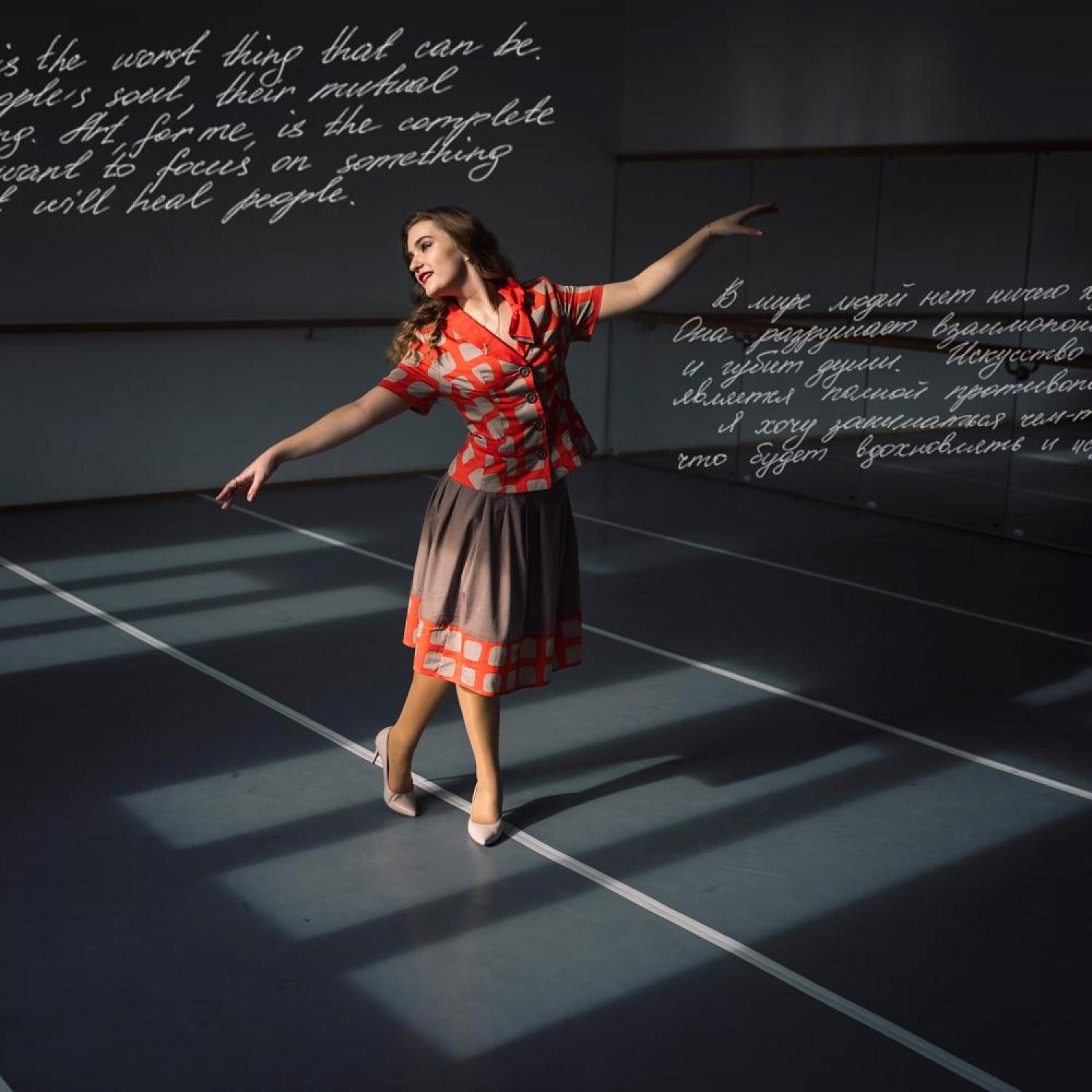
Bratislava, Slovakia, April 2024 Varvara, 18, and her family fled the the Donbas region of eastern Ukraine when the war broke out in 2022, and settled in Bratislava, Slovakia. “From a young age, I knew I wanted to be on stage and perform. At school, I was always the artistic one. I knew it was the place I wanted to be at. It was my space.” “I had graduated from Grade 10 in Ukraine. In the summer of 2022, I studied online in order to receive my high school diploma. When I put my mind to something, I always try the best I can. I cannot stay idle. I am always super active.” Varvara is now a BA student of Dance Arts at the Academy of Performing Arts in Bratislava, Slovakia. She receive the DAFI scholarship in October 2023. “I was so happy! In our situation, we do not have any stability in our lives. We were used to a normal way of living, as a family, in our home. We never wanted to move somewhere else. It was definitely stressful when we had to. All our plans got cancelled. So DAFI meant stability, at least for three years. It is like a pillar, or a safety net, something I am going to have no matter what. It also carries a feeling of independence.” “At the moment I am looking for as many opportunities to perform as possible. I really want to live through the experience of dancing.”
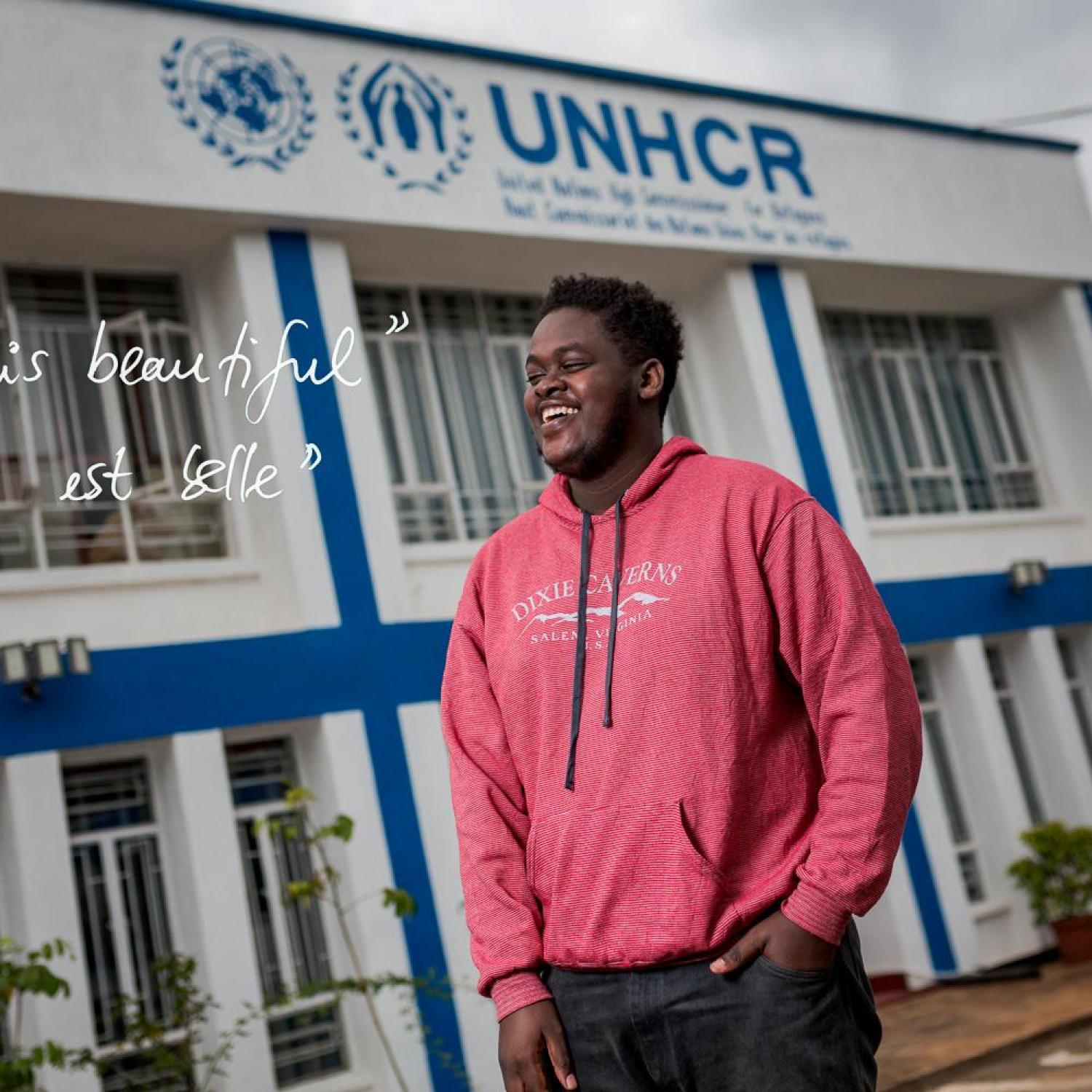
Lilongwe, Malawi, October 2021 Jules, 21, was born in the DRC in 2000. His family moved to Rwanda when he was nine, due to security threats. The family moved back to DRC five years later but had to flee for good after Jules’ father was killed. The family of five finally settled in Malawi in 2014. Jules had just completed primary school in the DRC, and was able to complete his secondary school in Dzaleka camp. “It was tough at the beginning. First of all, I had to improve my English. At home, we speak Swahili and Kinyamulenge.” After completing his secondary school, Jules had an opportunity to work as a sanitation monitor officer in the camp. With his modest wage, he was able to support his family as well as pay for electricity in order to receive programming lessons from a friend. In 2019, he learned about the DAFI scholarship, immediately applied and was accepted. “Receiving the scholarship felt amazing. When people live in normal conditions, there isn’t necessarily that sense of rush to grab an opportunity when it comes by. But when you’ve been through a lot and an opportunity presents itself, you can’t afford to let it go or waste it.” “DAFI students work harder than others because of what they have been through. We don’t take things for granted the same way others might. Sometimes I feel like telling them: “If only you knew how many people would like to have the opportunity to study…” But I don’t blame them. If I were in their shoes, I might act the same way.”
