

Saltwater Memory
Damien Jackson | Saint Vincent and the Grenadines
Photographer: Damien Jackson
Exhibit Title: Saltwater Memory
Location: Saint Vincent and the Grenadines
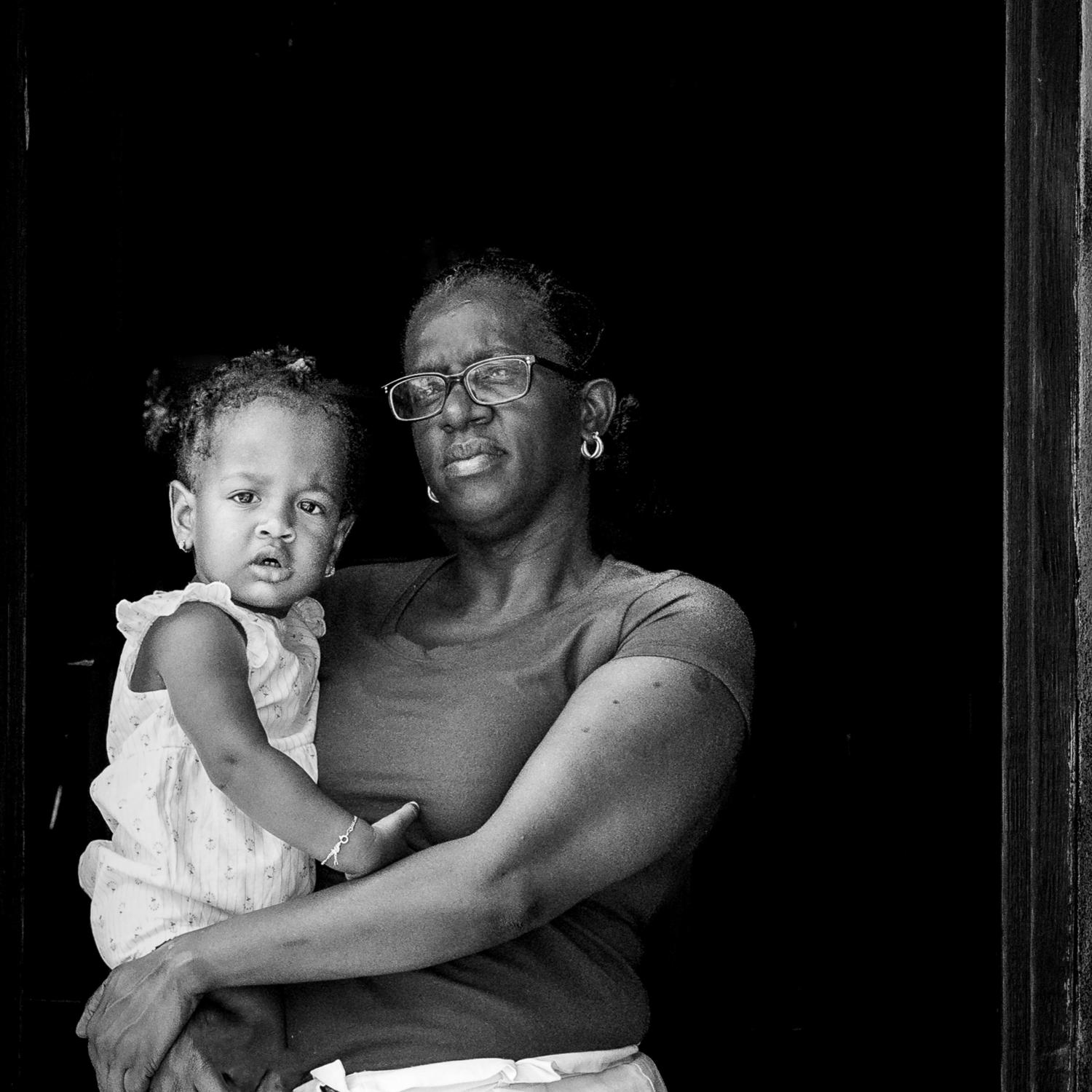
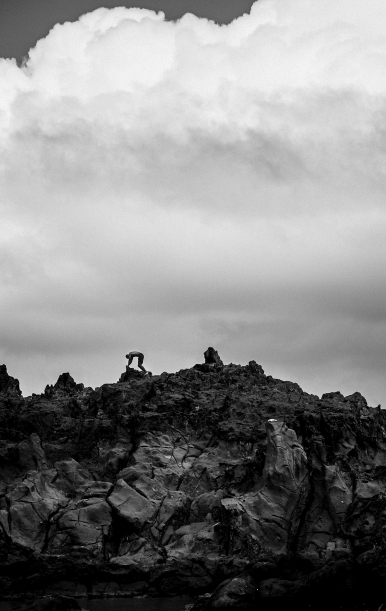
Saltwater Memory is a long-term black-and-white documentary series made in St. Vincent and the Grenadines — an island nation largely absent from the global cultural record. Working across years and seasons, Damien Jackson has built a civilization portrait: 21 images documenting the full arc of Vincentian life, from birth to elderhood, joy to grief, domestic ritual to communal ceremony, volcanic coastline to open sea.
The work refuses the flattening of Caribbean experience into tourism or spectacle. Instead it insists on complexity — the topographic face of an elder woman holding an unspoken thought, boys running through coastal spray, fishermen cleaning catch on black volcanic sand, a funeral cortège carrying a coffin through streets still wet with rain. These are photographs made in proximity and trust, in the unguarded moments when, as Jackson describes it, "our ancestors shine through most."
Influenced by Gordon Parks, Roy DeCarava, and Jamel Shabazz, Jackson approaches the camera as a portal — between what is visible and what is felt, between the living and those who came before. Saltwater Memory is both a document and an act of witness.
Damien Jackson is a documentary and fine-art photographer working at the intersection of Black and Caribbean life, diaspora memory, and ancestral witness. Born in Gibraltar and raised between St. Vincent and Brooklyn, he makes photographs with an ethic of dignity and emotional precision — refusing the flattening of Caribbean experience into tourism or spectacle, and insisting instead on complexity: elders, inheritance, labor, grief, and continuity.
Working in large-format black and white, Jackson returns repeatedly to the moments when the mask is down. “My portraits are not going to be posed,” he has said. “I prefer those because that’s when our ancestors shined through most.” His images catch people at the edge of ceremony and ordinary life — hands at work, the posture of an elder, the quiet choreography of mourning, children learning the edge of the sea. Subjects often tell him they recognize someone familiar in their portraits: a grandparent, a parent, sometimes their younger selves.
His ongoing practice treats the photograph as a portal — between what is visible and what is felt, between the living and those who came before. Water, coastlines, and domestic spaces recur as ancestral forces, sites where lineage is carried forward across generations without announcement. His commission to photograph his grandmother’s funeral — made at her request, an act of trust and love — is emblematic of the ethics that ground his work: the subject grants agency, and the photographer responds with care.
Influenced by Gordon Parks, Roy DeCarava, and Jamel Shabazz, Jackson came to photography not through formal training but through family — a path that still shapes the intimacy and attentiveness of everything he makes. He is represented by Gallery GPG (Harlem, NY).

Make Comment/View Comments