
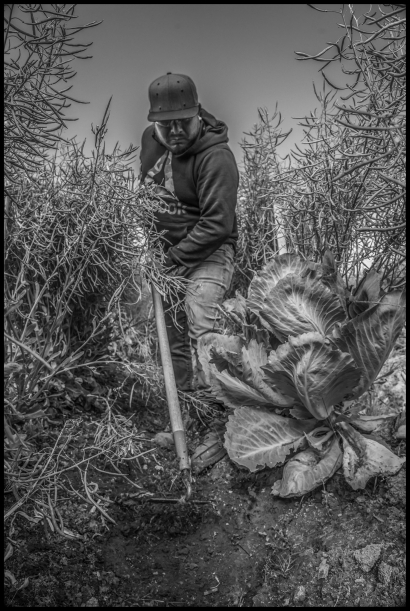

MT VERNON, WA - Pablo Ramirez and a crew of farmworkers weed a field growing organic cabbage plants for seed at Morrison Farm. Because it is an organic field, the grower doesn't use herbicide, and instead hires a small crew to weed the field before harvesting the seeds. Although there is no union contract there, the workers consider themselves members of Washington State's new farmworker union, Familias Unidas por la Justicia.
Immigrants and Deportees - Survival is Resistance
David Bacon | California, Washington, Baja California, United States
Photographer: David Bacon
Exhibit Title: Immigrants and Deportees - Survival is Resistance
Location: California, Washington, Baja California, United States
These photographs document the resistance to ICE raids. They begin with the work and culture of indigenous Mexican farmworkers, resisting racism and exploitation, in the context of anti-immigrant hysteria. Angry protests show people out in the streets, unafraid and facing the Border Patrol non-violently. Images include Lelo Juarez, forced into self-deportation. The series documentng those targeted - deportees and self-deportees in Tijuana - people ripped from their lives at home, trying to survive as best they can. The common thread in all the images is that in the current political context, survival is resistance.
This photoessay shows the multiple impact of the Trump campaign of anti-immigrant hysteria, and the subsequent wave of immigration raids, on Mexican immigrants in California and Washington State. Most media have concentrated on the administration's threats, but have paid little attention to the responses of the communities they threatened. This photoessay shows immigrants and immigrant communities as social actors, not victims.
The project starts with the essential work performed by Mexican farmworkers. People migrate because of economic necessity, and their vulnerability as workers derives from their lack of immigration status. Vulnerability, however, does not stop them from organizing, both at work and in response to raids and enforcement. This photoessay then follows the widespread resistance.
The unique culture of indigenous people from southern Mexico is itself a form of resistance to racism and exploitation. In the context of the current wave of anti-immigrant hysteria it is also a self-expression of collective identity. That culture then becomes a common thread, a culture of resistance, in the many marches and demonstrations in farmworker communities.
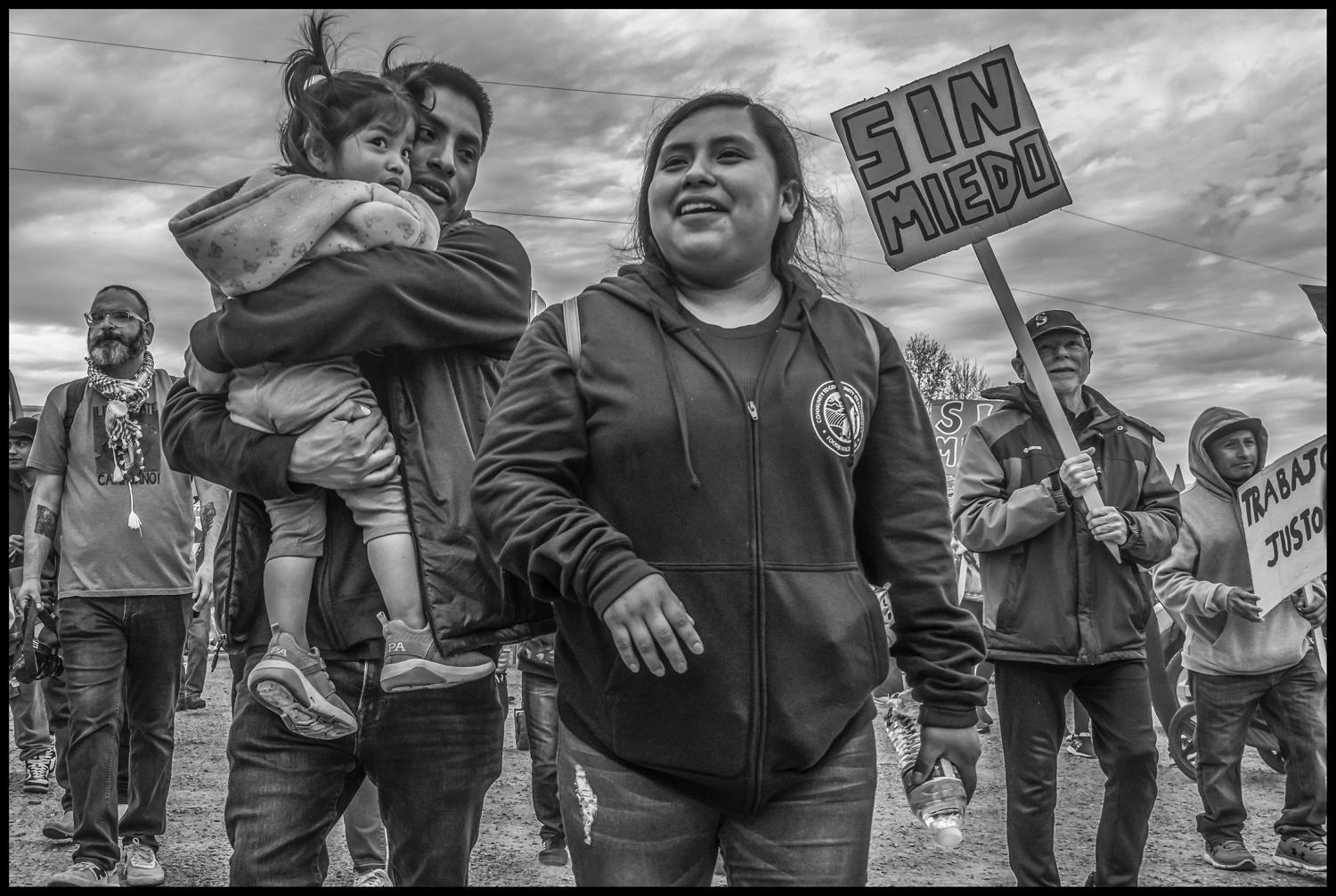
The protests against ICE raids are not the polite petitions of victims pleading for a softer repression. People are out in the streets, not cowering behind closed doors. Often there are marches organized by young people, consciously taking the place of their parents who would risk deportation by participating themselves. This wave of resistance began, not in urban centers, which typically receive more media attention, but in the Mexican barrios of the agricultural valleys and the urban fringe.
Fear of deportation did not paralyze these young people and their communities. They faced down the Border Patrol itself. In one image Rev. Jorge Bautista stands calmly, hands at his sides, as an agent in military garb fires a pepper spray gun directly into his face.
Nevertheless, we pay very little attention to what happens after people are deported, or when they choose self-deportation as a result of fear. These photographs include farmworker organizer Lelo Juarez, targeted by ICE and forced into self-deportation. The series ends by exposing the precarious situation of deportees and self-deportees in Tijuana - people ripped from their lives at home, trying to survive as best they can.
In the Fields of the North/En los campos del norte, ucpress.edu/9780520296077
More Than a Wall/Mas que un muro: https://david-bacon-photography.square.site/product/more-than-a-wall-mas-que-un-muro/1?cp=true&sa=true&sbp=false&q=false
Familias Unidas por la Justicia
Mixteco Indigenous Community Organizing Project
It's a Question of Humanity
Colegio de la Frontera Norte, Tijuana
dbacon@igc.org
Make Comment/View Comments