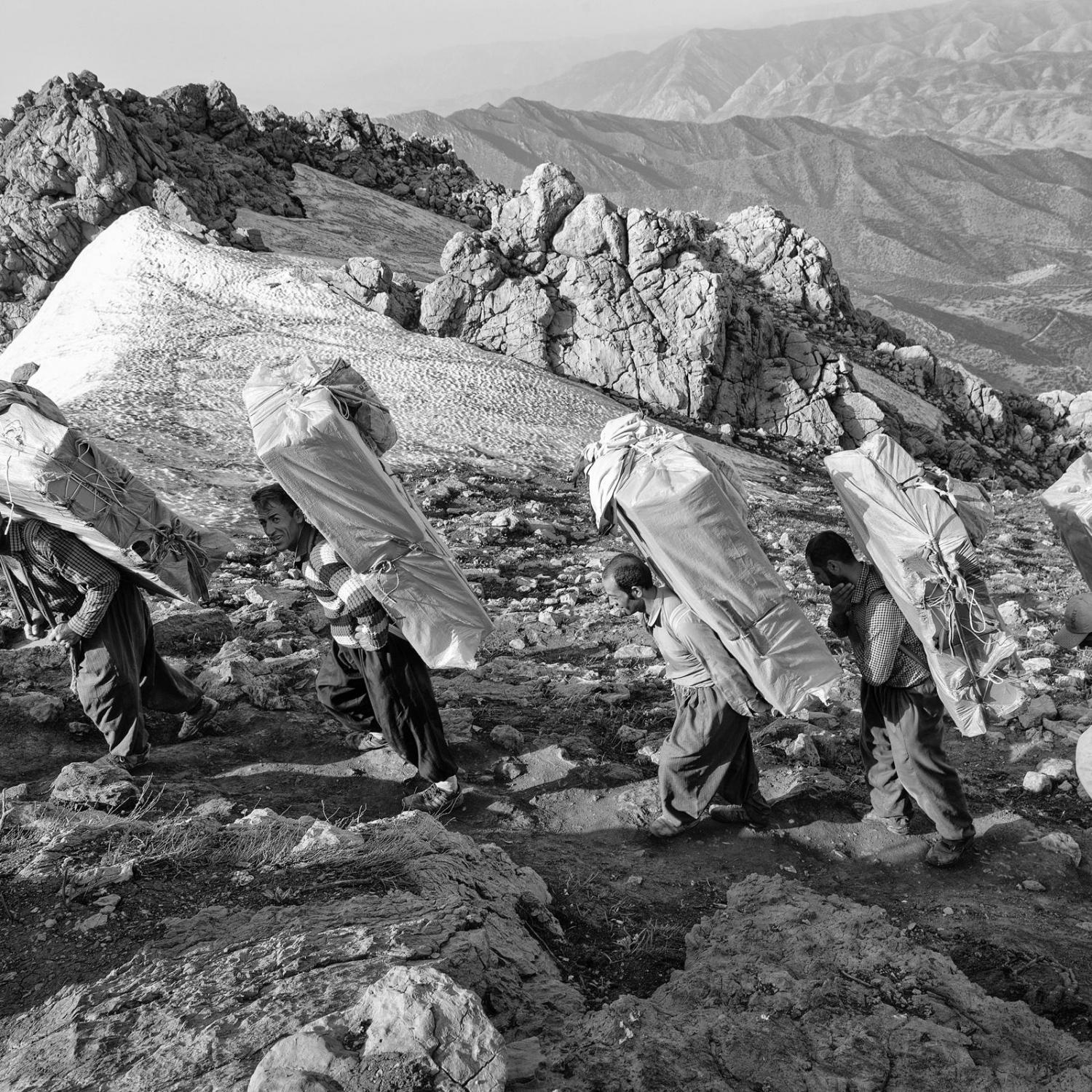

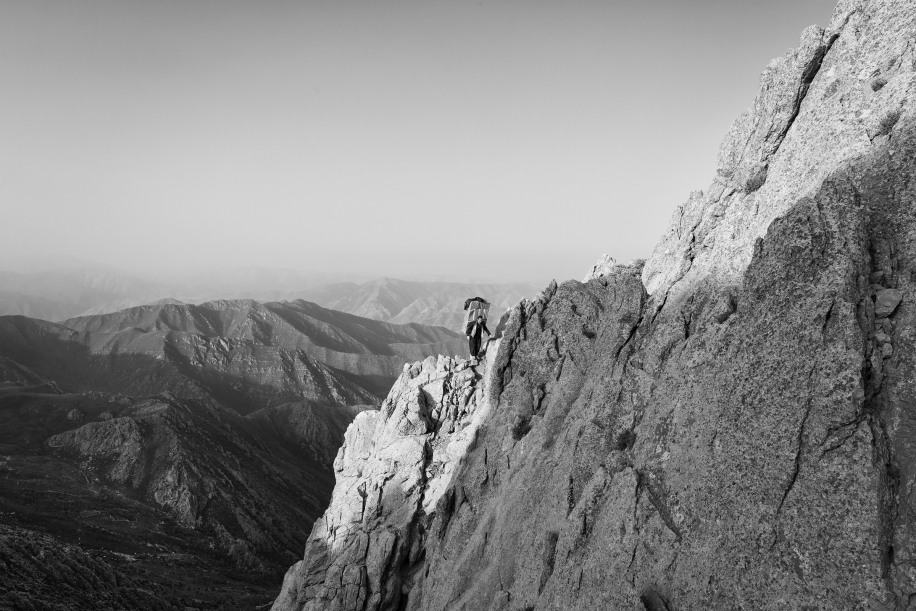

1- One of the countless arduous crossing paths that the Kolbars have to take while carrying items weighing more than 50 kilograms for long distances. These passages are one of the main causes of the deaths Kolbars endure. Kolbars usually leave late at night for the border to make a crossing early in the morning. Kurdistan, Iran, June 2019.
Bullets Have No borders
Ebrahim Alipoor | Kurdistan, Iran
Photographer: Ebrahim Alipoor
Exhibit Title: Bullets Have No borders
Location: Kurdistan, Iran
Bullets Have No Borders is a long-term documentary project about Kurdish kolbars—border porters who carry goods across the Iran–Iraq mountains to support their families. In regions shaped by chronic unemployment, political pressure, and marginalization, kolbari is often the only available source of income.
The project follows men and teenagers on night journeys through snow, fog, minefields, and militarized border zones, where they face armed patrols, falls, hypothermia, arrest, and death. Beyond the crossings, the work looks at waiting families, injured bodies, mourning, and the persistence of daily life under constant risk.
Photographed over nearly a decade with close access and long-term trust, the images reveal how an invisible economy operates through fear and endurance. At the same time, they show dignity, solidarity, and responsibility as forces that sustain individuals and communities.
Bullets Have No Borders asks how survival becomes criminalized—and what it means when borders value goods more than human lives.
Photography, editing, and project direction: Ebrahim Alipoor
All images © Ebrahim Alipoor
local people, called porters (Koolbar in Kurdish), transport goods from Iraqi Kurdistan into Iranian Kurdistan. As a result of poverty and high unemployment rates, Kurdish porters strive for a living under harsh environmental conditions, mostly in the Zagros mountains located on the border of the two countries. According to statistics, 300 Koolbars die annually, 71 percent of whom are shot to death by Iranian border patrols.
This border has been comprised of the most important transaction and commercial ports Iran has with Iraq and Iraqi Kurdistan. Due to customs laws in the years following the revolution, the government has forbidden the importation of some goods, including electrical goods, electronics, clothing, and so forth — transportation is considered smuggling.
the Kurdish term Koolbary (being a porter) is coined to describe the act of transportation of goods across the border on shoulders in exchange for a small amount of money. Mostly ranging from 12 to 65 years old, Koolbars do border crossing, with heavy loads, taking an average of 8 to 12 hours — routes are located in life-endangering locations including winding mountain trails, valleys, steep hills, narrow passages through high cliffs, among others. The risk of being shot by border patrols adds to the hazards Koolbars have to face in pursuit of a living.
Surviving wounded Koolbars, their families, as well as families of dead Koolbars, face numerous challenges and hardships. With Koolbary not being recognized as a “profession” in Iran as well as being considered illegal by the government, Koolbary as well as their families are not supported in any way. With the continuation of such deaths as well as Koolbars being maimed, it is likely that in the future residents of the region will face serious social and political implications.
This project was produced independently through long-term fieldwork and personal research.
Name: Ebrahim Alipoor
Website: https://ebrahimalipoor.com
Email: Ebrahim.alipoor1313@gmail.com
Phone: +98 933 818 1313
Instagram: @ebrahimalipoor

Make Comment/View Comments