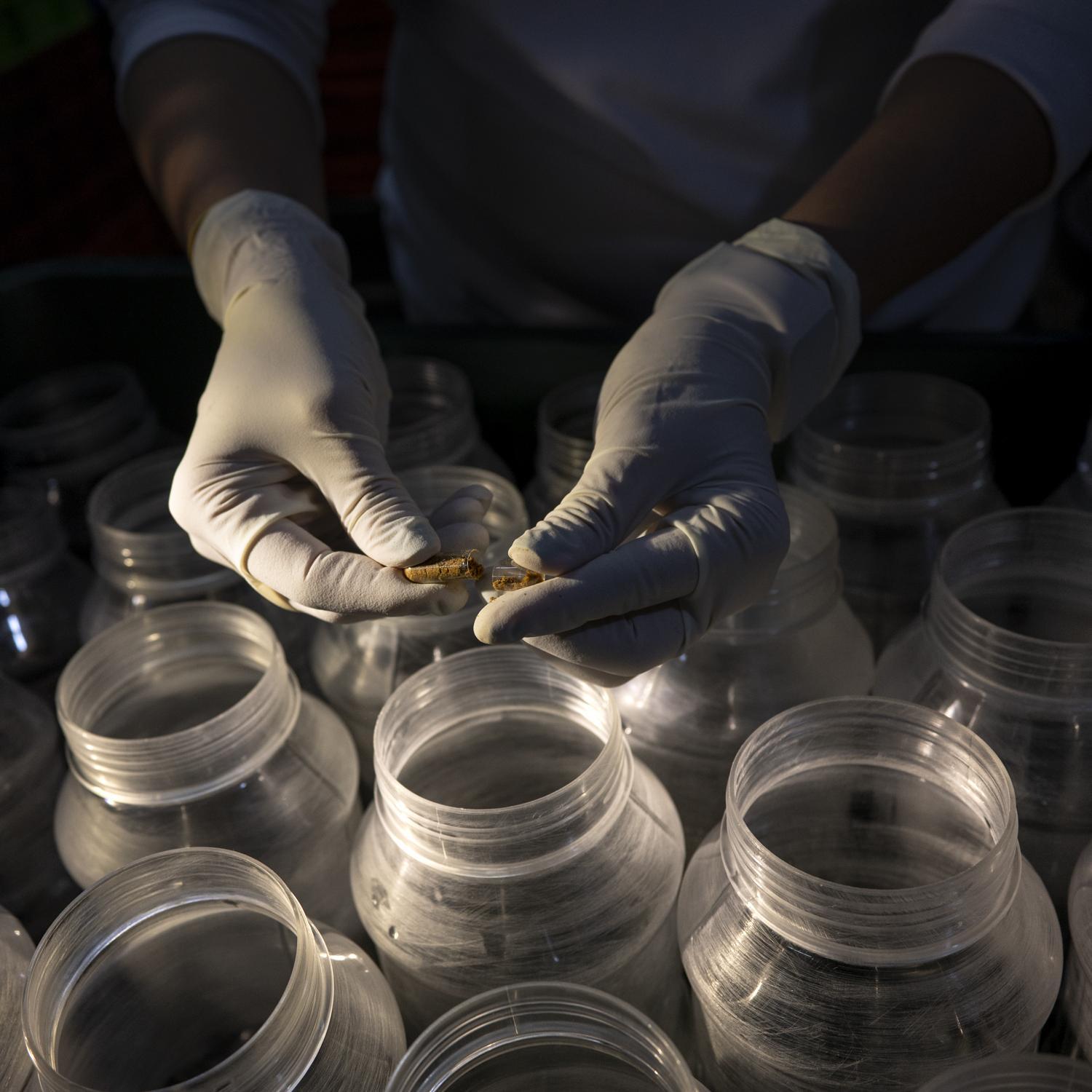

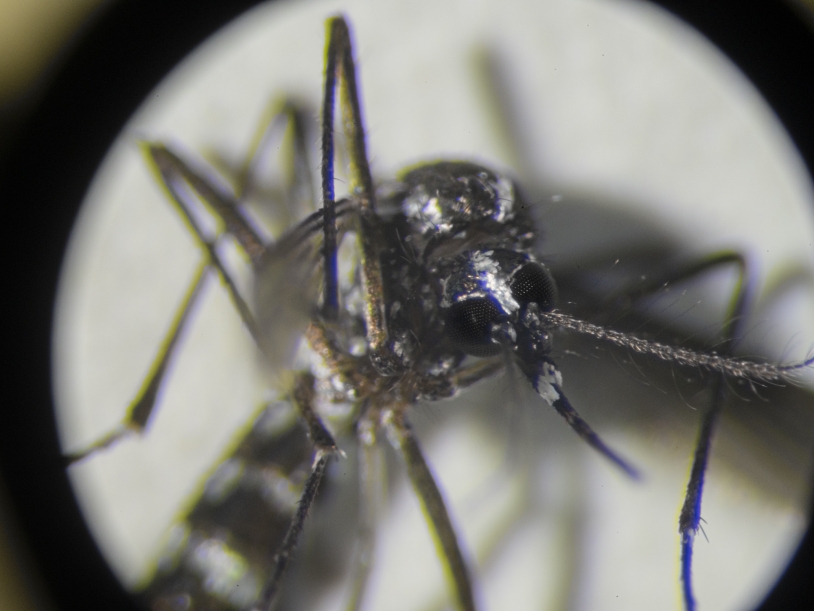

Italy. Rome. ENEA research centre. Close up of tiger mosquito under the microscope. The method tested by the ENEA research center is not based on genetic modifications but on the manipulation of the natural bacterial flora of the insect reproductive system, using bacterial strains already commonly spread in the environment and absolutely harmless to humans. In practice, through the administration of an antibiotic, the Wolbachia bacterium is removed from the cells of the reproductive tissue of the tiger mosquito and is replaced, via embryonic microinjection, by different variants of the same bacterium taken from the fruit fly.
Mosquitoes: A Global Enemy
Fausto Podavini | Varius
Photographer: Fausto Podavini
Exhibit Title: Mosquitoes: A Global Enemy
Location: Varius
Mosquitoes: A Global Enemy aims to document the mosquito’s global impact on ecosystems, human health, the economy, and its connection to climate change. Responsible for 700,000 deaths a year, the mosquito is the most lethal insect, creating its own microcosm of scientific research, health, economic, and cultural issues. The project aims to be a photographic reportage that portrays people and places from different nationalities united by the mosquito. Using a language that encompasses various photographic genres, the project places the mosquito at the center of the narrative, making it the fulcrum from which diverse stories branch out across different continents, allowing them to dialogue and unite under a single common denominator, because we cannot ignore something that has always existed and continues to shape our times. The project has been developed in the following countries: Italy, Chad, Ethiopia, Honduras, Cuba, and India.
This project aims to reveal the mosquito’s global impact on ecosystems, health, the economy, and the climate. It does so through a comprehensive study that places the mosquito at the center, documenting its impact on the lives of people so distant yet so connected by this insect. The work aims to highlight not only the problematic effects but also the solutions and research models to combat this insect, which has always characterized human life. The project addresses aspects ranging from health, related to viral infections that use mosquitoes as vectors (malaria, dengue, yellow fever, Zika, and chikungunya), to scientific research with universities and international research centers that are conducting research to better understand this insect and developing solutions that help us live in harmony with it. All this begins with one of the key aspects: the direct link between the mosquito and climate change and the spread of certain species in areas that until a few years ago were free of them. To date, the project has been developed in the following countries: Italy, Chad, Ethiopia, Honduras, Cuba, and India.
Make Comment/View Comments