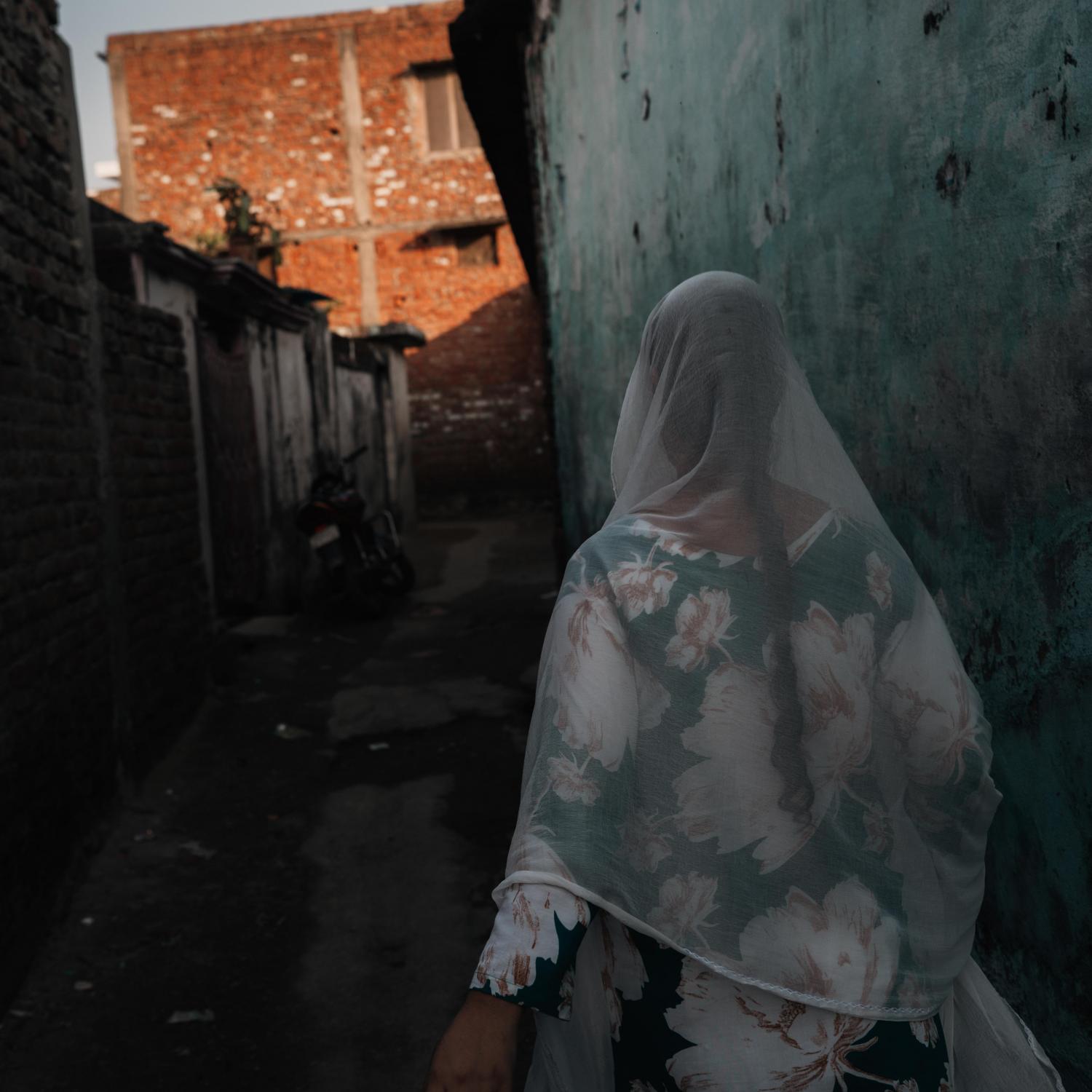

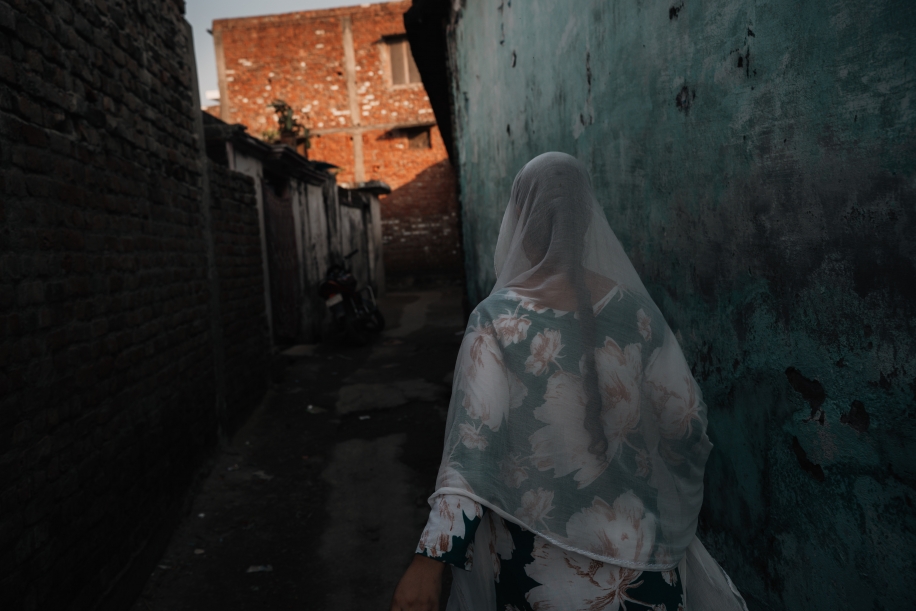

A young Muslim woman walks through the alleys of Baghori village. Despite coming from a relatively comfortable economic background, her life, and that of her relatives and friends, is deeply affected by the taboos and stigma surrounding menstruation. Sitarganj, Uttarakhand, India, November 2025.
Out For Blood
Ginevra Bonina | GE, India
Photographer: Ginevra Bonina
Exhibit Title: Out For Blood
Location: GE, India
Menstruation is a physiological process, but despite being universal—influencing psycho-physical well-being, reproductive health, education, work, and spiritual life—it remains surrounded by taboos and stigma rooted in mythology, religion, medicine, and culture. These prejudices have tangible consequences, turning periods into an invisible, underestimated issue.
Out for Blood documents the most extreme consequence of this reality in India: period poverty, defined as limited access to safe menstrual products, adequate sanitation, and education.
Of approximately 355 million women of reproductive age, only 45% are aware of menstruation before menarche (first menstual period). Many still rely on cloths—a non-hygienic practice risking infections. 24% of girls drop out of school after menarche due to inadequate sanitation.
Through voices from Hindu, Muslim, and Adivasi communities, the report documents lives and environments while addressing inequality, violence, taboos, sustainability, and healthcare access. This is not solely a public health issue but a human rights concern, as menstruation functions as a tool of control over women's bodies.
The report aims to foster awareness and self-determination, reclaiming the body as a site of struggle, resistance, and liberation.
This work forms part of a broader investigation I began in 2025 examining menstruation as a human rights issue. Through multiple chapters developed worldwide, the project addresses period poverty, waste and sustainability, menstrual disorders, cultural taboos, and spirituality.
My connection to this subject is deeply personal. As someone who menstruates, I have witnessed since childhood how this fundamental bodily process is stigmatized and rendered invisible—with consequences that profoundly impact lives. I chose to begin this work in India, focusing on period poverty: a global public health crisis that has long been neglected. Period poverty—inadequate access to menstrual products, education, and sanitation facilities—subjects millions of women and menstruating people to systemic injustice and inequity.
My goal is to break the silence surrounding menstruation, to make visible what has been deliberately obscured, and to document the very real suffering experienced by those denied dignity during their periods. Beyond exposing injustice, this work is about reclaiming bodily autonomy—about reasserting our right to make decisions about our own bodies, to understand them without shame, and to demand the resources and respect necessary for our health and dignity.

Make Comment/View Comments