
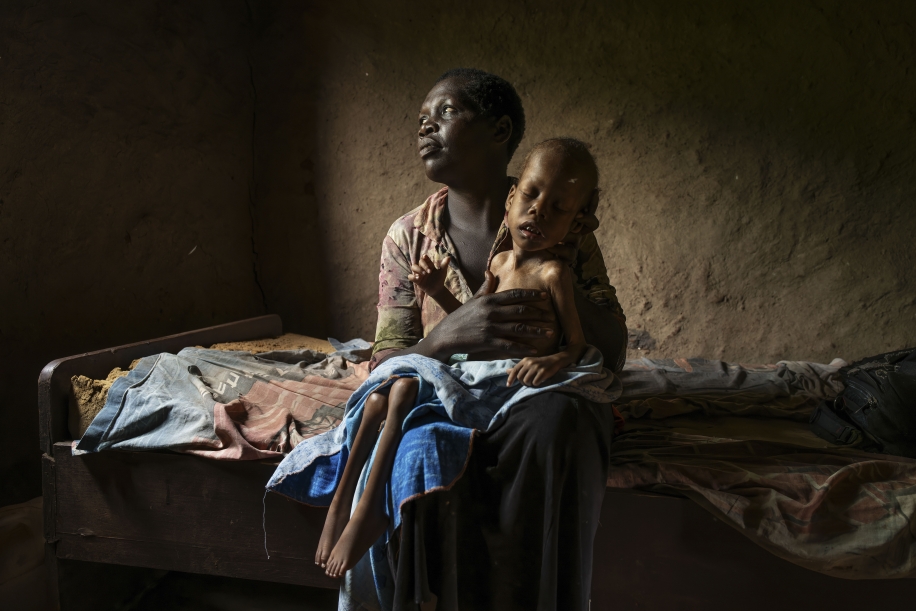
Ruth Araba (45) sits with her son Emma on her lap, who is severely malnourished, on the bed in the living room. A year ago Emma was put on nutrition at a local hospital, but after a while he was sent home, to die. Ruth:” I do not have money to pay for the hospital bills, because therefor I need to go to work and I can't leave my child alone." Ruth lives with her two sons in Bussede village in Uganda. Both of her sons suffer from Celebral Palsy due to a lack of oxygen during birth.
While discrimination on the basis of disability is outlawed in Uganda, there are still many cases of prejudice and misunderstanding within communities. Ruth’s husband, family and friends abandoned her because of her sons disabilities. People with physical or intellectual disabilities are often considered a burden. Stigma is fuelled by beliefs that people with disabilities are cursed or possessed. "Nobody comes to visit our house. I love my sons more than anything, but sometimes I have suicidal thoughts, because it is hard to take care of them without anyone supporting me."
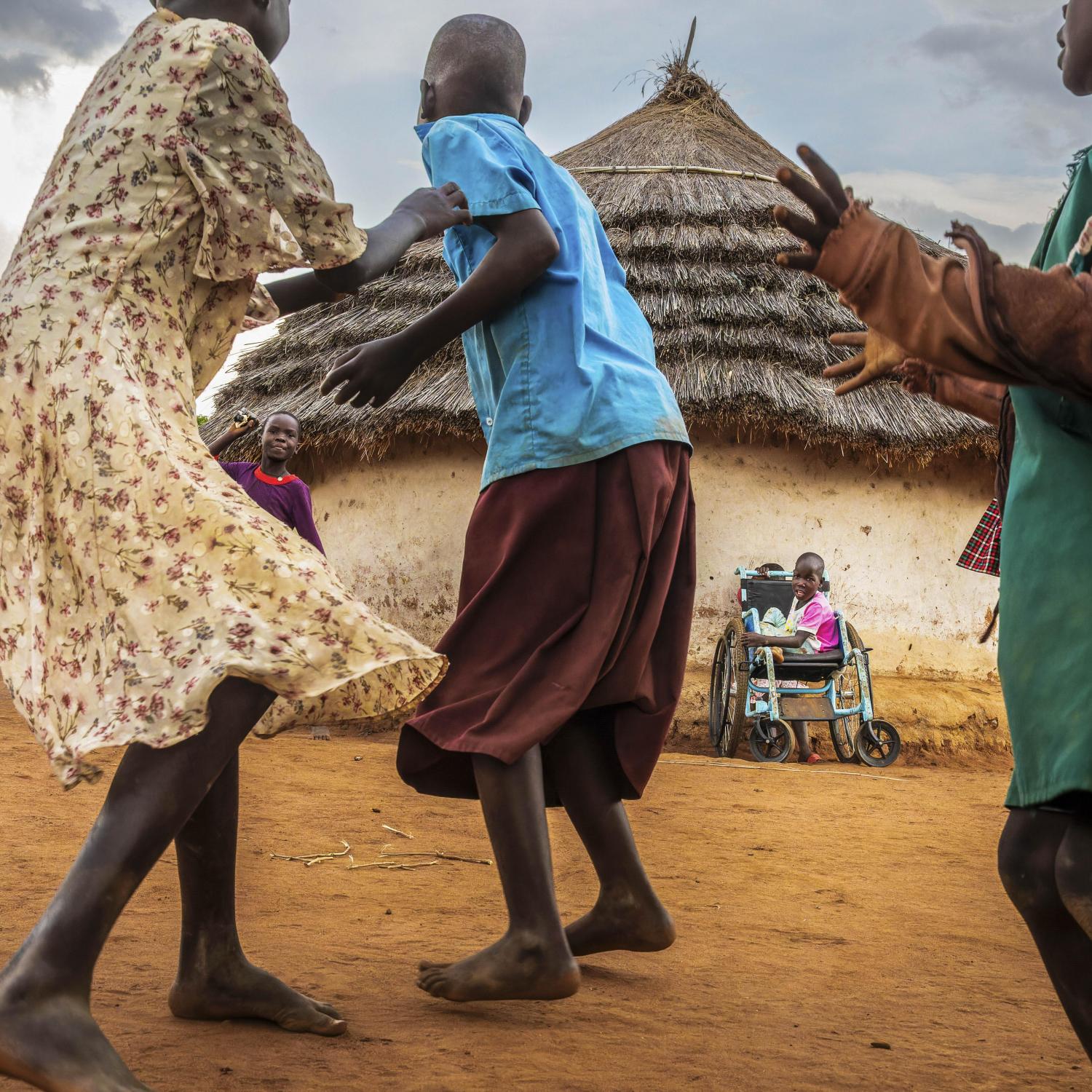
Life can present many obstacles for people with disabilities. These challenges lead to social isolation, poverty and reduced quality of life. However, amid these obstacles, Uganda is gradually transforming to become more inclusive.
As of 2020, Uganda has one of the most progressive laws for people with disabilities in the world. This states, among other things, that discrimination against people with disabilities is prohibited. Children with disabilities have the right to education and adults have the right to a job. This is very important because 80% of all people with disabilities in the world live in developing countries, such as Uganda.
While there is still much work to be done, the progress made thus far is a glimmer of hope for people with disabilities.
The lives of people with disabilities in Uganda are full of challenges, yet they are filled with courage and strength that often goes unseen. Too often these individuals are overlooked, marginalized or isolated from opportunities that others take for granted. Their daily experiences can be shaped by barriers both visible and invisible, from inaccessible environments to social stigma. Despite this, their stories are powerful, and they deserve to be seen and understood.
Highlighting these moments is essential because inclusion is not just a law, it is a human right that belongs to all of us. Uganda has made meaningful progress, granting children access to education and providing adults with the chance to work and contribute to their communities. These steps are significant, but there remains much work to be done to ensure that everyone can live with dignity and opportunity.
Through these images, the goal is to honor resilience and challenge the perceptions society often holds about disability. Each photograph is a window into the humanity and strength of people whose voices too often go unheard. They remind us that disability is not a limitation and that every person deserves recognition and hope for a fuller life.
This project was shaped not only by research and reports but by the incredible people I met along the way. Over the years, I have spent time with individuals and families in Uganda, listening to their stories, sharing moments and witnessing their strength firsthand. Their experiences brought life and depth to this work in a way that statistics and reports alone never could.
I also drew on a variety of resources to understand the broader context. Uganda’s Persons with Disabilities Act (2020) provided a legal framework for disability rights, while reports from organizations such as UNICEF and the World Bank offered insight into education and social inclusion. Local and international advocacy groups, including the Uganda National Union of Disabled Persons and Light for the World, highlighted the ongoing efforts to create a more inclusive society.
These combined perspectives, both personal and research-based, helped guide this project, ensuring that the work reflects not just the challenges faced by people with disabilities, but also their resilience and hope.
Adress: Havenspoor 91, 3841 KZ Harderwijk, The Netherlands
Phone: +31640789960
E-mail: info@marijnfidder.nl
Make Comment/View Comments