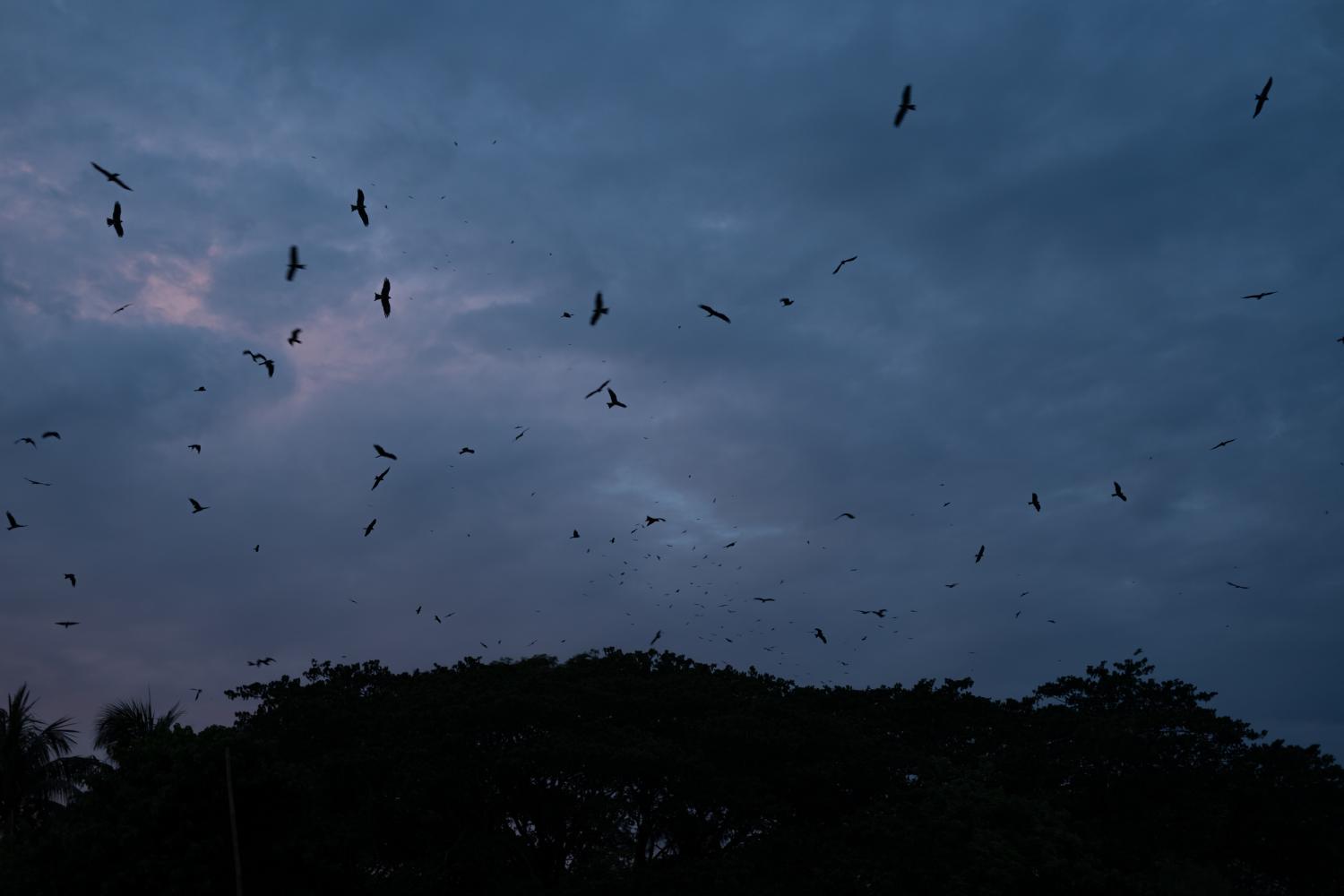

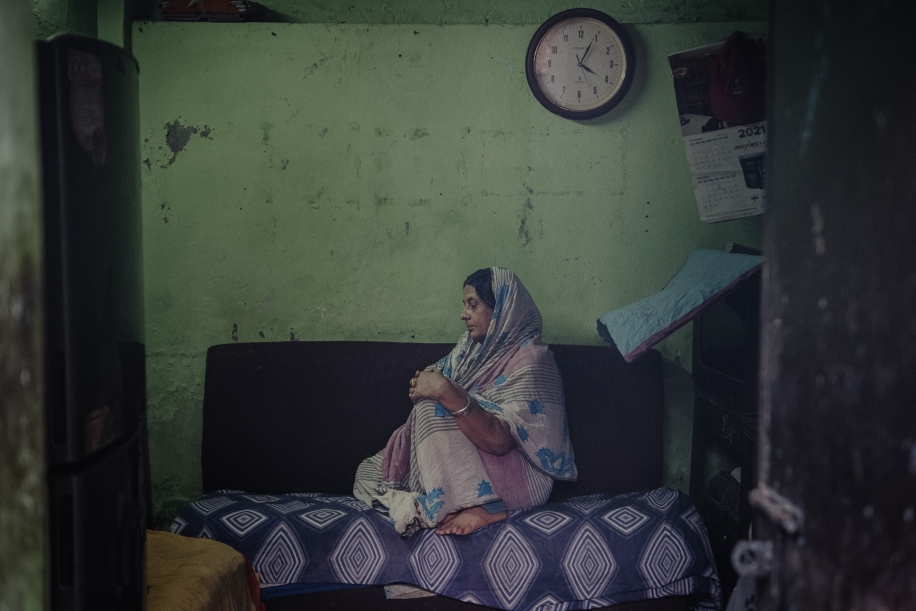

Hasina Banu, 55, the mother of Selim Reza Pintu, who was abducted on Dec. 12, 2013, speaks about the unshakable hope she holds for her son’s return. “Remembering him I stay awake, even when I am asleep. I constantly wait to hear him calling me ‘Maa,’ saying, ‘I have returned.’”
She adds, “I never doubt if my son is alive or dead. I think he is alive. I believe that by the grace of Allah, my son is alive. He is still alive and will return. I read the Quran and talk to my Allah, and my prayers are always with him.” Photographed in Dhaka on june 30, 2022
Memories of Disappearance
Mosfiqur Rahman Johan | Bangladesh, Bangladesh
Photographer: Mosfiqur Rahman Johan
Exhibit Title: Memories of Disappearance
Location: Bangladesh, Bangladesh
Memories of Disappearance examines the rise of enforced disappearances in Bangladesh within the contexts of state violence, political control, and trauma caused by state-sanctioned erasure. The state’s security apparatus—particularly the police and the Rapid Action Battalion (RAB)—has adopted militarised strategies to suppress dissent and control opposition, resulting in the enforced disappearance and extrajudicial killing of activists, journalists, students, and dissidents. Over 3,000 such cases were documented between 2009 and 2024.
Maayer Daak, founded in 2014, is a Bangladeshi grassroots platform advocating justice for victims of enforced disappearances. I joined the platform in 2021 and witnessed how collective grief transforms into resistance. Survivors of detention recount isolation, torture, and dehumanisation, while families remain trapped between hope and despair, enduring the pain of prolonged uncertainty.
The aftermath of the July Uprising offers a critical lens to explore these dynamics. As political prisoners were released from secret detention centres, they carried testimonies of survival that exposed state repression and renewed public discourse on accountability, human rights, and justice in post-revolution Bangladesh.
Mosfiqur Rahman Johan is an anthropologist and documentary photographer based in Bangladesh. His work explores humanitarian, environmental, and socio-political realities across Bangladesh, combining ethnographic research and long-term immersion to build layered narratives of resistance, resilience, memory, and belonging.
Johan’s recent collaboration is with Maayer Daak — a collective for justice, where relatives of the disappeared come together to share grief, preserve the stories of their loved ones, and resist state violence. His projects address enforced disappearance, death penalty , displacement, police brutality, and environmental degradation through research-driven visual storytelling.
Johan's visual journal reflects on the psychological impact of losing one’s space, challenging dominant discourses on state violence, gender, and development. His work has been exhibited, awarded, and featured internationally.
Mosfiqur Rahman Johan
Documentary Photographer & Anthropologist
Based on Bangladesh
Whatsapp: +8801684903111
Instagram :https://www.instagram.com/mosfiqur
Email : johan.mosfiqur07@gmail.com
https://johanmosfiqur07.wixsite.com/johan
Make Comment/View Comments