

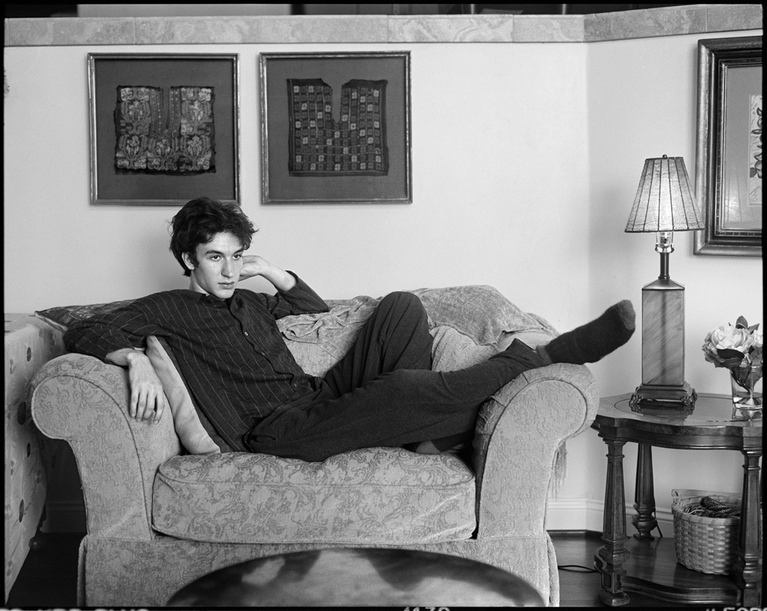

Tenaya Frederick-Nasser.
"Being Palestinian-American has put me at an antagonistic relationship with the country I was born and raised in, where I’m a citizen.
"I remember 9/11 when I was in third grade. I woke up at my Polish-Irish Father’s house. He was in front of the TV. “What happened?” He said, “It was Bin Laden. He is a very bad man… He’s a son of a bitch. An asshole.” That was the first time I heard my dad swear. Then I go to my Palestinian Mom. She had a very different take on the whole thing. From that point on, hearing about 9/11, or the Holocaust, or anything at my father’s home, there is your standard approach. “You need to understand how terrible they were.” My mother’s approach was “why are they telling you to focus on this? Are there different interpretations of these tragic events? In whose interests are these interpretations working?”
"It was always confusing to me. I couldn’t watch a movie like Schindler’s List and simply feel bad for the victims like everyone else. My conflicted ideas made me more invested in it than others. Really, I’m so happy I’m Palestinian-American because that itself forces me to think critically."
Home Away from Home: Little Palestine by the Bay
Najib Joe Hakim Hakim | California, United States
Organization: Jaffa Orange Photography
Photographer: Najib Joe Hakim Hakim
Organization: Jaffa Orange Photography
Exhibit Title: Home Away from Home: Little Palestine by the Bay
Location: California, United States
The second largest community of Palestinians in the United States calls the San Francisco Bay Area home. But what does it mean to be a Palestinian in America? Is the US their real home? How do Palestinian Americans maintain their ties to a seemingly unreachable homeland while grappling with life in a country whose political culture is so profoundly hostile to their core aspirations and identity?
Home Away from Home: Little Palestine by the Bay provides a platform for the participants to share their personal experiences. It is a audio-visual project juxtaposing audible excerpts from the recorded interviews with B&W portraits.
Click on the Audio link to listen.
Or click the Video link to watch the short ten minute video teaser.
Unlike most projects dealing with the so-called “Arab-Israeli Conflict”, Home Away from Home is not about solutions. It’s about leveling the playing field. It’s about raising the perception of Palestinian humanity to the level that the Israeli, the Jew, the American take for granted. Odd that this even needs discussion, isn’t it? Believe me, it does.
That is what I hope to encourage by having you listen to these voices from Palestine who live among us in the Bay Area. Please look into their eyes as you listen. You just might see things differently afterwards.
I want to portray how these people feel and live “Home”. How they bridge the distance to “back home”. How their memories and ideas about Palestine collide with their daily lives in the US. And how the very sound of their breath resists the de-humanization, dispossession and occupation they experience.
Listening to their words and reading between the lines, you will find many surprising things. You will find an attachment to family that the distance of time and space cannot sever. You will find a profound appreciation for what the US has offered them in rights and opportunities, coupled with a determination to use their new rights to change the harsh reality of America’s policies toward Palestine.
And perhaps most surprising, you will find that each one, whether s/he was born in Palestine or never ever breathed the illuminated air of the Holy Land, refers to it as “back home”.
The people “back home” also feel connected to those in exile. On the project’s Facebook page, one Palestinian woman from Nazareth who once lived in the Bay Area wrote, “I miss being with you guys! So proud of this wonderful initiative. It makes us here in Palestine even stronger and provides us with more resilience. Way to go!"
On his deathbed, my father expressed a desire to look upon the sea one more time. At first I thought he meant the ocean on the Virginia coast near his suburban DC home. I soon realized he used the word "sea", not "ocean". And perhaps what he was actually hoping for was another visit to his birthplace in Jaffa, the former pearl sitting on the Mediterranean coast of Palestine. From some of these stories, I learned why he and other Palestinians feel so attached to their homeland. The answer is between the breaths they take. Listen.
Funding for Home Away from Home comes from the San Francisco Arts Commission’s Cultural Equity Grant and the Arab Fund for Art and Culture (Beirut).
Abdallah Saadeh - bit.ly/AbdallahHome
Alaa Daoudi - bit.ly/AlaaHome
Altayeb Abdulrahim - bit.ly/AltayebHome
Amin Aftim Saba - bit.ly/AminAftimHome
Amin Muwafi - bit.ly/AminMHome
Fr. Bernard Poggi - bit.ly/BernardHome
Dounya Kardoush Matar - bit.ly/DounyaHome
Duraid Musleh - bit.ly/DuraidHome
Elias Tuma - bit.ly/EliasHome
George Bisharat - bit.ly/GeorgeBHome
Ibrahim Matar - bit.ly/IbrahimHome
Jamal Dajani - bit.ly/JamalHome
Joe Eadeh - bit.ly/JoeEHome
Jumana Hassan - bit.ly/JumanaHome
Leena Barakat - bit.ly/LeenaHome
Lulu Palestina - bit.ly/LubnaHome
Nader Oweis - bit.ly/NaderHome
Nizar Haddad - bit.ly/NizarHome
Nora Talebi - bit.ly/NoraHome
Rena Shanawany - bit.ly/RenaHome
Samir Totah - bit.ly/SamirHome
Sandra Nasser - bit.ly/SandraHome
Suzy Abu-Nie - bit.ly/SuzyHome
Tenaya Frederick Nasser - bit.ly/TenayaHome
Wajih Saadeh - bit.ly/WajihHome
Zahwa Amad - bit.ly/ZahwaHome

Make Comment/View Comments