


The Village: An Uncanny Consequence of War
Cory Zimmerman | Tarasivka, Ukraine
Photographer: Cory Zimmerman
Exhibit Title: The Village: An Uncanny Consequence of War
Location: Tarasivka, Ukraine
The experience of living in limbo is a complex push-and-pull between profound loss and the fierce human drive to survive. For the displaced, the need for belonging and connection persists. And the unexpected challenge of bridging the sudden chasm in their lives, forging a new community amongst strangers to supplement, and, for many, permanently replace, all whom they have ever known, while soothing, is daunting. Building new networks of support, sharing resources, and drawing on collective strength can fill the silence left by homes fled, but even as new bonds take root, a persistent ache of self-erasure remains. Identity, so deeply entwined with land and heritage, when confronted with the abrupt physical absence of the familiarity of “home,” creates an enduring fracture in the soul. Life in the Hansen Village is one of a dislocated sense of self, amid an entirely foreign nostalgia, within a utopian vision of a faraway land.
The Hansen "Miracle" Village in Tarasivka, Ukraine, stands as a jarring architectural anomaly, a pristine slice of the American suburban dream transplanted into the war-scarred landscape of rural Ukraine. Funded entirely by Utah real estate mogul Dell Loy Hansen, the development bypasses traditional aid bureaucracy to provide immediate, high-quality housing for those displaced by the invasion. With its perfectly paved cul-de-sacs, manicured lawns, and uniform duplexes, the village looks less like a refugee settlement and more like a planned community from Florida or the American West, creating a sharp visual contrast with the ancient, irregular textures of the bombed-out buildings of the surrounding Ukrainian countryside.
The funding behind this "fabricated" reality is as singular as the place itself, fueled by Hansen’s personal mission to use his development expertise for rapid humanitarian relief. Sepping away from the American sports world following a career-ending scandal, Hansen channeled his wealth into the "Hansen Ukrainian Mission," investing over $140 million into turnkey residential projects. This approach brings a distinct "big developer" efficiency to the crisis, in which homes are delivered fully furnished "down to the kitchen appliances and linens, "allowing families to step directly out of the chaos of the front lines and into a life of total, if surreal, domestic order.
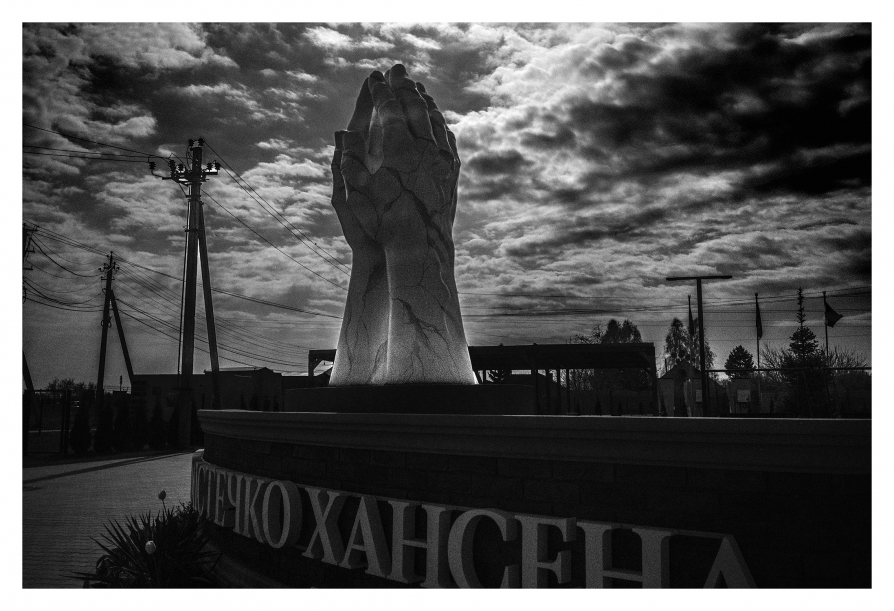
Ultimately, the strangeness of the village lies in its attempt to curate "normalcy" through a foreign aesthetic, anchored by the massive "Praying Hands" sculpture at the entrance, which mirrors both Oklahoma's Oral Roberts University and Soviet-era sculpture. To a casual observer, the uncanny village feels like a movie set (e.g., The Truman Show), yet for the residents, this artificiality is a sanctuary. By creating a self-contained ecosystem complete with its own woodshop, plant nursery, cinema, school, medical clinic, and nursing home, The Hansen Center is more than just housing; it is a permanent, Suburban American-style oasis that prioritizes psychological comfort and predictable safety over local architectural tradition, despite the wailing air-raid sirens that fill the crisp, countryside air.

Make Comment/View Comments