


Operation Midway Blitz
Nima Taradji | Illinois, United States
Photographer: Nima Taradji
Exhibit Title: Operation Midway Blitz
Location: Illinois, United States
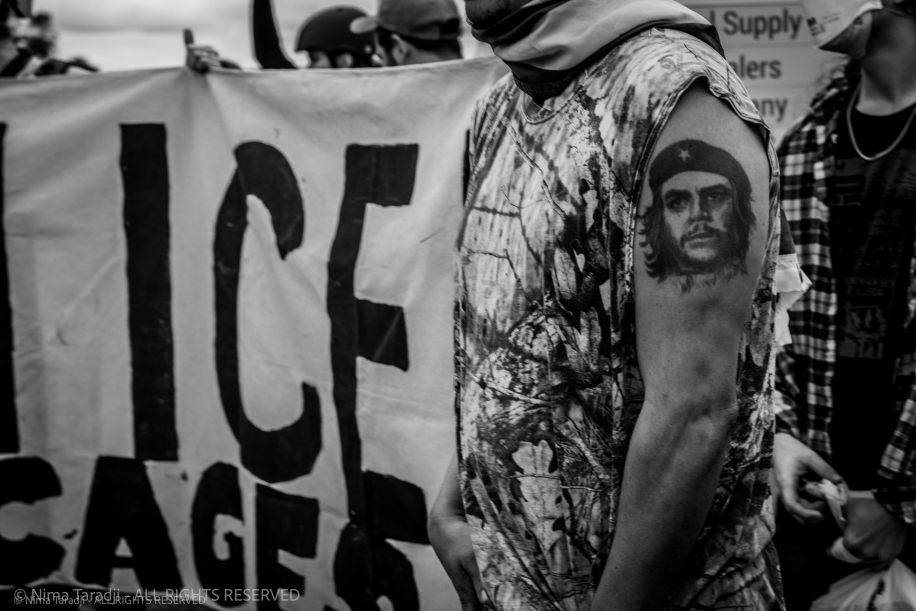
This series documents scenes from what became known as the “Midway Blitz,” a coordinated operation led by U.S. Immigration and Customs Enforcement across Chicago. Despite its name, it was not limited to Midway Airport and unfolded citywide over nearly eight weeks, aiming to detain and process individuals for immigration enforcement.
As operations spread, Chicagoans gathered to observe, document, and at times disrupt. Streets became sites of tension—crowds forming, vehicles halted, names called out. Enforcement escalated with the use of chemical agents, flash-bangs, and rubber bullets, at times affecting peaceful protesters without clear provocation.
Illinois State Police were later deployed for crowd control, and repeated confrontations led to multiple arrests. Those detained included not only individuals targeted by enforcement but also protesters and bystanders. Injuries were reported on both sides.
While highly visible during those weeks, such enforcement has continued in less visible ways—quiet arrests, detentions, and deportations that unfold without public attention.
This series documents scenes from what became known locally as the “Midway Blitz,” a coordinated enforcement operation led by U.S. Immigration and Customs Enforcement across Chicago neighborhoods. Despite the name, the operation was not confined to the Midway Airport area; it unfolded throughout the city. Its stated aim was to locate, detain, and process individuals identified for immigration enforcement—part of a broader federal effort to increase removals and demonstrate operational reach in major urban centers.
What unfolded on the ground did not occur in a single day. The operation stretched over nearly eight weeks, with repeated actions across different parts of the city. During that time, word spread quickly through communities, and Chicagoans—family members, neighbors, advocates, and bystanders—moved to observe, document, and, at times, physically disrupt enforcement. Cars slowed to a halt, crowds gathered at pickup points, phones were raised, names were shouted, and officers were questioned in real time. In several instances, attempts to block vehicles or delay departures led to tense and prolonged standoffs.
During these encounters, enforcement tactics escalated. Officers deployed a range of crowd-control measures, including chemical agents, flash-bang devices, and rubber bullets. Their use was often described by witnesses as indiscriminate, with peaceful protesters at times caught in or directly subjected to these tactics without clear provocation or immediate threat. Scenes shifted quickly from observation to confrontation.
As the operation continued, Illinois State Police were brought in to assist with crowd control. Their presence added another layer to an already volatile situation. Interactions between officers and protesters frequently resulted in skirmishes, with multiple arrests reported over the course of the operation. Arrests extended beyond those targeted for immigration enforcement to include protesters and observers, often on charges such as obstruction or disorderly conduct. Injuries were reported on both sides—civilians caught in crowd surges or impacted by crowd-control measures, and officers injured during clashes.
While the Midway Blitz drew attention because of its visibility, the underlying enforcement has not stopped. It has shifted. Operations continue in a lower-profile manner—early morning pickups, courthouse arrests, and traffic stops that become immigration checks. For many, the experience remains sudden and destabilizing: individuals taken into custody, transferred to detention, and in some cases deported, often with little warning to families.
www.nimataradji.com
+1-312-925-3500

Make Comment/View Comments