


Blood and Soil: Life and Legacy on a Family Farm
Traci Arney | NC, United States
Organization: A Photographers Place
Photographer: Traci Arney
Organization: A Photographers Place
Exhibit Title: Blood and Soil: Life and Legacy on a Family Farm
Location: NC, United States
For over twenty years, I’ve returned to the Trexler family farm in North Carolina to document their traditional hog killings. These gatherings, held in the cold months of spring and fall, aren’t commercial—they’re communal acts of sustenance and connection. Family and friends come together to raise, harvest, and preserve food that will feed them throughout the year. Every step is done by hand, with deep respect for the lives they take and the lives they nourish.
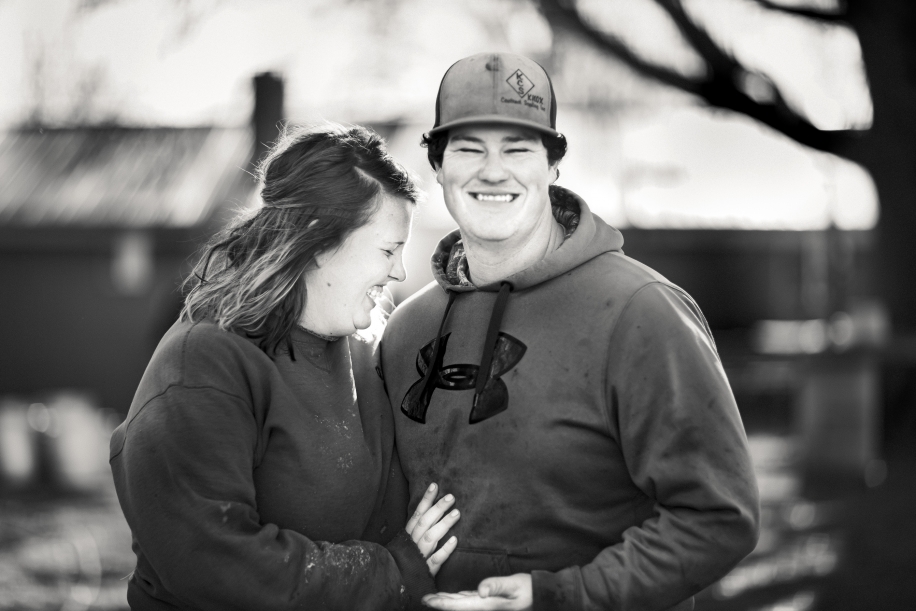
The Trexlers are kind, grounded people. Their hog killings are about care, legacy, and feeding their community. Fires burn through the night. Smoke drifts in early light. Children learn from elders. Neighbors lend a hand. It’s hard, physical work—tending fires, stirring cauldrons, processing every part of the animal—but it’s shared, made lighter by conversation, laughter.
This project is about dignity in that labor. About joy and reverence that live side by side. In a world where our food is often stripped of origin and meaning, their practice offers something else: a model of care, memory, and rooted responsibility.
I began photographing the Trexler family’s hog killing over twenty years ago. At the time, I was a vegetarian—curious, cautious, and expecting to witness something harsh or unsettling. But what I found was something else entirely. Their annual gathering was not about violence, but reverence. It was methodical, precise, and filled with intention. I’ve returned over the years because I realized this wasn’t just a story about food—it was a story about care, tradition, and the quiet bonds that hold a family together.
My father introduced me to the Trexlers. He grew up on one of the many small family farms that shaped the town where I was raised. I spent much of my childhood on my grandparents’ farm—the same one he knew as a boy—running wild with cousins through fields, climbing silos, and fetching buttermilk from the barn. The sounds of water rushing through creeks, birdsong, and distant tractors still echo in my memory. While I didn’t witness hog killings in my youth, I knew the rhythms of a working farm and the pride of producing one’s own food. That world—where labor and joy coexisted—left its mark.
In many ways, this project has become a return to that landscape. What began as observation became relationship. Over time, the Trexlers allowed me in—not just with my camera, but as someone they trusted to witness them fully.
The Trexlers are grounded people—generous, soft-spoken, and quick to laugh. Their annual hog killing isn’t just a family ritual; it’s a community effort. Friends and neighbors drop in to lend a hand and leave with sausage, pork, and livermush—foods made not for profit but for sharing. The work is constant, the labor shared, and the meals simple but deeply earned. What matters most is the time spent together—working, remembering, and keeping tradition alive.
The hog killings take place twice a year—in the spring and fall—when the weather turns cold and the air holds the smoke just so. Family members walk together to the pens in the early morning hours, moving quietly, purposefully. The process is carried out with deep awareness of what it means to take a life, and why. The fires never stop burning—tended day and night, casting their glow over the constant motion of hands and hearts. The work is grueling—physical, unrelenting—but when shared the way the Trexlers do it, it becomes something more. Not a burden, but a passion. A way of expressing love for family, reverence for life, and a pride that runs generations deep.
Through it all, people check in on one another, feed one another, make sure no one stands alone in the work. There is no idle moment, no forgetting of the task at hand. And yet, within that steady labor, there is joy—laughter, stories, teaching. Friends and neighbors arrive to help and leave with more than food. They leave with belonging. This isn’t just labor—it’s legacy.
There’s a certain dignity in raising and preparing your own food—knowing its source, tending its life, and honoring it in its death. In a world where so much of our food is stripped of origin and meaning, the Trexlers’ practice offers a different model: one of care, community, and rooted responsibility.
Traci Arney
traci@traciarneyphoto.com
https://www.traciarneyphotoart.com/blood-and-soil-photographic-exhibition
https://www.traciarneyphotoart.com/
336.404.6949
Instagram: https://www.instagram.com/traciarneyphoto/
Facebook: https://www.facebook.com/traciarneyphotography/
Make Comment/View Comments